Using compressed air as a cutting gas instead of nitrogen reduces part costs in hot forming // New nozzle and process solution from TRUMPF boosts productivity and system availability
Automotive industry: TRUMPF laser technology reduces manufacturing costs in hot forming
Ditzingen, 21 April 2026 – High-tech company TRUMPF is reducing component costs by up to 20 per cent when cutting hot-formed components for safety-critical body structures, thanks to a new laser technology solution. “Energy costs, expensive cutting gas and unplanned downtime are driving up component prices in hot forming. TRUMPF now offers a solution that addresses this very issue. By combining a new cutting nozzle, a new generation of fibre lasers and proven beam shaping technology, we enable efficient laser cutting of hot-formed parts, making our customers even more competitive,” says Ralf Kohllöffel, responsible for product management of 3D systems at TRUMPF. The high-tech company is showcasing the new solution at its in-house exhibition, INTECH, in Ditzingen.
Fewer machine downtimes and higher productivity
Users benefit from fewer machine downtimes and fewer service interventions with the new solution. At the heart of the new solution is a new cutting nozzle. The new design allows the nozzle-to-sheet distance to be increased to several millimetres. This significantly reduces the risk of collisions between the nozzle and the sheet during the cutting process. “Nozzle collisions have previously been a frequent source of disruption, particularly when laser cutting with compressed air as the cutting gas. They led to damaged nozzles, fluctuating cut quality and unplanned machine downtime. In tests, the new nozzles were in use for more than three months without needing to be replaced. The typical service life of the already improved X-Blast standard nozzles was previously just a few days,” says Kohllöffel. Even with less-than-ideal programming or fluctuating production conditions, the cutting process now remains stable, even when using compressed air as the cutting gas.
Cutting gas costs reduced by 75 per cent
By using compressed air instead of nitrogen, users can reduce their cutting costs by 75 per cent. “Although compressed air is significantly cheaper than nitrogen as a cutting gas, it was previously considered less robust, particularly in continuous operation of high-productivity systems. This is precisely where TRUMPF’s new process combination comes in,” says Kohllöffel. Whilst many users previously stuck with the more expensive nitrogen for reasons of process reliability, the new X-Blast 2.0 nozzle, in combination with the BrightLine Speed beam shaping technology, now enables the industrial use of compressed air even in 24/7 operation of high-productivity 3D laser cutting machines when cutting hot-formed components in the automotive industry.
BrightLine Speed is a beam shaping technology that enables higher cutting speeds to be achieved with lower laser power. This means that users can cut faster with, for example, 3 kilowatts of laser power than competitors using 4 kilowatts. Furthermore, thanks to the laser’s high brilliance, users benefit from significantly lower cutting gas consumption compared to a standard process without BrightLine Speed
The new generation of TRUMPF fibre lasers complements this effect. It operates much more energy-efficiently and reduces the power consumption of the beam source. At the same time, the lower laser power required reduces the total energy consumption per component.
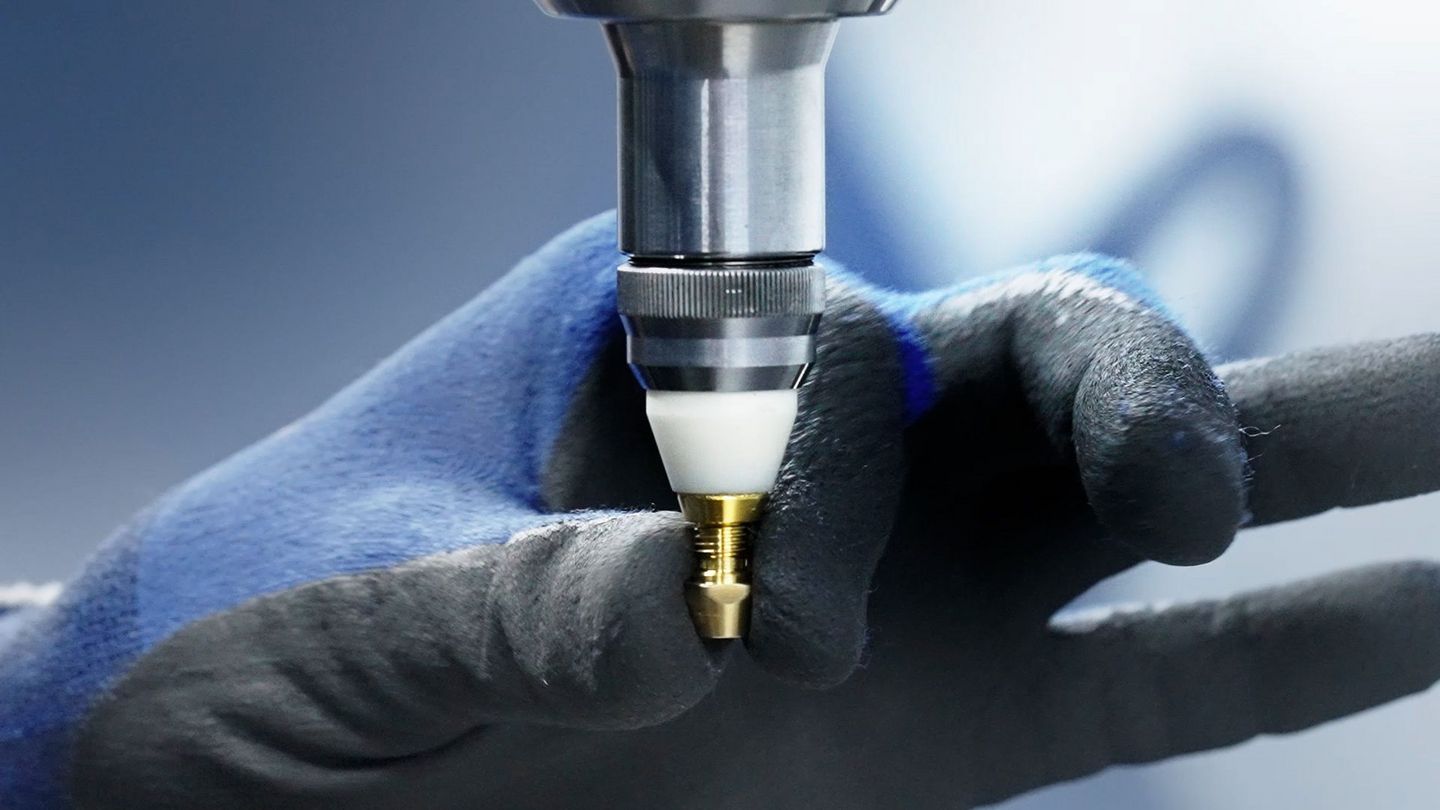
New cutting nozzle
The heart of the new laser solution is a new cutting nozzle. (Image: TRUMPF)
本新聞稿提供有數位版圖像,且其解析度適合列印。 該圖像的用途僅限於新聞編輯。如注明「圖片來源: TRUMPF」, 則可免費使用。不得對圖像進行任何改動,但裁剪主要場景除外。 如需更多圖片可造訪 TRUMPF Media Pool。
The heart of the new laser solution is a new cutting nozzle. (Image: TRUMPF)

連絡人