This product range and information may vary depending on the country. Subject to changes to technology, equipment, price, and range of accessories. Please get in touch with your local contact person to find out whether the product is available in your country.

VisionLine for marking
Modular sensor system for every step of the marking process
VisionLine Detect
Recognition of characteristics for simple geometries
VisionLine Model
Geometric recognition of entire, pre-programmed workpieces
VisionLine OCR
Extraction and quality assessment of text and numbers
VisionLine Code
Extraction and quality assessment of 1D and 2D codes
Position recognition
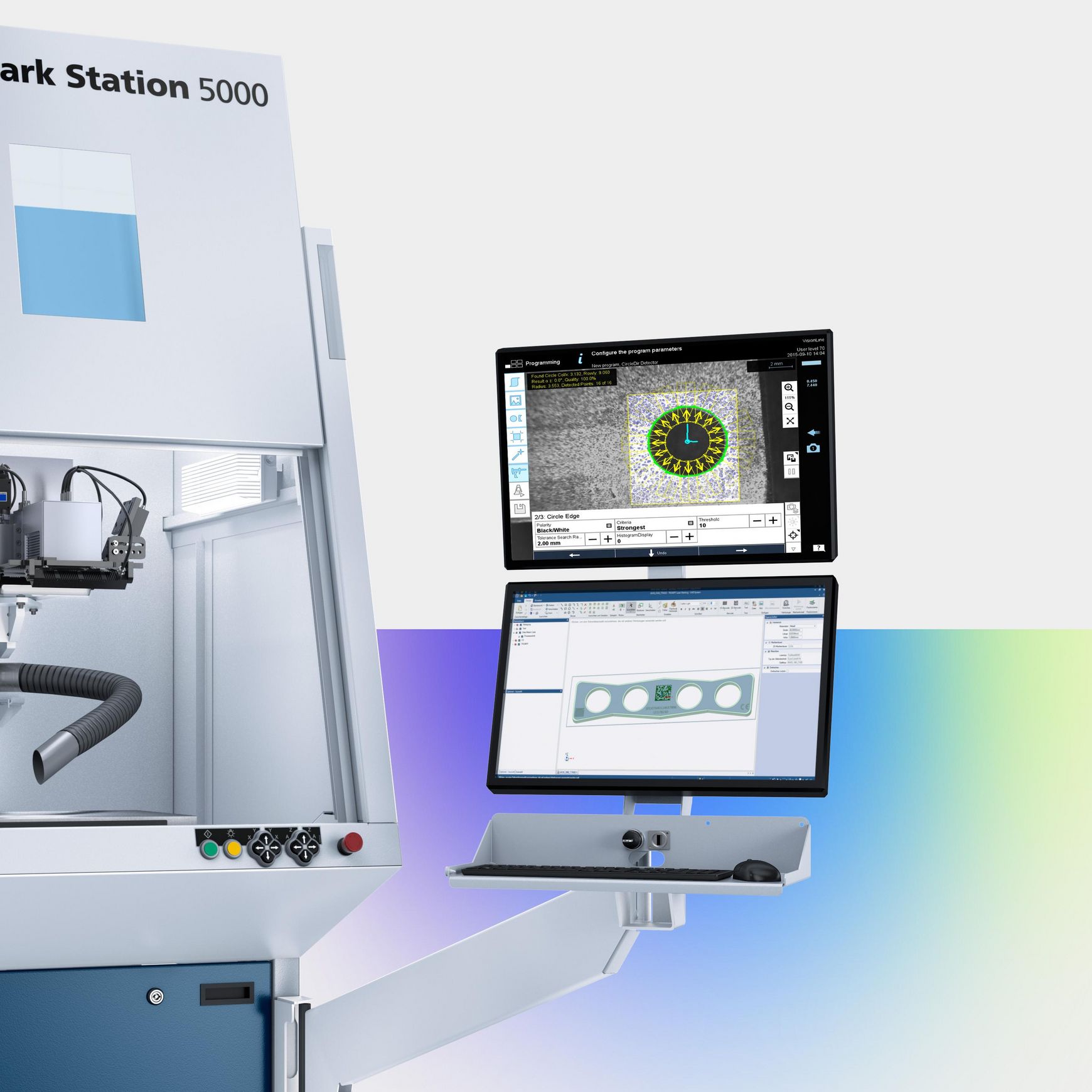
VisionLine Detect
Recognition of characteristics for simple geometries
Automatically detects workpiece positions based on defined features such as edges, circles, or drilled holes from a feature library
Automatically aligns the laser, even if parts are slightly misaligned or twisted
Optional AI filter for reliable detection even under challenging component, lighting, or contrast conditions
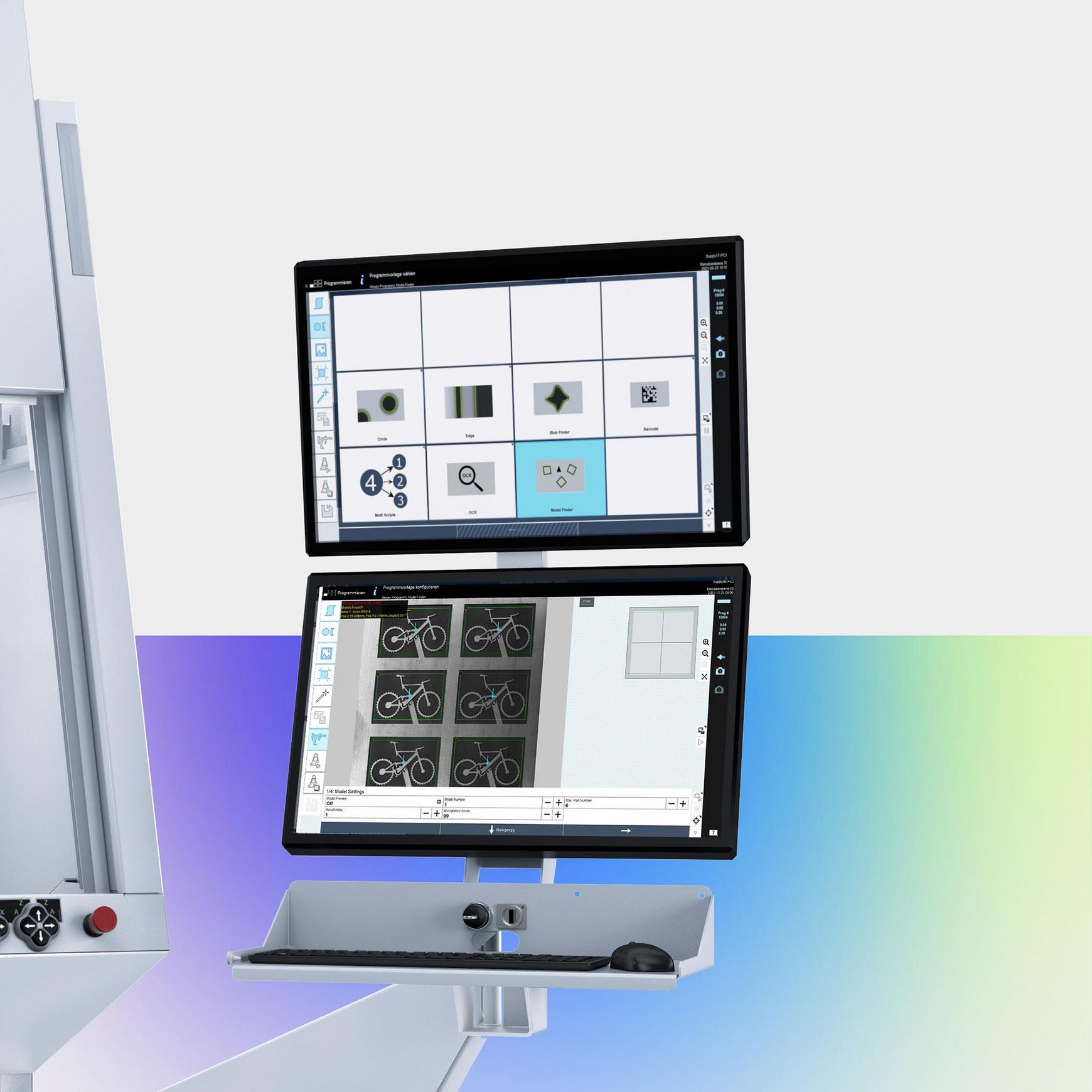
VisionLine Model
Geometric recognition of entire, pre-programmed workpieces
Teach the system the entire workpiece once, and it will then automatically recognize where it is located and how it is oriented
Automatically compensates for variations in position and height by adjusting the focus position - even if the parts are positioned differently in the marking area each time
Captures multiple components in a single shot and only marks those it can reliably recognize
VisionLine model in use
Marking bone plates
Marking bone plates
Codes and lettering on bone plates must be precisely positioned and permanently legible - this is a prerequisite for meeting the traceability requirements of medical technology. Different component geometries make it difficult to reproduce the position of markings consistently.
The VisionLine model automatically detects the geometry and corrects the marking position in real time. Codes and lettering are reliably placed at the specified location - reproducible quality even at high throughput.
Quality
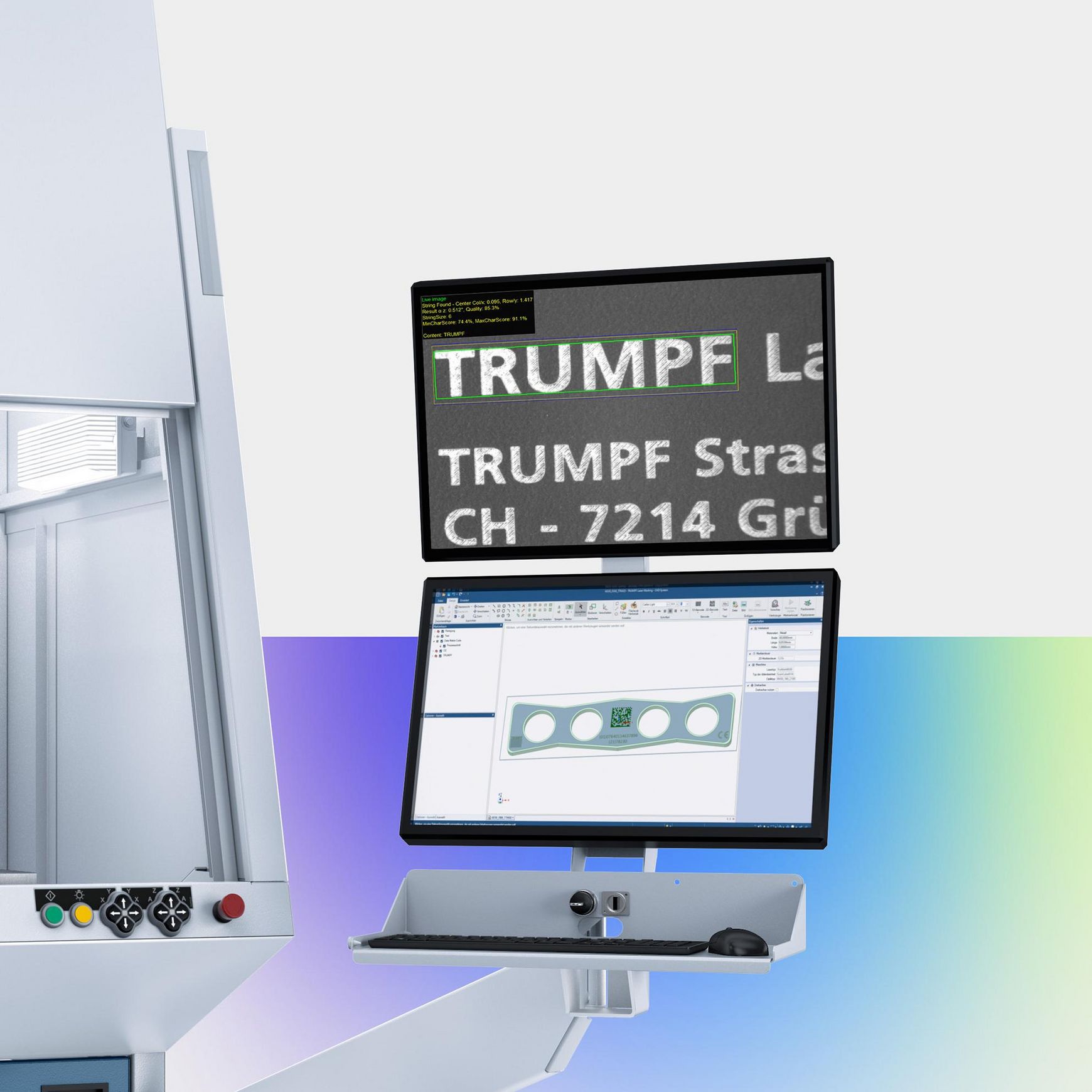
VisionLine OCR
Extraction and quality assessment of text and numbers
Automatically reads selected text and numbers, including both system and machine fonts
Evaluates the quality of the marking, such as the contrast and line sharpness
Compares the read data with the database and, if requested, documents it along with its content and quality assessment
Uses the read data directly in the marking process, for example, for sequential serial numbers
VisionLine OCR in use
Reliable recognition of cursive handwriting
Reliable recognition of cursive handwriting
Delicate cursive handwriting with intertwined letters and varying line thicknesses must be clearly legible. At the same time, different materials (metal, plastic, leather, ceramic) require specific marking parameters. Illegible or incorrect markings result in rejects and rework.
VisionLine OCR uses optical character recognition to verify each character after it has been marked. The markings are compared against your specifications - illegible, incomplete, or incorrect markings are detected reliably. This helps you to avoid rejects and rework.
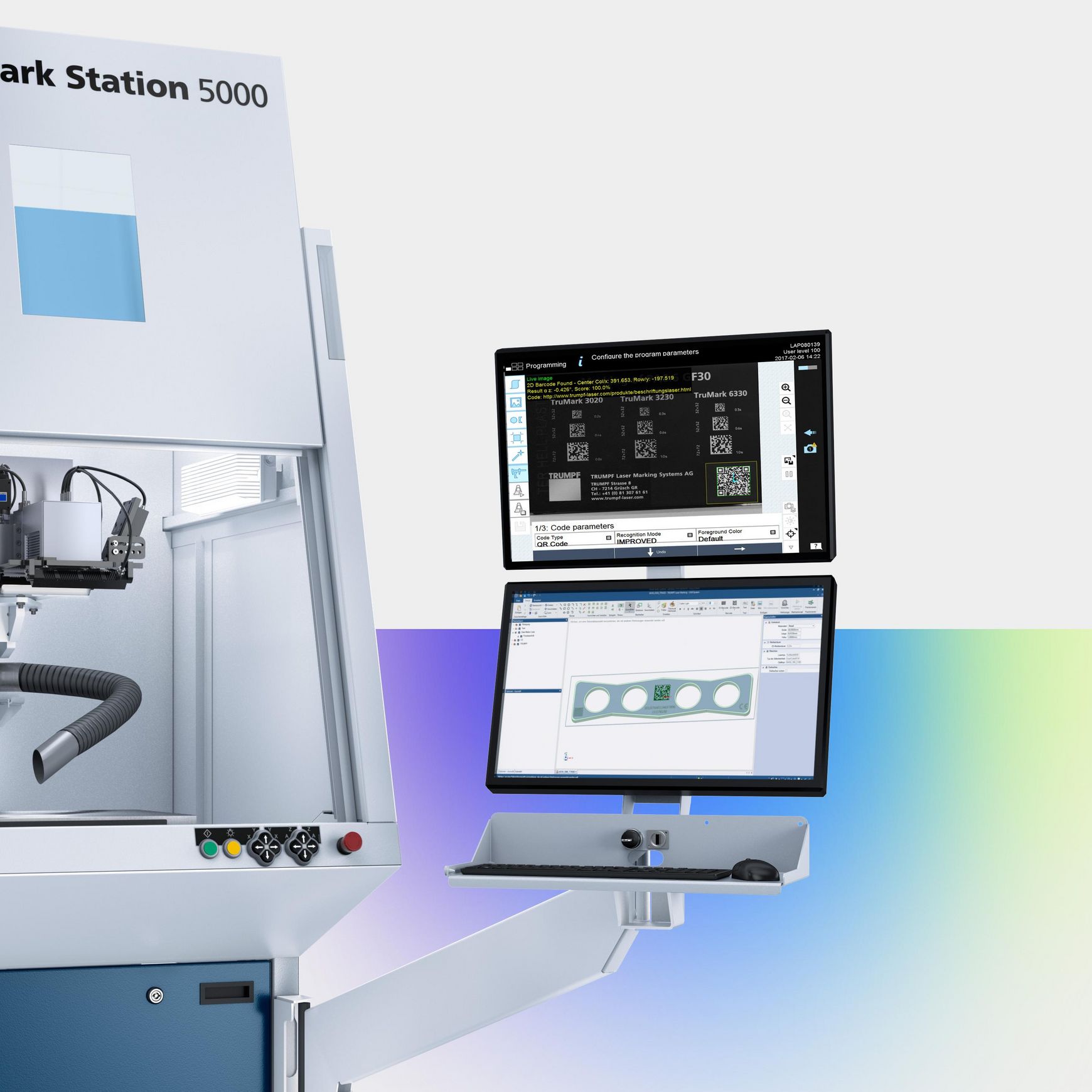
VisionLine Code
Extraction and quality assessment of 1D and 2D codes
Automatically reads marked bar codes, Data Matrix, and QR codes
Checks each code for contrast, modulation, and uniformity in accordance with ISO 15416, ISO 15415, and ISO 29158, and assigns a quality rating
Documents each result, thus verifying that the marking complies with the specifications
VisionLine Code in use
Marking surgical instruments
Marking surgical instruments
Codes on delicate surgical instruments (tweezers, scalpels, grippers) must be reliably legible despite their small size. Different surface materials (stainless steel, titanium, special alloys) make precise marking even more difficult.
VisionLine Code reads every marking after the process - even intricate 1D and 2D codes. The system checks the content for readability and accuracy and immediately detects incorrect or insufficient markings. This is how you maintain a traceable record and avoid defective instruments.
Marking watch components
Marking watch components
Data Matrix and QR codes containing serial numbers and authentication data must be precisely marked on the smallest surfaces and remain permanently readable. Reliably inspecting these intricate codes is a particular challenge in the watch industry.
VisionLine Code checks the legibility and content of each code after laser marking. Incorrect or inadequate markings are immediately detected and documented. This enables you to implement reliable quality assurance that meets the high standards of the Swiss watch industry.
VisionLine Detect
VisionLine Model
VisionLine OCR
VisionLine Code
What sets VisionLine apart
– Overview of key features
Always correctly positioned - even when the component position changes
Always correctly positioned - even when the component position changes
VisionLine captures the workpiece in real time using the same optics as the laser (coaxial camera alignment). As the camera and laser are aligned in the same direction, there is no misalignment between the camera image and marking point. If the workpiece deviates from the programmed position, the system detects the deviation and compensates for it before marking begins. This ensures that the marking is accurate even if there are tolerances in the fixture or if the workpiece has shifted slightly.
Faster setup - even without precise insertion
Faster setup - even without precise insertion
An additional side camera captures the entire working area and detects workpieces even before the marking process begins. You can therefore place the parts anywhere without having to position them precisely -VisionLine locates each one and marks it at the designated spot. This reduces the need for fixtures and setup time, especially when switching between series.
Automatically in focus - no manual readjustment required
Automatically in focus - no manual readjustment required
Two autofocus systems operate in parallel: The laser autofocus measures the distance to the part's surface and automatically adjusts the working distance, regardless of how high the part is at that point. At the same time, the camera's autofocus keeps the image in focus, allowing VisionLine to reliably recognize features and codes. Even stepped or curved components can be marked this way without requiring any readjustments.
Reliable detection - even in challenging lighting conditions
Reliable detection - even in challenging lighting conditions
Four light sources illuminate the workpiece evenly, independent of the ambient lighting. Distracting reflections and shadows do not appear in the camera image in the first place. This allows VisionLine to reliably detect edges, positions, and other features even on shiny or strongly textured surfaces.