December 2017. There is a Christmas card from TRUMPF on Peter Götzl's desk. It depicts a jolly Santa looking into a futuristic manufacturing landscape – the Smart Factory from TRUMPF in Chicago. For many just a nice greeting, Götzl sees it as a vision of the future. This is what industry can look like: networked, automated, efficient. To experience this for himself, he flies to the USA shortly after receiving the card. He comes back with ideas that will once again reinvent his company and himself . But this story starts far earlier than this. Not in Chicago. But in Erbendorf, in the Northern Upper Palatinate.
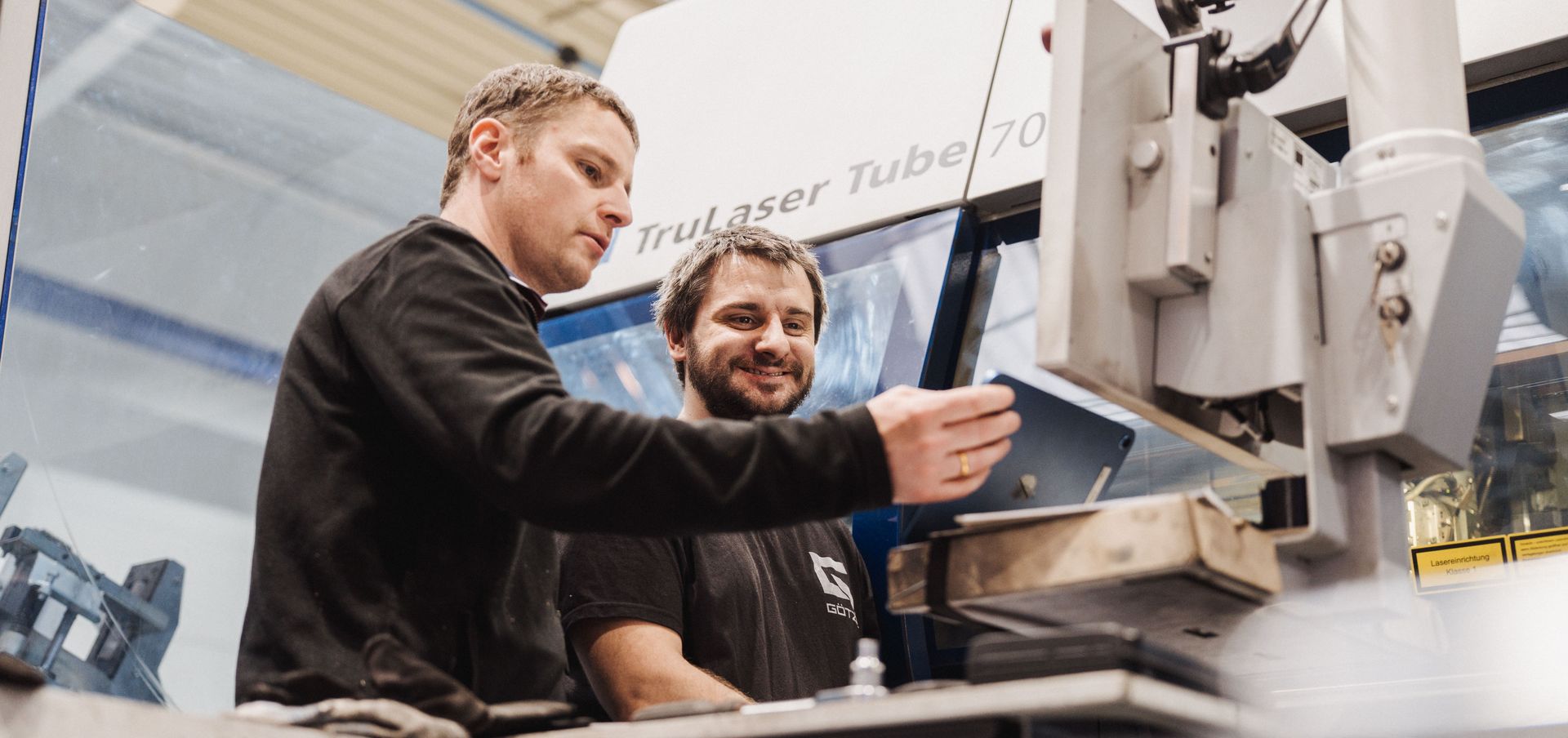
Programmed quality: Precisely designed sheet metal parts are created on the screen, which the TruLaser Tube 7000 then cuts precisely and fully automatically – almost twice as fast as previously completed by hand.
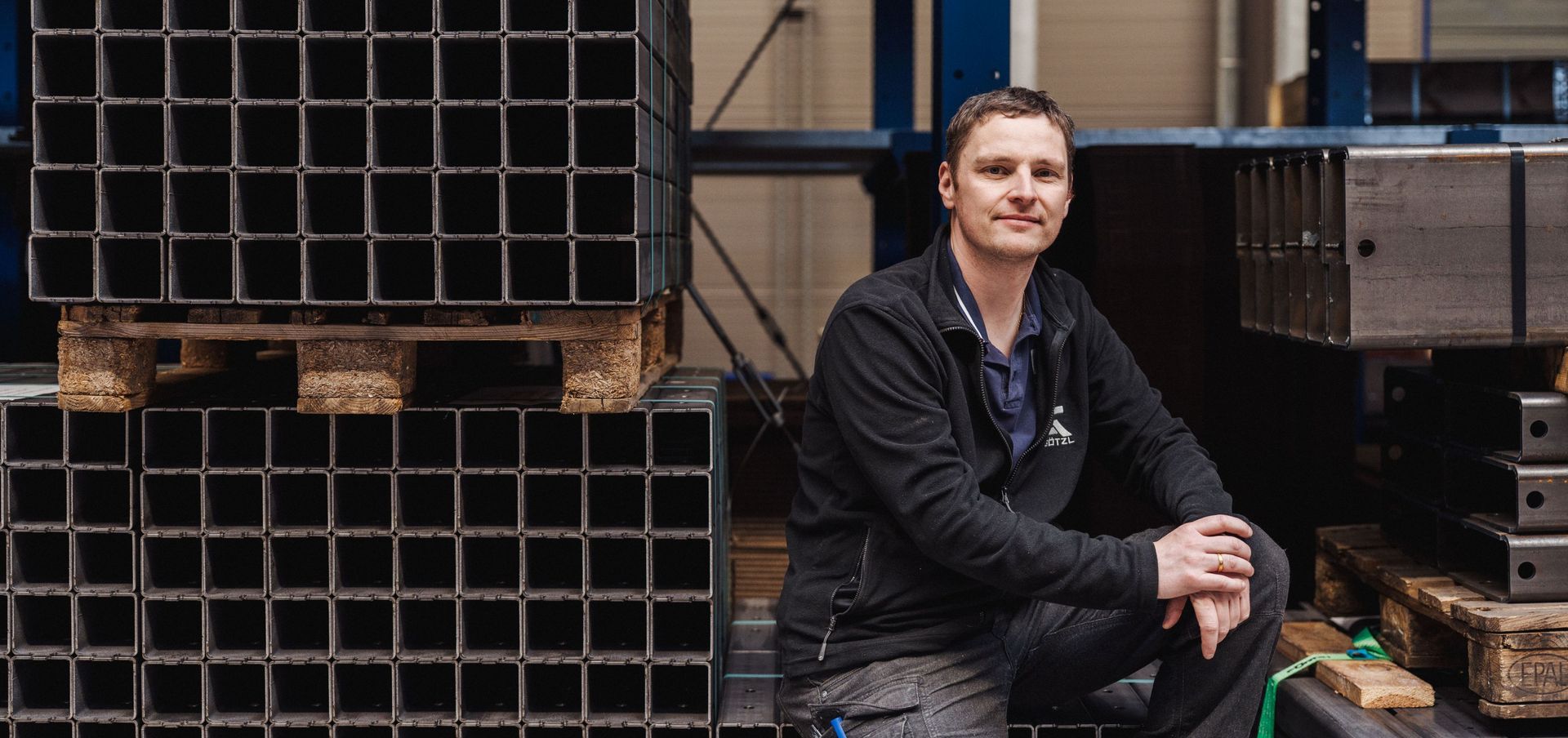
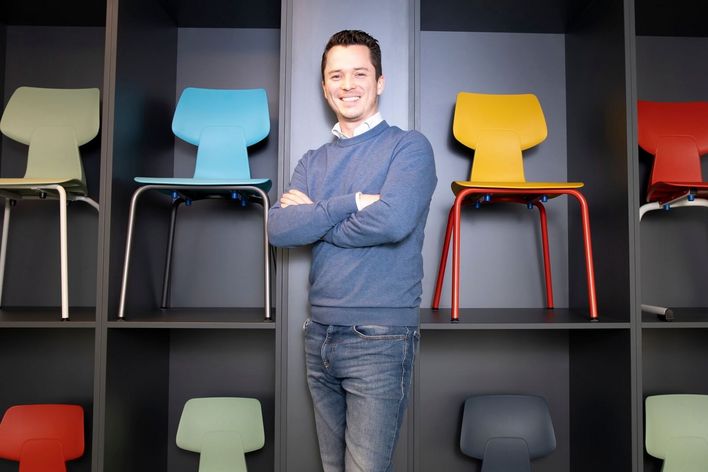
Early starter: Peter Götzl had already founded his company at the age of 18 and now runs one of the most modern laser tube cutting stores in Germany.
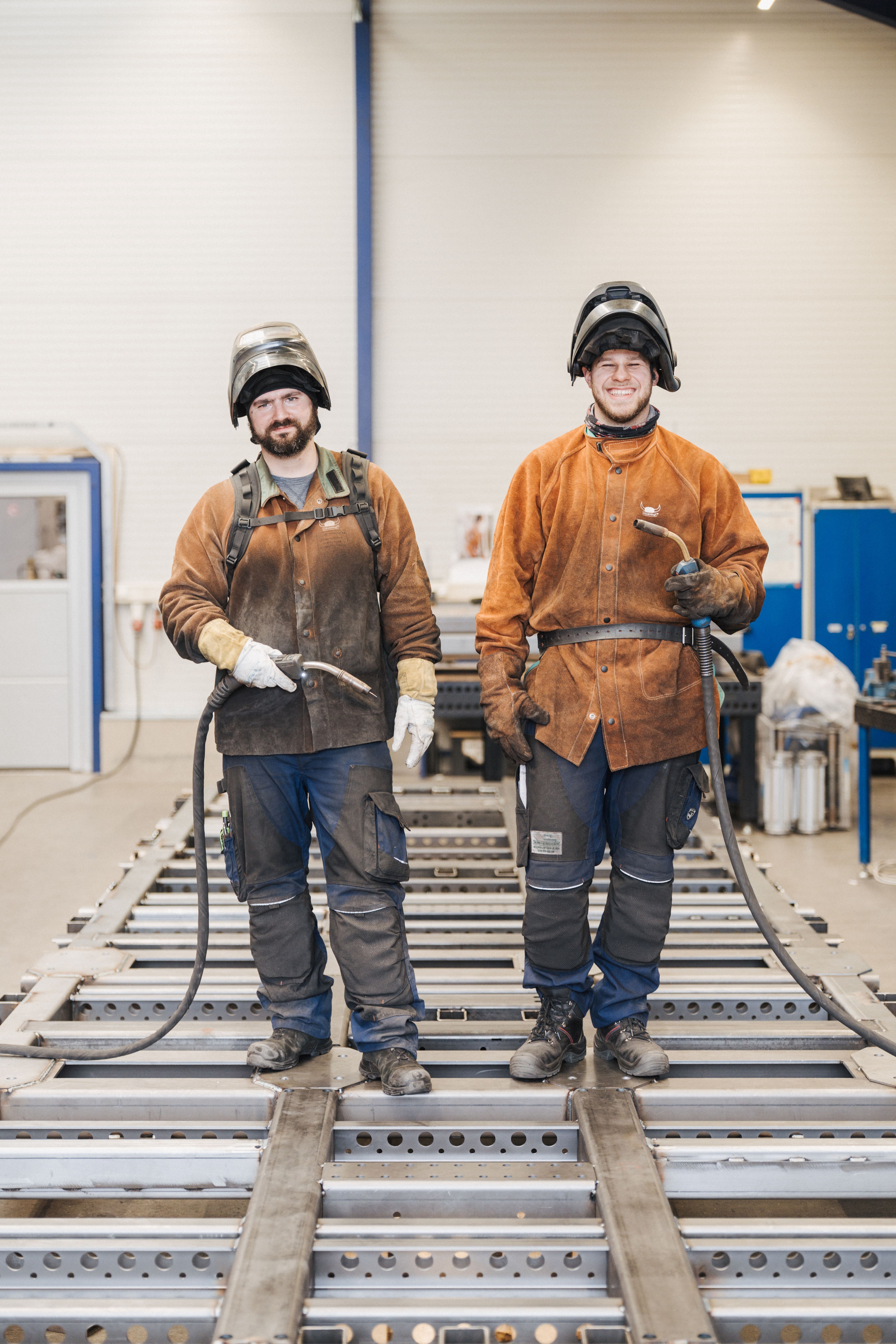
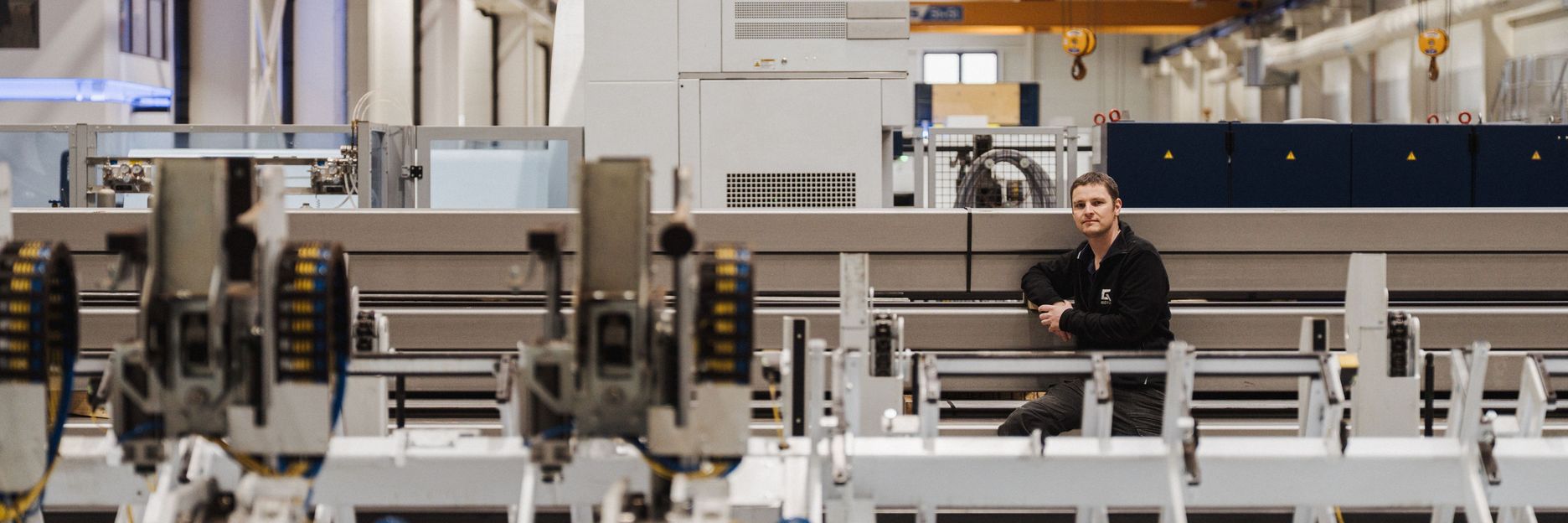
Busy times in the high-tech store: Some things are still completed by hand by production employees, well protected in their welder's gear.
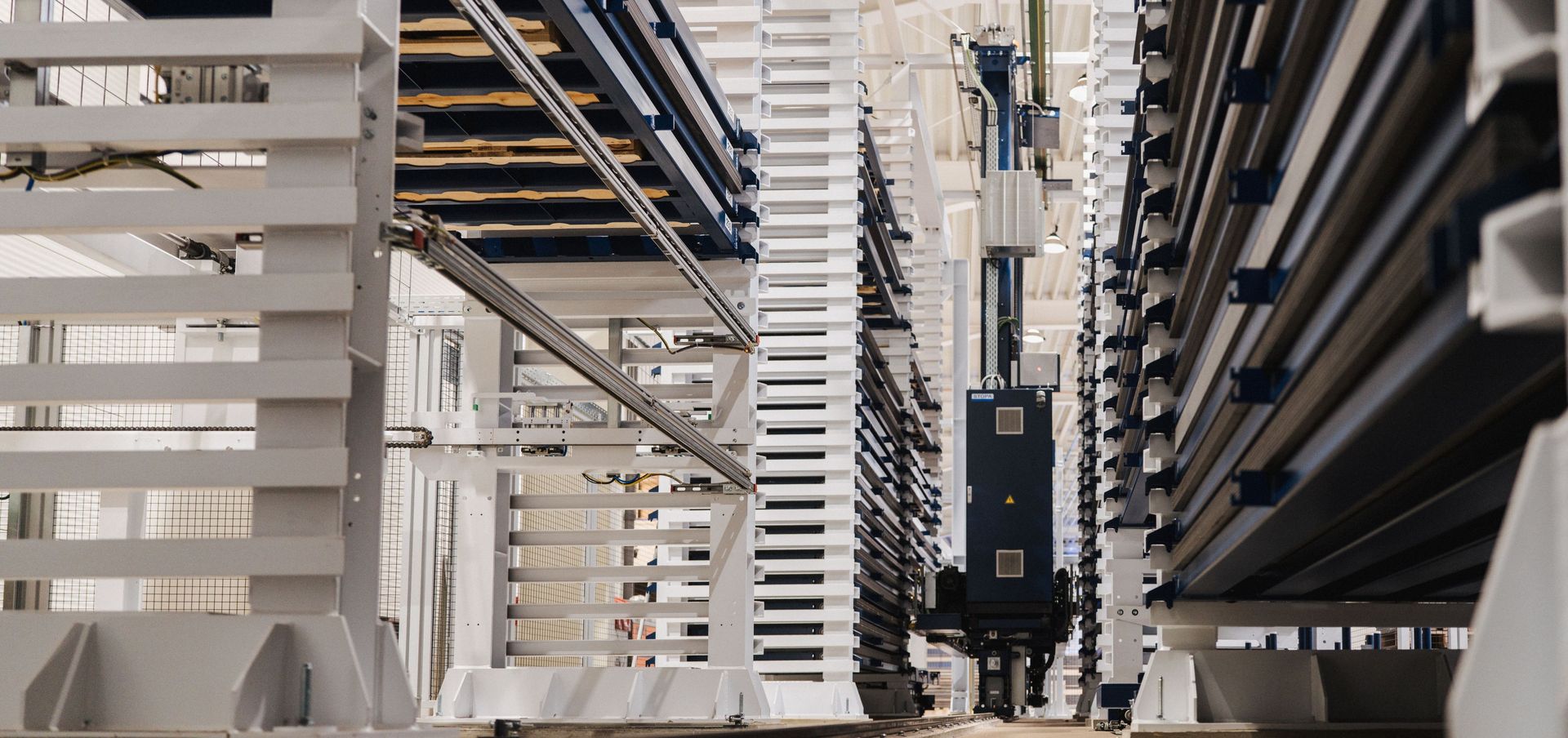
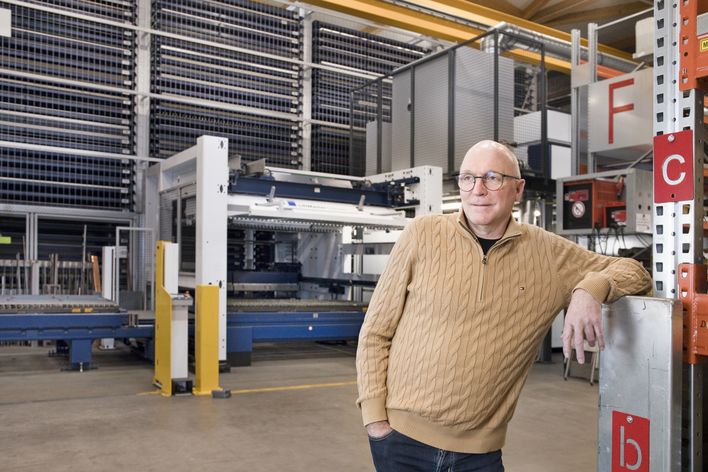
The large-scale storage system: STOPA is fully automated and sends the sheet metal material on its production journey and retrieves the finished parts just as efficiently.
Entrepreneur in a hurry
May 2005. Peter Götzl is just 18 years old, he has just received his master craftsman's certificate, and immediately founds his own company – a locksmith store. The training before that? Brief! His apprenticeship? Only two months, then straight to a specialist college. Goetzl really rushes into being an entrepreneur. While others are still considering what they want to study, he is standing in a 20 square meter space in a friend's milling shop making his first railings and fences. State-subsidized – he receives the "Ich-AG" business start-up subsidy. He has little capital, but a lot of initiative. Yet for a long time he was more of a shy boy than a go-getter. In his father's hotel and in his grandfather's workshop , who worked as a mechanical engineer, he learned first-hand what it means to be an entrepreneur: Doing everything yourself, around the clock. But now he suddenly has to be able to do more than produce goods, he has to sell and negotiate. But above all, be convincing. During interactions with customers and banks, he soon encounters the other side of his early start – who is going to trust such a young managing director? "That was the biggest challenge for at least ten years," says Peter Götzl. His insight: "Experience can only be replaced by hard work. And business only works with quality and adherence to deadlines." This is how the newcomer established his reputation. Order after order through fast, binding responses, and delivery times
Achieving new goals with laser technology
After building his first production hall in 2011 and hiring more employees, a problem develops alongside his success: the more railings and fences he manufactures, the more often he also needs design parts, such as railing fillings or top plates. These require a lot of time and effort to produce manually, so he purchases them as laser-cut parts. However, their long delivery times do not really fit in with Götzl's concept.
Instead of a solution to the delivery problem, Peter Götzl has a new vision: laser cutting technologies. First he wants to use a laser flatbed machine to produce the purchased design parts himself to save time. On request, his TRUMPF advisor shows him an even better solution for his core business: a large TruLaser Tube 7000 laser tube-cutting machine. Götzl is immediately impressed and recognizes this during the live demonstration at the Ditzingen Customer Center: It would enable him to cut railings, stairs, and balconies much faster and better than using a manual band saw. And give him a head start to win over new customers! However, to set up the TruLaser Tube 7000 and utilize it profitably, a new hall and more personnel to work shifts are required.
The construction of hall number two in the spring of 2014 marks the start of the company's development to date. The highly productive laser tube cutting technology almost doubles the production speed and also increases precision. The company transforms from a traditional locksmith store to a modern contract manufacturing plant. And just like when the company was launched, a head start also has a flip side, as not all of the customers were familiar with laser tube cutting. "Everyone knew about milling or turning, but not about tube laser processes. That is why I often send sample parts, as they are very convincing," explains Peter Götzl.
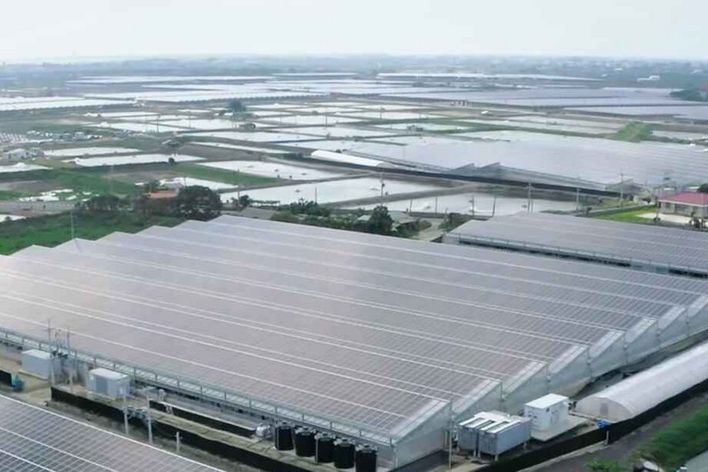
The courage to expand his business model with new technology has paid off. Götzl now supports other laser tube cutting service providers with large orders and manufactures a wide range of parts, including large series, for example for vehicle swap bodies, high bay storage racks, seating furniture, and solar energy systems. When the first TruLaser Tube 7000 was running at 3-shift operation, he purchased a second one in 2017. And was soon won over not only by the machines, but also by the service provided by TRUMPF.
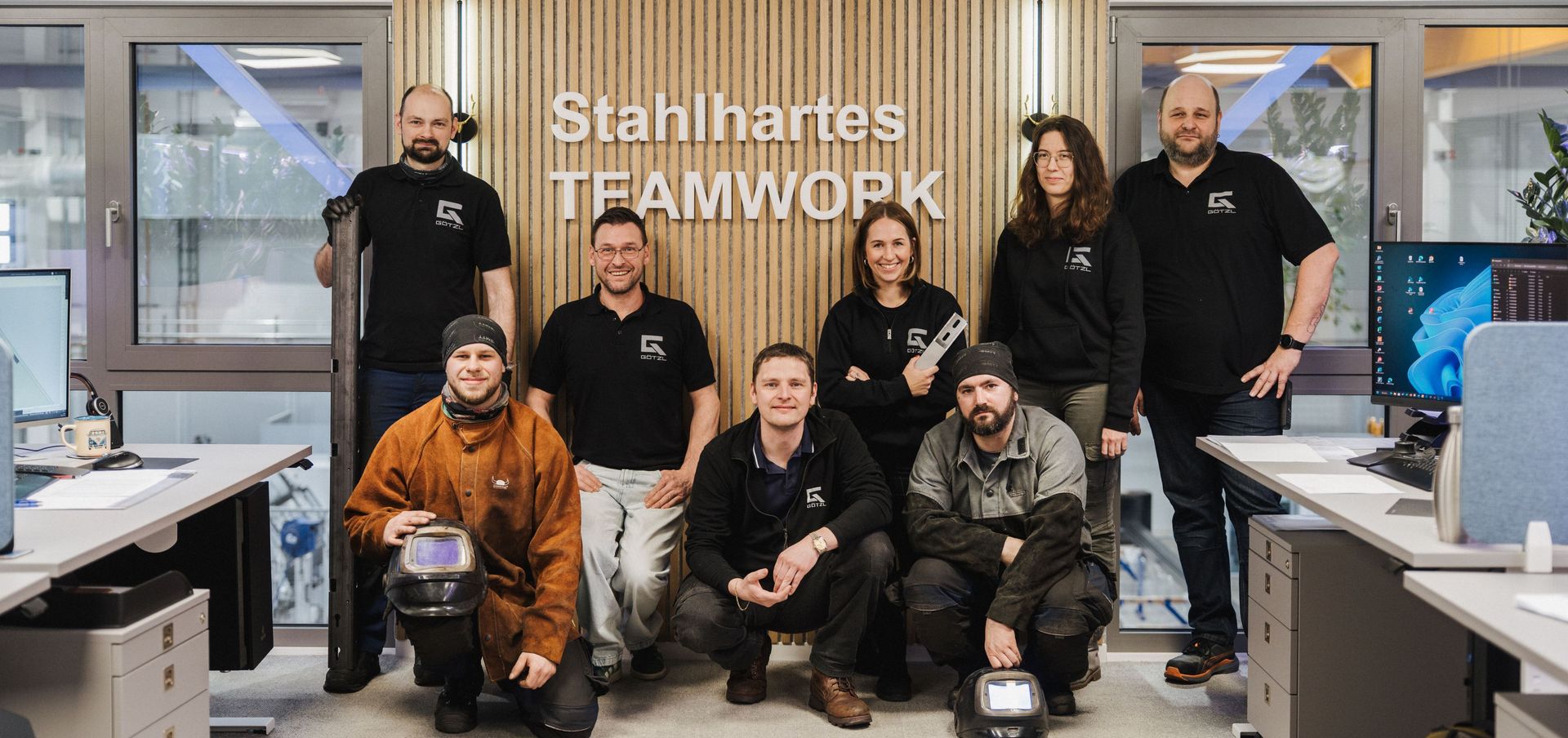
A sense of unity: Success and quality are ultimately down to one thing – the team.
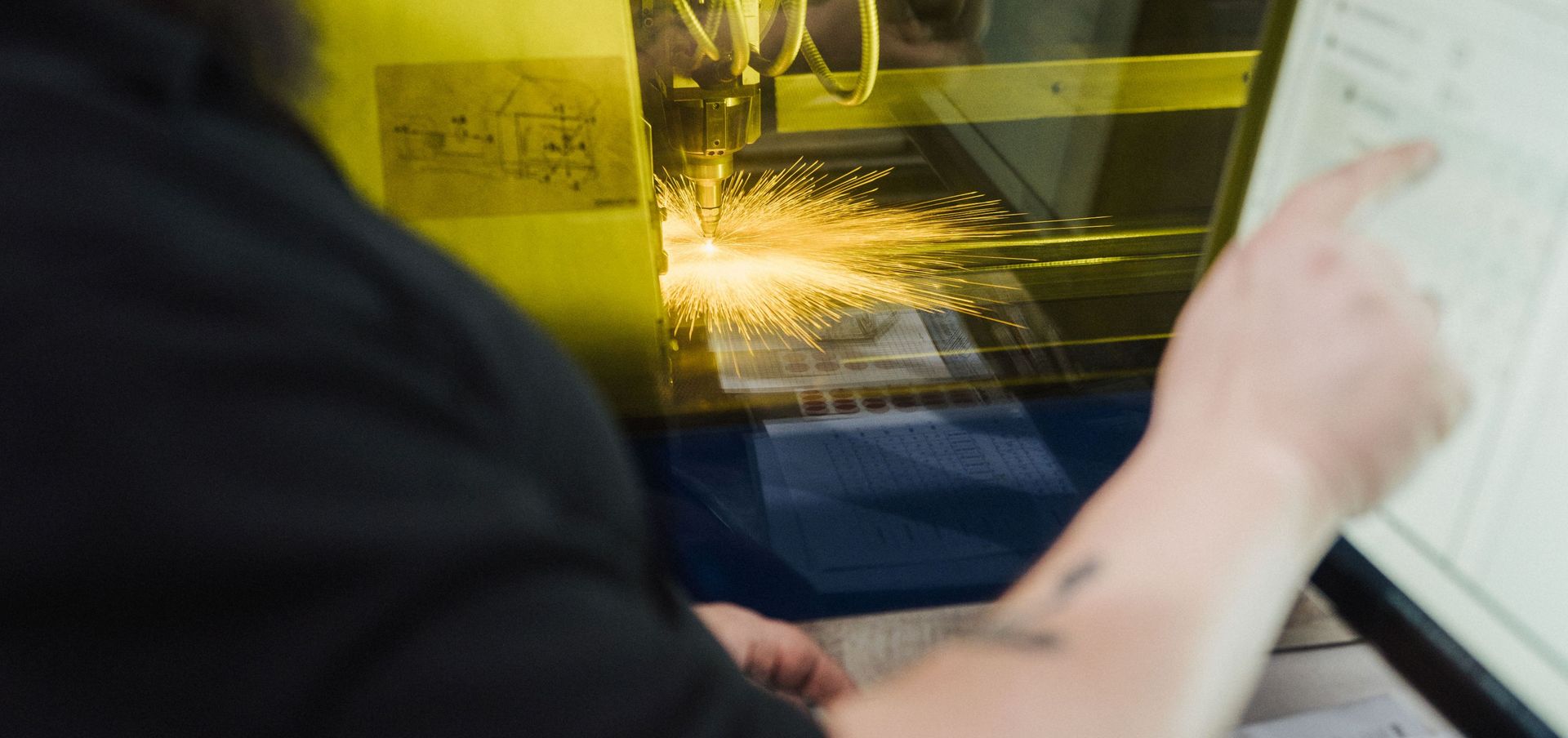
The metal in the machine is glowing, while the monitor remains cool and competent.
Peter Götzl (left) and his operations manager, Robert Walberer, keep an eye on all of the processes.
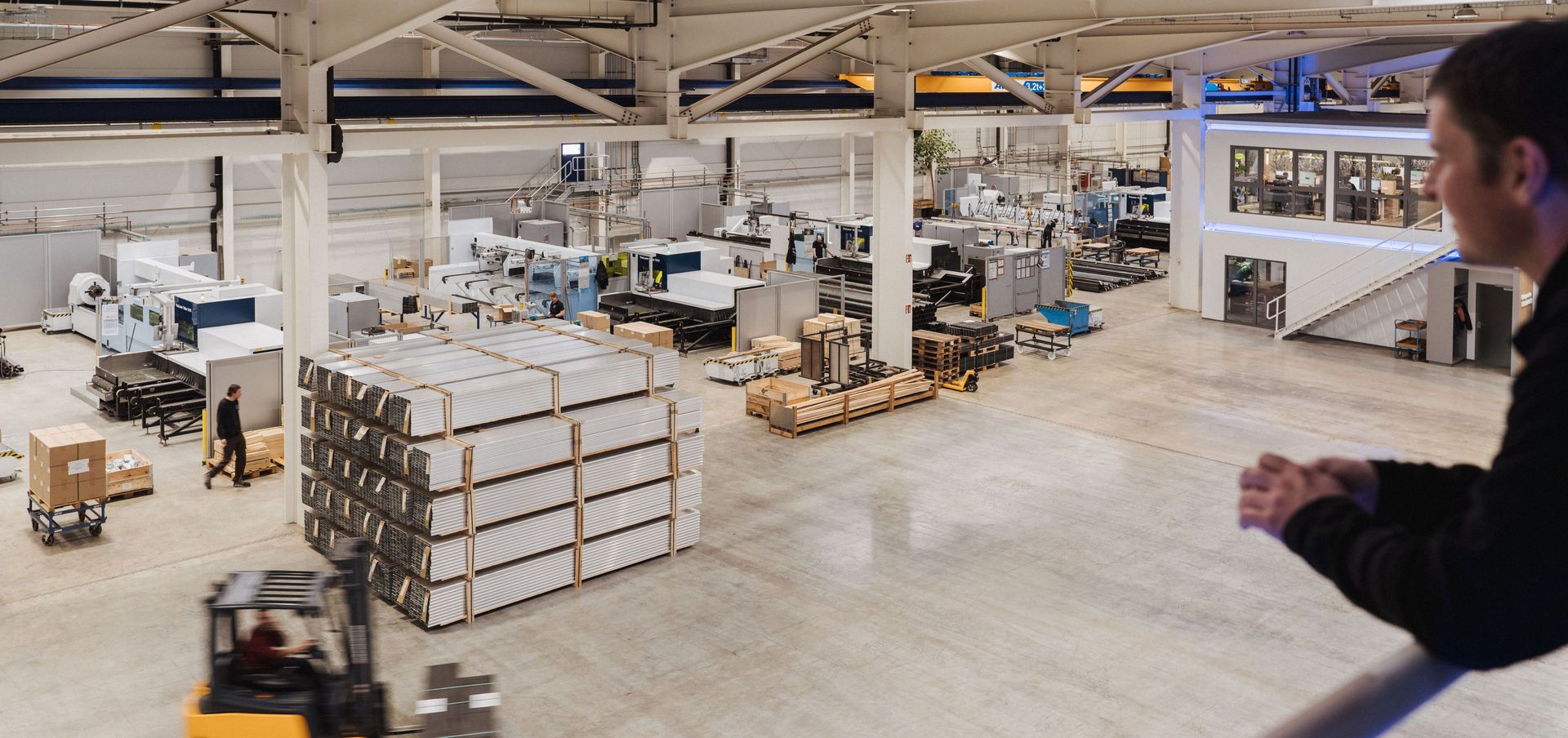
Chicago sends its regards: Based on the example of the TRUMPF Smart Factory, Peter Götzl has built a fully automated sheet metal processing facility in Erbendorf.
Chicago in Erbendorf
One summer night at 11 p.m., a laser tube-cutting machine suddenly comes to a standstill. It has a damaged laser head. Half an hour later, Peter Götzl has found the material numbers of the required spare parts from the TRUMPF online database and orders them over the telephone from TRUMPF via express transportation. They are delivered at 5 a.m. and at 6 a.m. the laser is running again, and reliably cutting tubes. "This is not the only reason why we are convinced by the concepts of the machines, software and, above all, the people at TRUMPF, who are always there to assist us," emphasizes Peter Götzl.
Following this statement, let's go back to "Chicago in Erbendorf" – the vision of 2017. Together with TRUMPF, Götzl plans a future-oriented sheet metal production environment. To this end, he buys more land, builds a third hall and expands his machinery to seven laser tube cutting machines, including a TruLaser Tube 7000 with six kilowatts of laser power and a loading and unloading length of 12.5 meters, which has only been installed three times in this country. "This makes us Germany's largest laser tube cutting store without our own product," says Peter Götzl proudly. Sheet metal processing is fully automated and versatile – with TruBend bending machines, TruDisk disk laser, flatbed laser cutting system (24 kW), and a punch laser machine, all connected to the STOPA large-scale storage system, which supplies the machines with sheet metal and stores finished parts. The Oseon software for material flow and production control also ensures optimum planning and the necessary level of transparency.
Since 2019, Götzl has invested around 25 million euros in the project, of which 12 million euros has been invested in TRUMPF technologies. Oversized? Not according to Peter Götzl: "Production is designed to meet the standards of the next ten years. With more laser power I can cut faster, including thicker material, which opens up new markets. In addition, customers are increasingly ordering assemblies instead of individual tube parts. We are equipped for everything." But he is not running out of ideas yet: "We have only realized the basic version of the Chicago model. There is still a lot to achieve."