Country/region and language selection

Precision all along the line

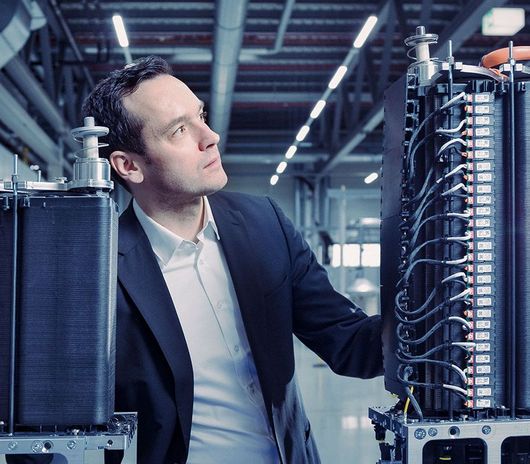
The mobility revolution is progressing because the world needs emission-free drives for vehicles of all kinds. But not every route leads via the power socket. The fuel cell scores points with its long range and short refueling times, especially on long journeys and in heavy goods traffic. EKPO Fuel Cell Technologies from Dettingen an der Erms manufactures the heart of this technology: So-called fuel cell stacks, which consist of up to 400 wafer-thin welded bipolar plates. These plates are essential components as they connect the individual cells electrically, distribute the reaction gases, cool them and discharge water as the end product. EKPO masters the challenges of fuel cell production with a wealth of experience from classic automotive supply and state-of-the-art laser technology from TRUMPF. 

EKPO Fuel Cell Technologies GmbH

www.ekpo-fuelcell.com

EKPO develops and produces fuel cell stacks in large series. The company is backed by a strong duo: The joint venture was founded in 2020 by automotive suppliers ElringKlinger and OPmobility. As a component and system supplier, EKPO manufactures solutions for all types of vehicles. Whether on the road, rail, water or off-road – EKPO fuel cells power every engine emission-free. 

Industry
Mechanical engineering
Number of employees
Approx. 220
Site
Dettingen an der Erms (Germany)
TRUMPF products
  • TruFiber

  • TruDisk

  • TruLaser Cell

  • TruMark

  • TruMark Station

Applications
  • Laser welding

  • Laser cutting

  • Laser marking

Challenges

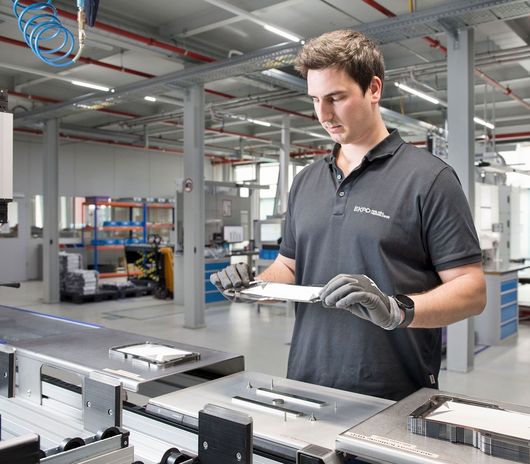
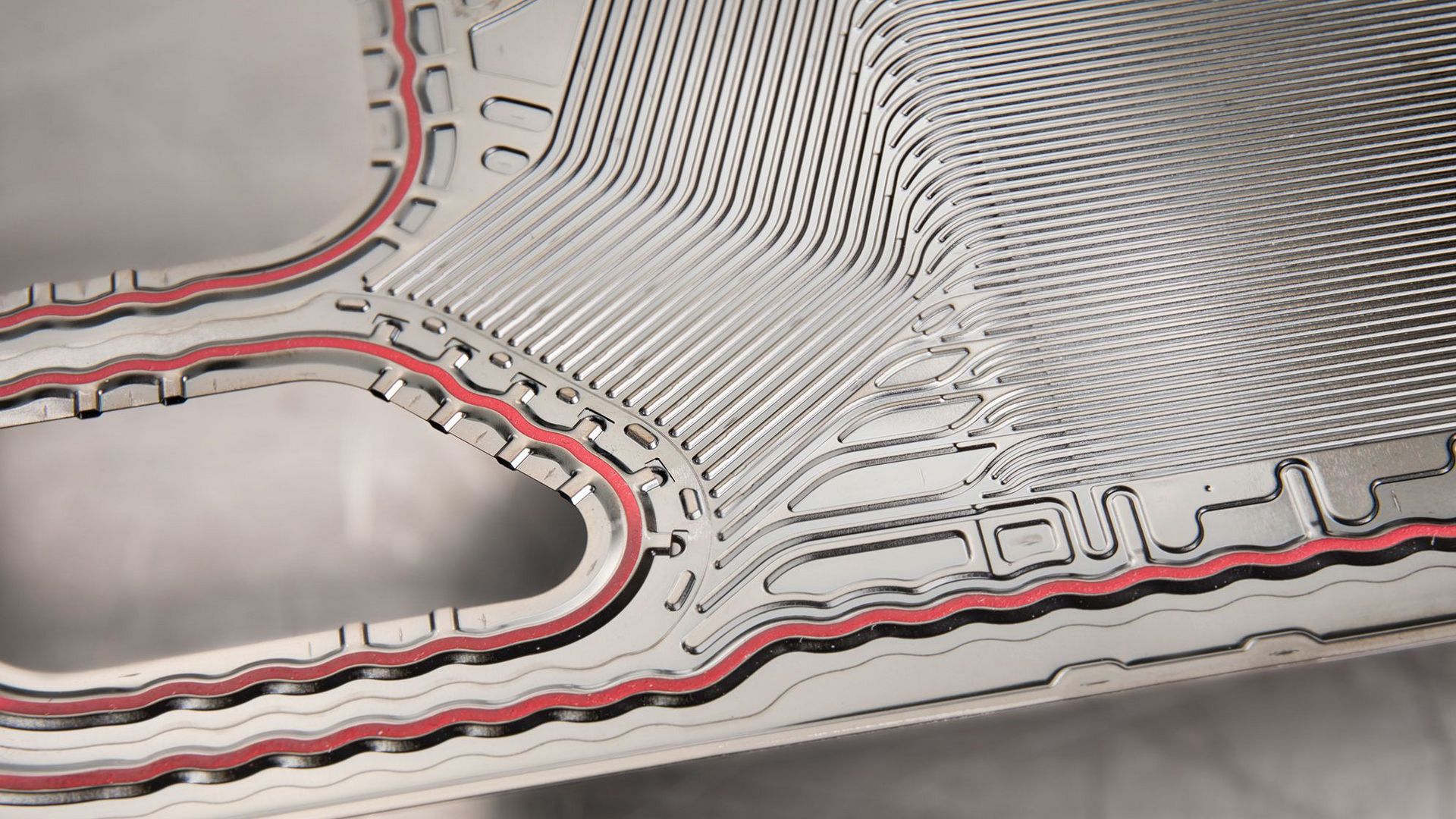
Bipolar plates are the heart of every fuel cell: They connect, distribute, conduct and cool. Bipolar plates consist of two very thin metal plates that are welded together. On it are micro-fine channels – the so-called flow field – through which hydrogen and oxygen later flow. A coolant circulates between the two plates. The chemical reaction in the fuel cell can only function safely and reliably if the connection is absolutely gas-tight. "If just one weld seam is leaking, the entire stack is unusable," says Arno Bayer, Head of Industrial Engineering Joining at EKPO. With up to 400 panels per stack, every single seam counts – also because a defect cannot be repaired afterwards. 

The bipolar plate may be a mass-produced product, but it demands the highest precision. And this is exactly what the TruFiber delivers.

Arno Bayer
Head of Industrial Engineering Joining at EKPO

Solutions

EKPO was looking for a laser welding solution that was precise, fast and reliable. "It was clear to us that we needed a laser that not only works extremely precisely, but can also do so reliably under industrial conditions – and the TruFiber can do that," says Bayer. EKPO was particularly impressed by the combination of outstanding beam quality and high process reliability. "There is a lot of know-how in bipolar plates. At the same time, they are also pure mass products, because we need up to 400 of them per fuel cell. And we have weld seams of up to three meters per panel." EKPO produces around 10,000 stacks a year. The fiber laser at the Dettingen site therefore has to draw around 12,000 kilometers of weld seams every year - a boat trip from Hamburg to New York and back again. 


Implementation

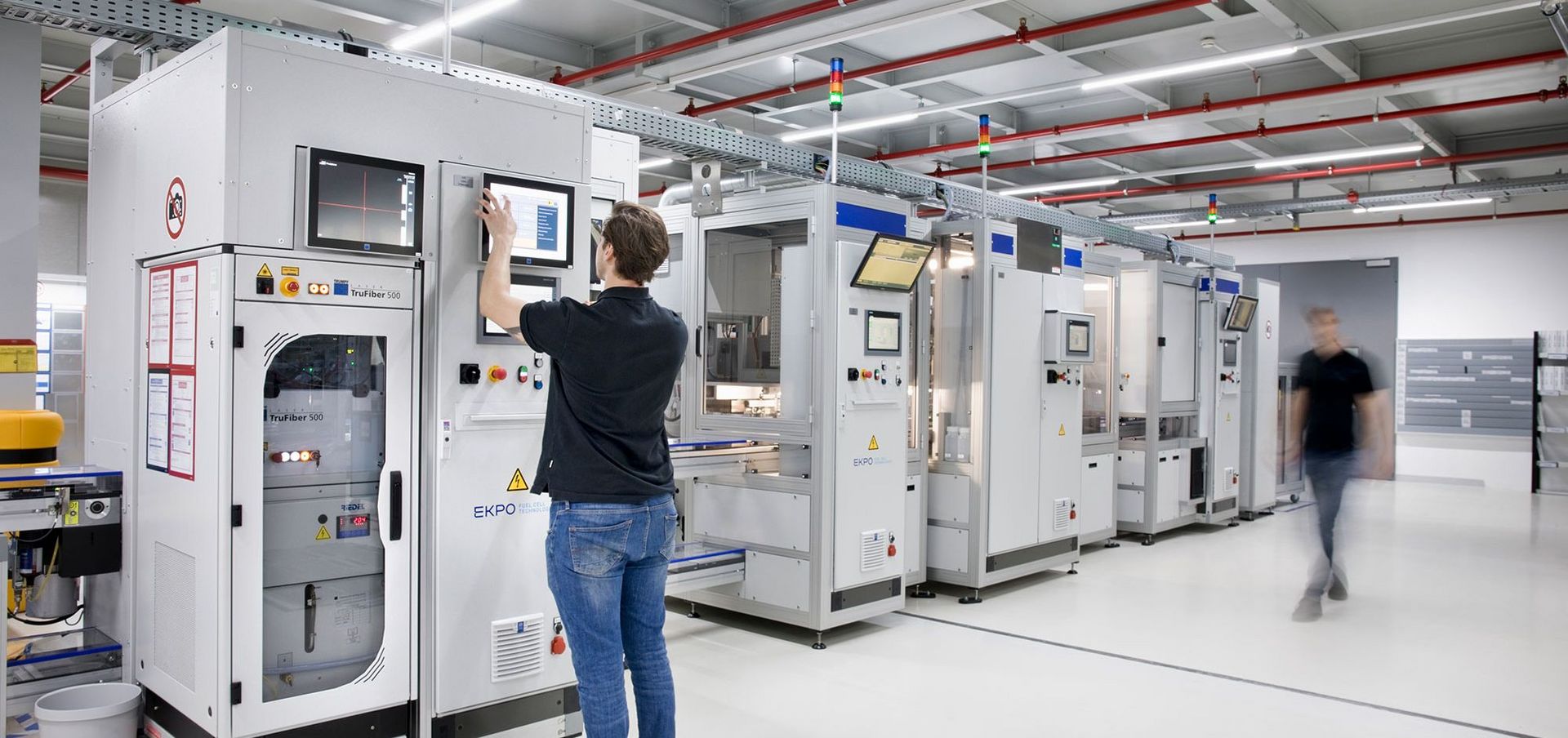
In EKPO's automated production line, the laser beam joins the two sides of the bipolar plate to form a gas-tight unit – with weld seams no wider than 0.2 millimeters. In doing so, EKPO moves close to the so-called humping speed limit, at which, for physical reasons, unwanted, bead-like protruding parts appear in the seam. No problem for the fiber laser. It delivers consistently high-quality results, so that the reject rate is well below one percent. The welding process is followed by a demanding conductivity and leak test at up to two bar pressure. If the weld seams hold, the bipolar plate is ready for the stack. 

Forecast

 "We can see that the demand for fuel cells with high performance combined with higher efficiency and a longer service life is increasing," says Bayer. "Marine and rail applications, heavy-duty trucks on the road and construction site vehicles are all on the rise." EKPO is responding to this trend with its new NM20 stack. This achieves electrical outputs of up to 400 kilowatts and makes fuel cell technology competitive in other areas. 

Find out more about the product

TruFiber P, Produktfamilie
TruFiber P fiber laser

The TruFiber P series was developed for a wide range of production requirements and therefore offers a variety of configuration options: As a singlemode laser with up to 2 kW for high-precision applications or as a multimode variant with up to 6 kW for applications with a higher welding depth or welding speed - all in a compact housing.

To the product

Updated: 2025-09-08