Laser replaces screws: New welding solution for power electronics in electric cars // Automated process speeds up the welding of power electronics // Improved quality thanks to AI monitoring
New welding solution for the more efficient production of power electronics for electric cars
Ditzingen, 21 April 2026 – A new laser welding solution from TRUMPF makes the production of power electronics for electric cars more efficient and reliable. The high-tech company has developed a highly automated process that enables users to weld copper electrical conductors directly onto copper busbars. Manufacturers can now replace the screw connections traditionally used with this new technology. “The key lies in the interplay between laser, sensor technology, AI and data. Only when all components work in perfect harmony can highly automated and stable processes for series production be realised,” says Woo-Sik Chung, who is responsible for the new laser welding solution at TRUMPF. The high-tech company is demonstrating the new process alongside its partner Yazaki at TRUMPF’s in-house exhibition, INTECH.
Voltage distributors in electric cars operate more efficiently thanks to laser technology
The new laser solution creates a firmly fused joint with low electrical resistance, thereby making the power electronics more efficient. The process is primarily intended for use in the manufacture of voltage distributors in electric and plug-in hybrid vehicles. These components distribute the high voltage from the vehicle battery to the electric motor, lighting and other electrical consumers, and are fitted in every electric car. Until now, manufacturers have had to produce conventional mechanical connections for voltage distributors in several process steps. This is time-consuming and can lead to errors. Furthermore, mechanical screw connections are susceptible to vibrations and exhibit higher electrical resistance. This leads to energy losses and additional heat generation.
Artificial intelligence ensures reliable welding processes
At the heart of the solution is the interaction between laser, sensor technology and AI. First, an AI-supported image processing system identifies the component and positions the laser beam with pixel-level precision. A 9 kW fibre laser then welds the copper strands. During the process, an optical coherence tomography (OCT) system monitors the welding depth in real time to prevent the component from being welded right through.
After welding, another camera-based system checks the quality of the weld seam. AI is also used here. Just a few training images are sufficient to enable a reliable assessment of seam quality. All process steps, from component recognition through welding to quality control, take place in a single laser station. Component recognition and laser beam positioning occur within milliseconds. “The entire process takes well under a second and is therefore designed for high-productivity series production. “Our goal is seamless process control in real time, without slowing down the production flow,” says Chung. The 9 kW fibre laser is suitable for welding copper to a depth of several millimetres reliably and at high speed. For larger cross-sections, users can employ more powerful TRUMPF lasers.
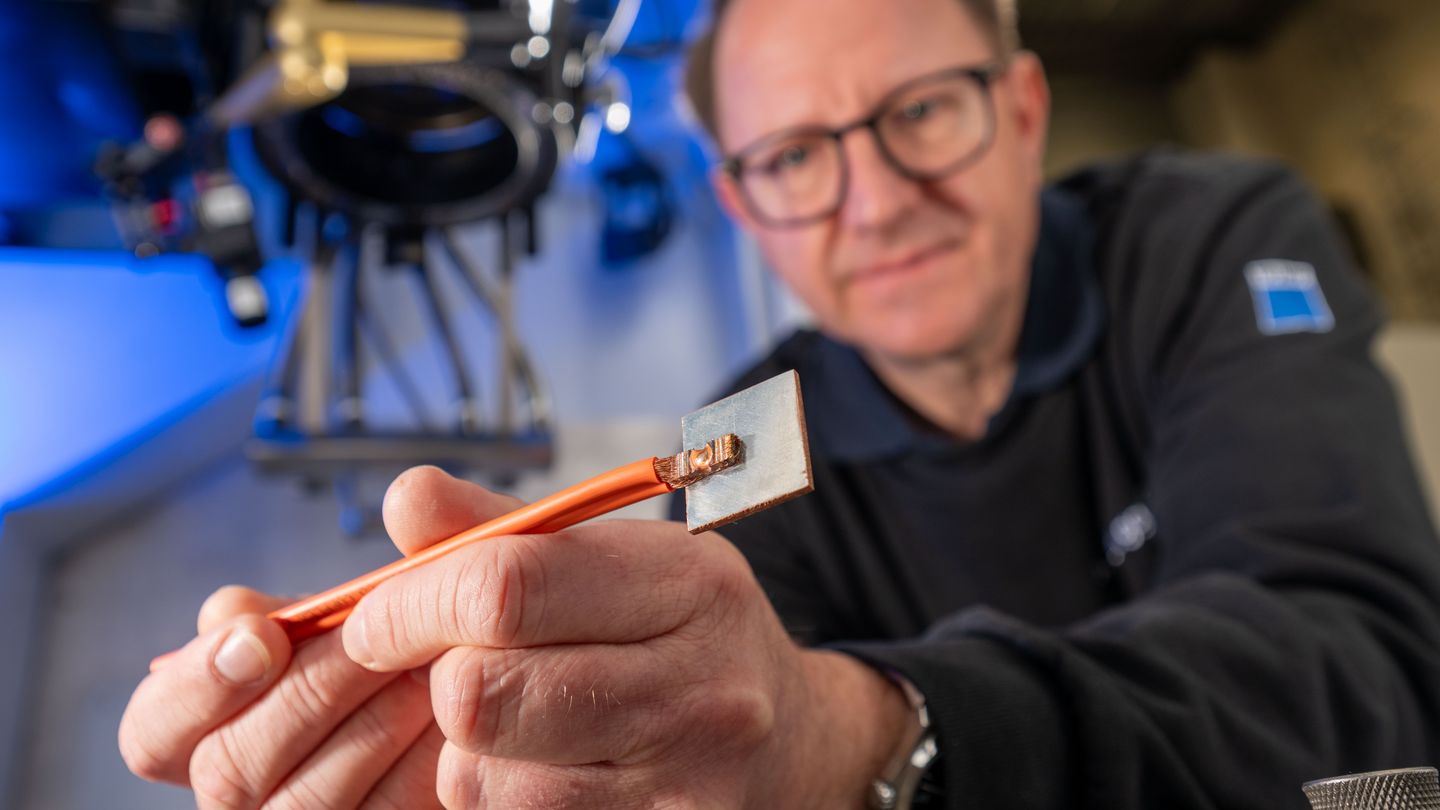
More Efficient Power Distributors
TRUMPF’s new laser solution enables more efficient power distributors in electric vehicles. (Image: TRUMPF)
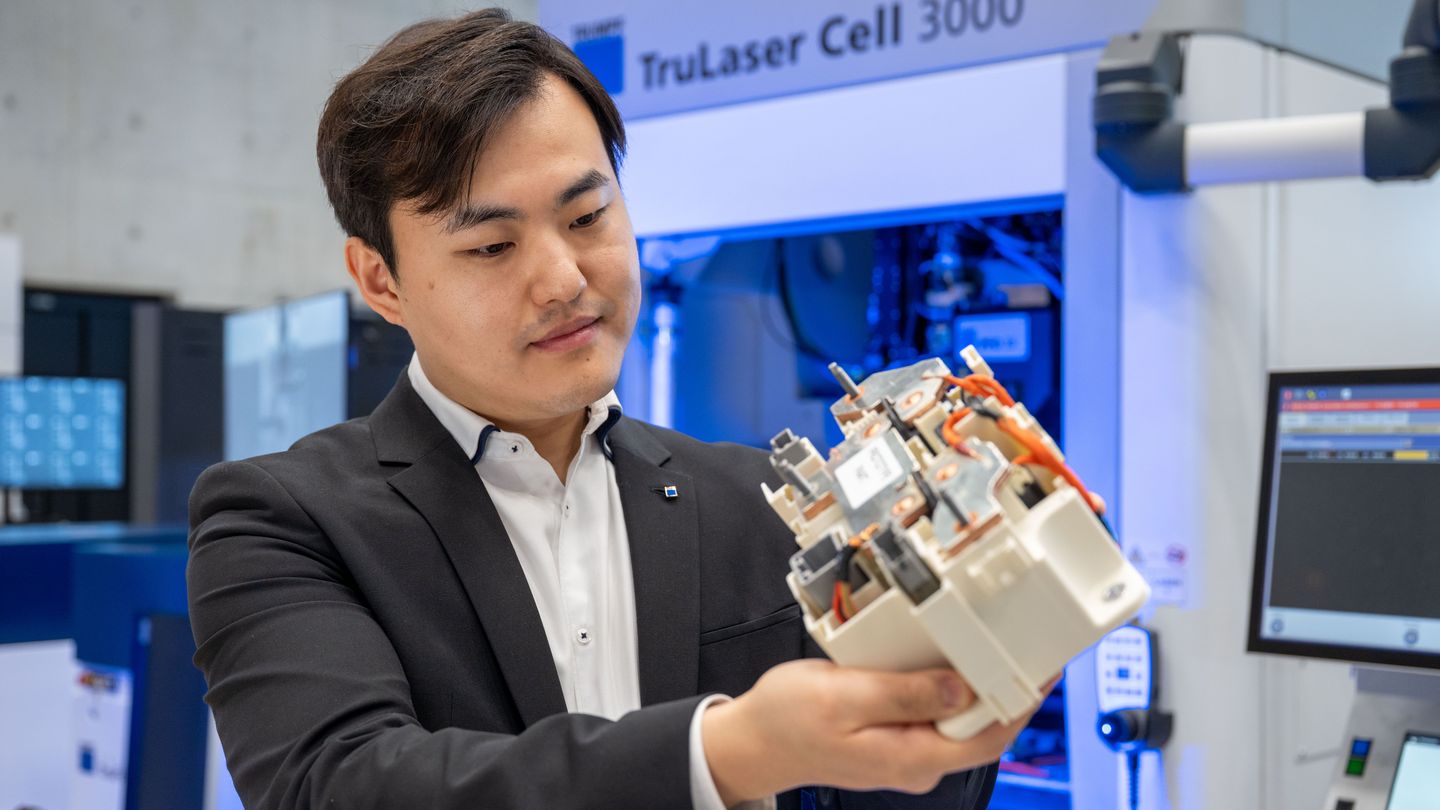
Exemplary laser-welded voltage distributors for PHEVs and BEVs
(Image: TRUMPF)
Bij deze persinformatie zijn passende digitale afbeeldingen beschikbaar in afdrukformaat. Deze mogen alleen voor redactionele doeleinden worden gebruikt. Het gebruik is gratis bij bronopgave "Foto: TRUMPF". Grafische wijzigingen - behalve het uitsnijden van het hoofdonderwerp - zijn niet toegestaan. Meer foto's zijn te vinden in de TRUMPF Media Pool.
TRUMPF’s new laser solution enables more efficient power distributors in electric vehicles. (Image: TRUMPF)
(Image: TRUMPF)

Contactpersoon