This product range and information may vary depending on the country. Subject to changes to technology, equipment, price and range of accessories. Please get in touch with your local contact person to find out whether the product is available in your country.

Temperature control
Sensors for stable heat input
Temperature control
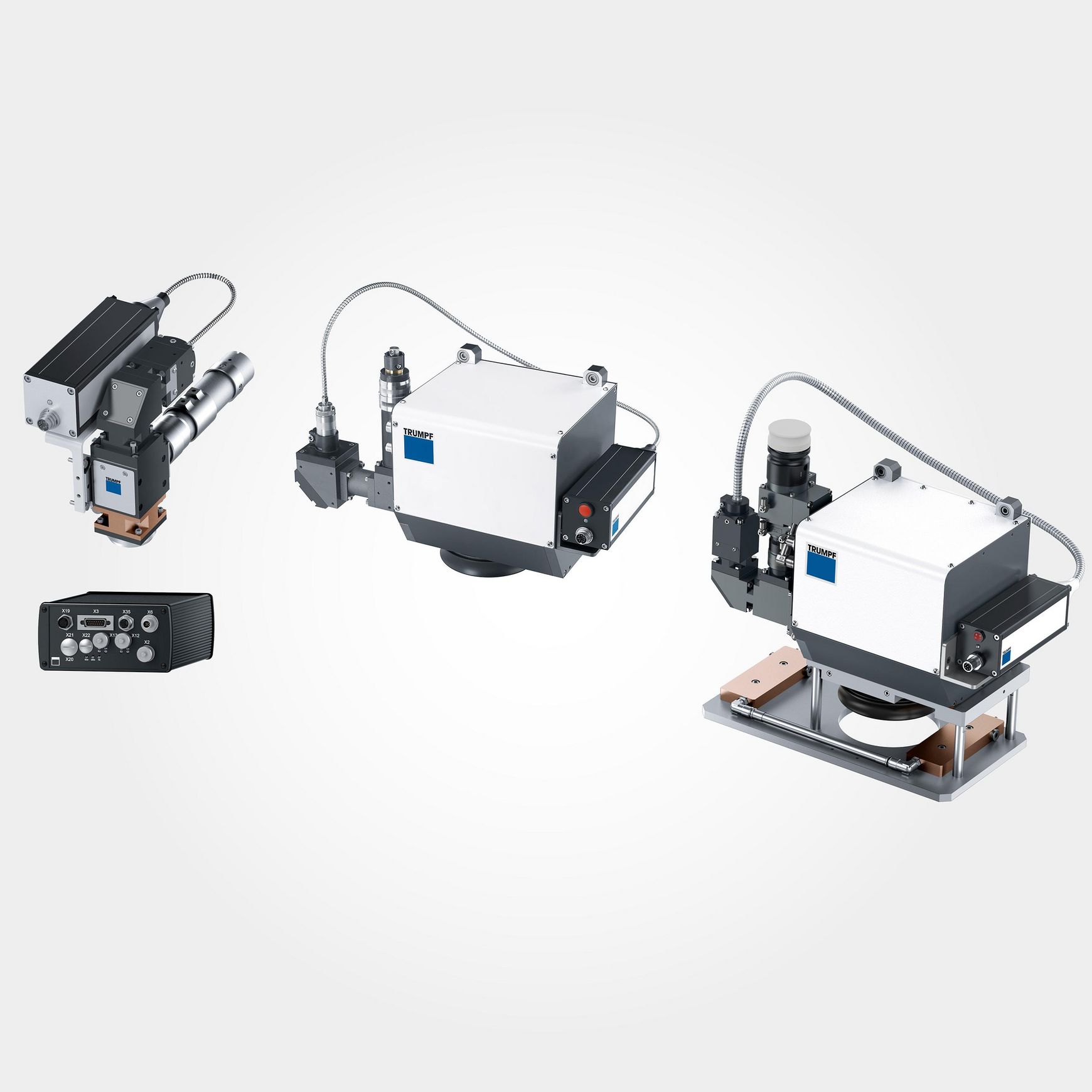
Pyrometer-based temperature measurement and control
Quality
Temperature control
Temperature measurement and control for laser welding and surface processing
Measures the surface temperature in real time and transmits the values to the control, which automatically adjusts the heat input
Ensures uniform melt formation along the weld contour during plastic welding
Enables consistent hardening and reproducible layer depths during surface hardening and deposition welding
Temperature control in use
Soldering PCBs
Soldering PCBs
PCBs have tight tolerances during the soldering process. Uncontrolled heat leads to solder evaporation and oxidation – rapid or slow cooling causes warping, cracks, and crystal structure defects. Without temperature control, rejects are inevitable.
The temperature control sensor system regulates heat input precisely and locally. You get clean solder joints without any additional cleaning – and rejects rates will drop significantly. The system flexibly adjusts parameters to accommodate different materials.
Laser surface hardening of gearbox components
Laser surface hardening of gearbox components
Laser surface hardening requires extremely precise temperatures. Temperatures that are too low result in incomplete hardening – temperatures that are too high can cause warping, cracks, or unwanted microstructural changes. To avoid rejects or rework, the temperature is often adjusted manually, which increases production time.
The sensor system continuously measures the surface temperature during the laser process and automatically adjusts the laser power accordingly. This keeps the temperature within the optimal range. This allows you to create stable processes with reproducible results.
Laser surface hardening of bending tools
Laser surface hardening of bending tools
During laser surface hardening of tools, uncontrolled temperature spikes can occur, leading to deformation and tolerance deviations. This increases wear and reduces the durability of the tools. Manually monitoring the temperature during the production process is time-consuming and expensive.
The sensor system monitors the temperature at critical points in real time and adjusts the laser power accordingly. Predictive data analysis detects overheating in advance. This helps you prevent warping, reduce rework, and increase throughput.
Laser surface hardening of turbine blades
Laser surface hardening of turbine blades
During the hardening process of turbine blades, the energy of the laser beam is often distributed unevenly, depending on the geometry and surface structure. Overheating in one area and rapid cooling in another can lead to warping and cracks, which impair the efficiency of the turbine engine. Without effective monitoring, high-quality results are therefore difficult to reproduce.
The sensor system accurately measures the temperature in the curing zone and automatically adjusts the laser power accordingly. The optimal curing temperature remains constant – the surface is protected, throughput is increased, and quality is ensured to meet the most stringent requirements of the aerospace industry.
Plastic welding of control units
Plastic welding of control units
Plastic components such as housings, connectors, and sensors require precise welding temperatures. Temperatures that are too high can cause material deformation and damage – while temperatures that are too low can result in an incomplete bond. Contaminants or variations in the glass fibre content further exacerbate the problem.
The temperature control sensor system continuously measures the temperature in the fusion zone and automatically adjusts the laser power accordingly. Defects and material variations are reliably detected. This helps to achieve tight, high-quality welded joints – consistently and without rejects.
Temperature control
|
Compatible optics
|
PFO 20, BEO D50 |