The collaboration between TRUMPF and STOPA goes back almost four decades and developed from the shared desire to intelligently combine material flow and machine performance. Today, both companies develop integrated Smart Factory solutions for sheet metal processing. TRUMPF's majority shareholding in STOPA gives this partnership a new level of quality.
TRUMPF has significantly increased its stake in STOPA. What do customers believe is the most important advantage of this closer cooperation?
J.-A. Junker: The customer receives an integrated entire system. The machine, storage system, and software are optimally coordinated - this ensures stable processes and predictable throughput times. Customers notice the increased productivity.
Why was now the right time to take this step?
J.-A. Junker: Our customers' requirements have changed noticeably. Today, they no longer expect individual products, but end-to-end solutions – from the machine to the storage system, and through to the software. With a majority stake, we are creating the structural requirements to consistently develop this further.
What does this fundamentally change about the previous partnership?
J.-A. Junker: We can drive issues forward more quickly and make joint decisions. Development, product strategy, and service are now even closer. That makes us more powerful. Edgar Mörtl and I are already seeing many positive effects.
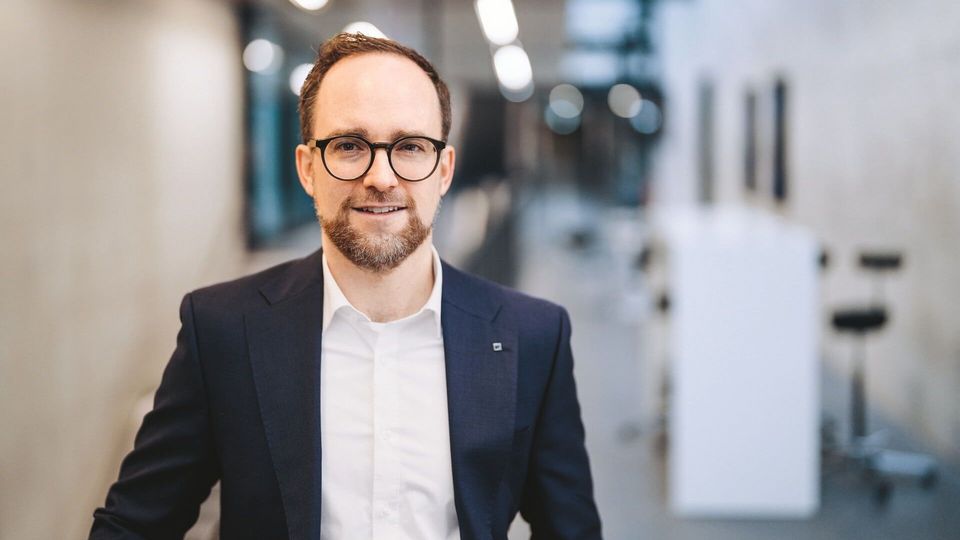
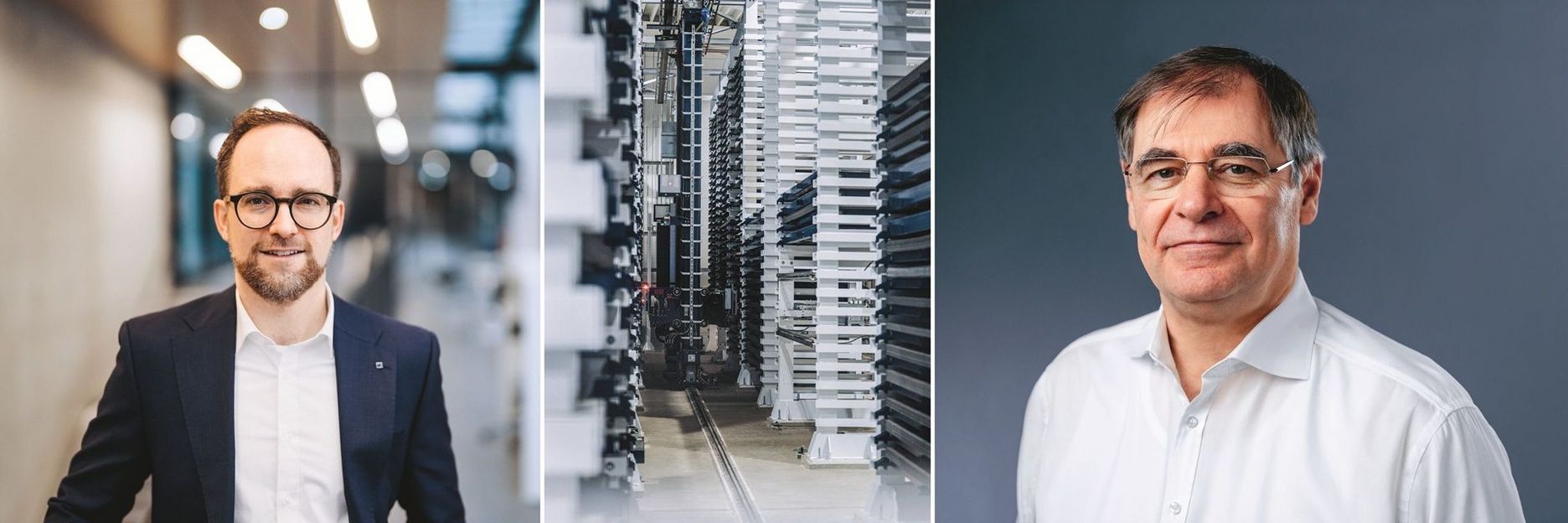
Jörg-André Junker is certain that integrated systems are the future of sheet metal processing. The close collaboration of TRUMPF and STOPA should make it easier for customers to automate their production and operate more efficiently in a sustainable way.
STOPA has been working closely with TRUMPF for decades. What does the majority shareholding mean to you?
E. Mörtl: We believe it is the next logical step. The collaboration has grown over many years, both professionally and culturally. Now we can integrate our warehouse expertise into TRUMPF's overall strategy even more directly – with a clear focus on customer benefits.
Where do customers still experience frictional losses – and how can these be reduced?
E. Mörtl: Often at the interfaces: different contact persons, manual coordination, media disruptions. This is precisely where we come in. The aim is to create a Smart Factory where material is automatically in the right place at the right time – controlled by software, not by colleagues shouting. Of course, this will continue. The entire customer experience, including service, will benefit from the deeper integration.
What role does the combination of STOPA storage systems and TRUMPF software, such as Oseon, play in this?
E. Mörtl: A very central one. The software handles planning, optimization, and control. It organizes returns to storage, prioritizes orders, and optimizes travel times often even autonomously overnight. This increases transparency and reduces operational interventions for customers.

Edgar Mörtl has decades of experience in automated storage technology. He describes the role that intelligent material flows play within stable processes, why the storage systems are becoming the backbone of modern production, and how customers benefit from scalable solutions that grow with their requirements and safeguard investments in the long term.
Non-productive times are seen as thwarting productivity. How do integrated solutions help to minimize these?
J.-A. Junker: Non-productive times are often caused by a lack of material or unplanned idle states. If the storage system, machine, and software work as a unit, these effects can be reduced significantly. The system thinks for itself – completes work in advance.
You describe the storage system as the backbone of the Smart Factory. Why?
E. Mörtl: Because the overall efficiency of a system is only as good as its individual components. The storage system ensures that materials are available and processes are stable. High availability is crucial as the potential of the machines is otherwise wasted.
Many customers are growing step by step or modernizing existing halls. How does the joint portfolio support these scenarios?
E. Mörtl: Our systems are scalable. Customers can start small and expand their storage system over the years. A storage system is often used for 25 years – machines are renewed several times during this time. Our solutions are designed for this. We also offer customers full flexibility when it comes to the material flow logistics that can be used. Flexible small warehouses and highly integrated large warehouses with a wide variety of connections and stations.
What distinguishes large storage solutions from small ones?
J.-A. Junker: We are talking about two material flow approaches here: decentralized small storage systems that supply one or two machines, and centralized large storage systems that are a logistical hub for many machines. Both concepts have different strengths and weaknesses, which we evaluate with our customers in terms of processes, space, and cost-efficiency. Working with STOPA, we can offer optimally coordinated solutions for both approaches and align the material flow precisely to each production process.
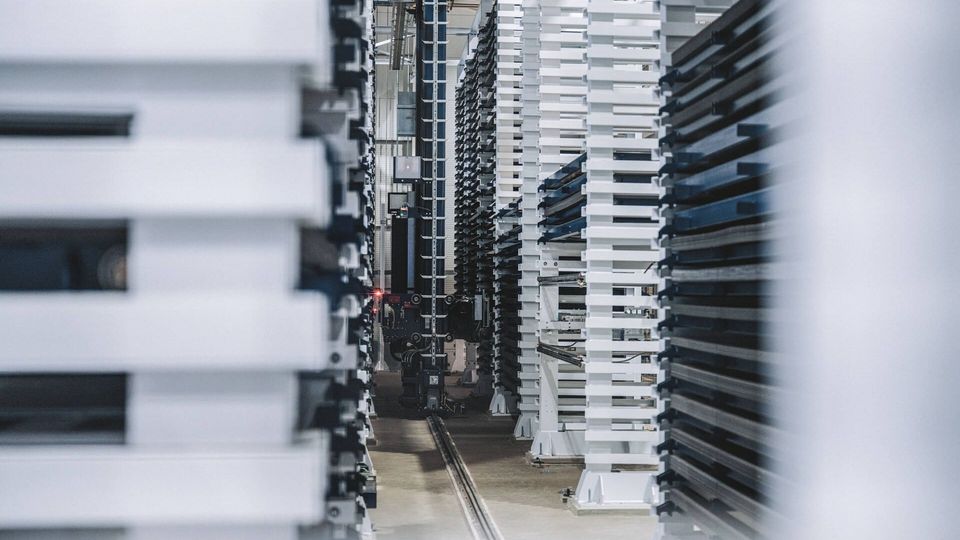
The backbone of production: Automated STOPA storage systems link the material flow, machines, and software to create an end-to-end process. They provide material exactly when it is needed, reduce distances, save energy, and increase the productivity of the entire production process.
In day-to-day production, service often makes the difference between production efficiency and idle states. What specific improvements do users gain as a result of closer integration?
E. Mörtl: The customer has a contact person for their wishes and concerns, regardless of whether it is about the machine or storage system. The services provided by STOPA and TRUMPF are being combined. This speeds up service processes considerably and reduces the complexity.
How do automated storage systems contribute to sustainability?
E. Mörtl: Through efficient material movement, high space utilization, and optimized processes. For example, by not transporting material unnecessarily through the hall, but having it available directly where it is needed. Less transportation and less energy used per part, which pays off both environmentally and economically.
What can TRUMPF customers expect in the coming years?
J.-A. Junker: We will work with STOPA to develop new products that can be adapted flexibly to different production sizes and requirements. Specific benefits for our customers include less non-productive times, higher machine utilization rates, transparent material availability, and reduced service costs – all with the aim of sustainably increasing productivity and competitiveness.