The demands placed on modern vehicles are increasing. Components need to be lighter, production and investment costs more efficient. At the same time, production processes are becoming increasingly complex, especially in car body construction. Spanish multinational automotive component company Gestamp has taken up this challenge. Thanks to TRUMPF technology, Gestamp has developed an innovative, industrial-grade laser welding process that addresses the very areas where conventional methods reach their limits: the fast and flexible joining of large, coated structural components. "We rely on large structural components instead of many individual components in order to simplify industrial processes. This reduces complexity in final assembly, which implies more cost-efficiency," says Miguel Ángel Ferrández, Material joining and R&D Tokyo & Bilbao director at Gestamp.
Why large structural components?
In automotive production, the fewer components a vehicle needs, the more efficiently it can be manufactured and assembled. Gestamp is pursuing this strategy with its Ges-Gigastamping® family – large-format structural components using hot forming from high-strength steels. These parts offer enormous advantages in terms of weight, stability, and crash safety, but place high demands on the joining process. “The challenge starts with the material,” explains Miguel Ángel Ferrández. “We process press-hardened steels with an aluminum-silicon coating (AlSi). This protects the component from corrosion but makes welding rather difficult. It was therefore necessary to replace traditional welding processes with an industrial laser welding process that offers greater speed and flexibility.”
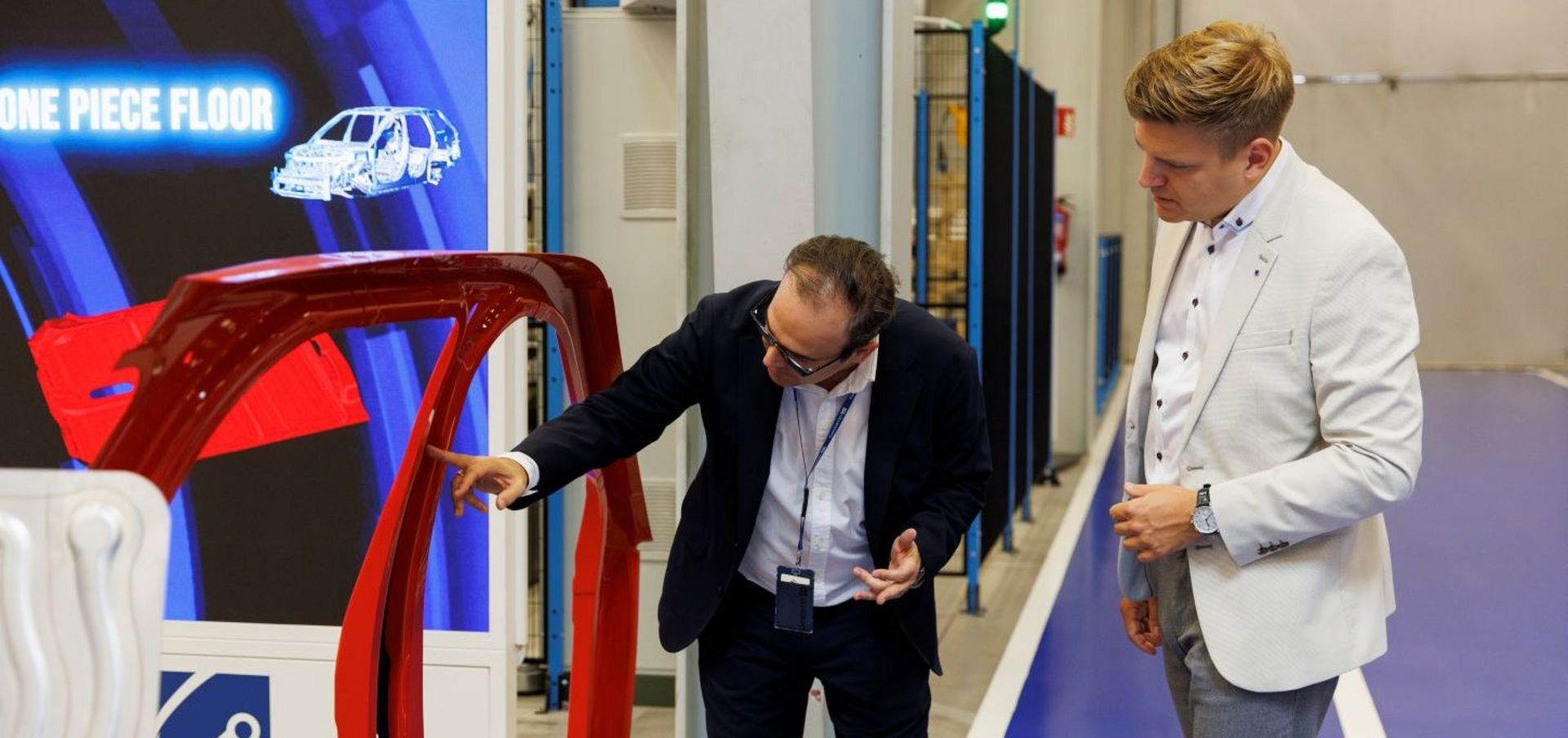
Gestamp processes press-hardened steels with aluminum-silicon coating (AlSi). This protects the component from corrosion, but makes welding challenging.
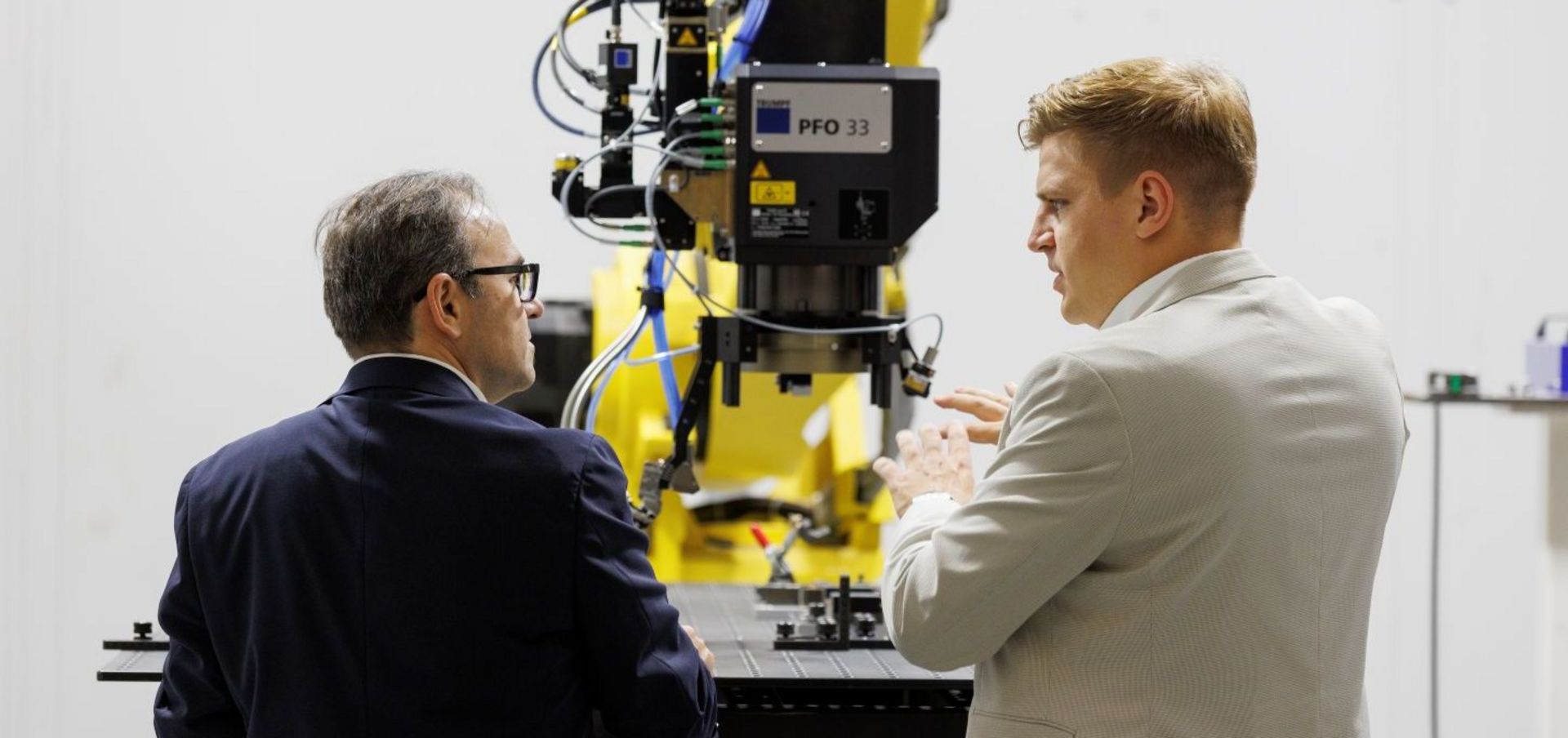
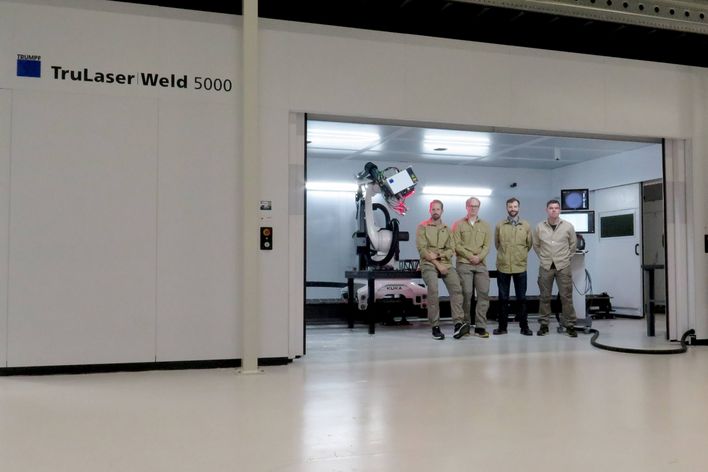
Gestamp has teamed up with TRUMPF to develop an industrial-grade laser welding process for fast and flexible welding of large-format, coated structural parts.
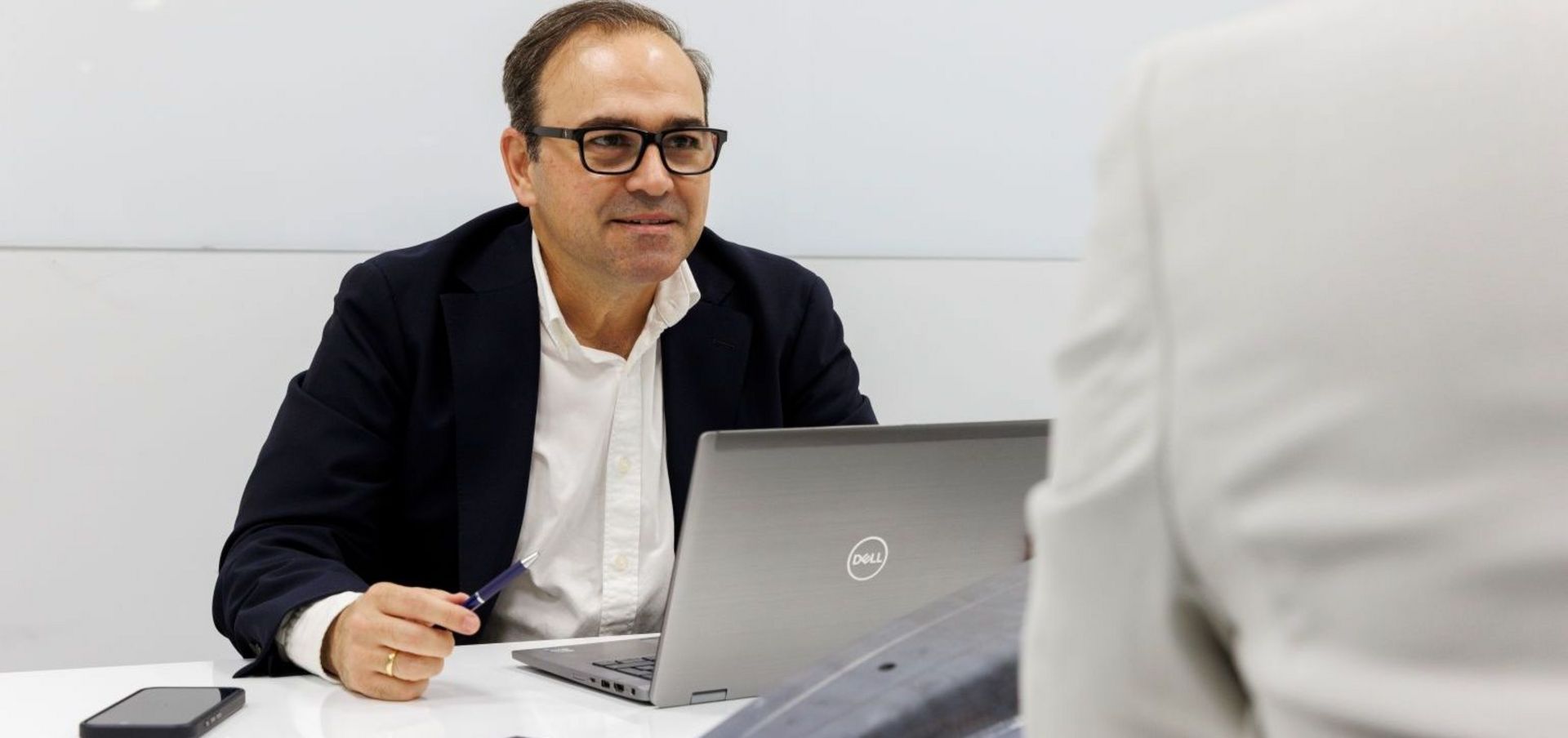
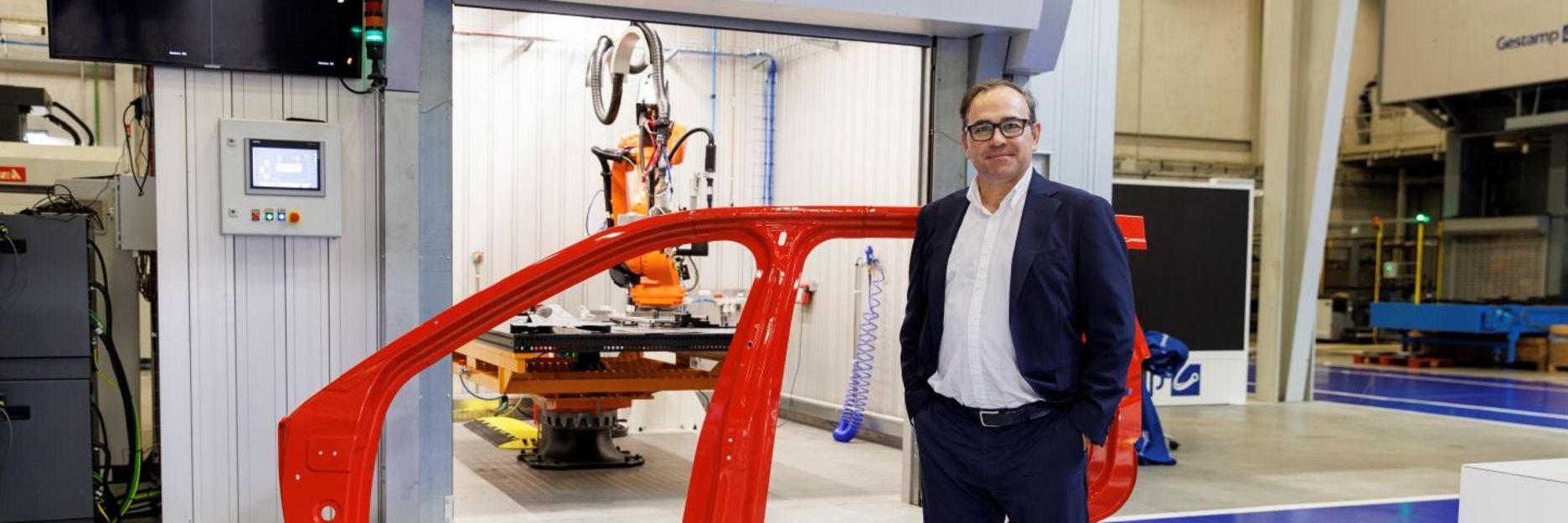
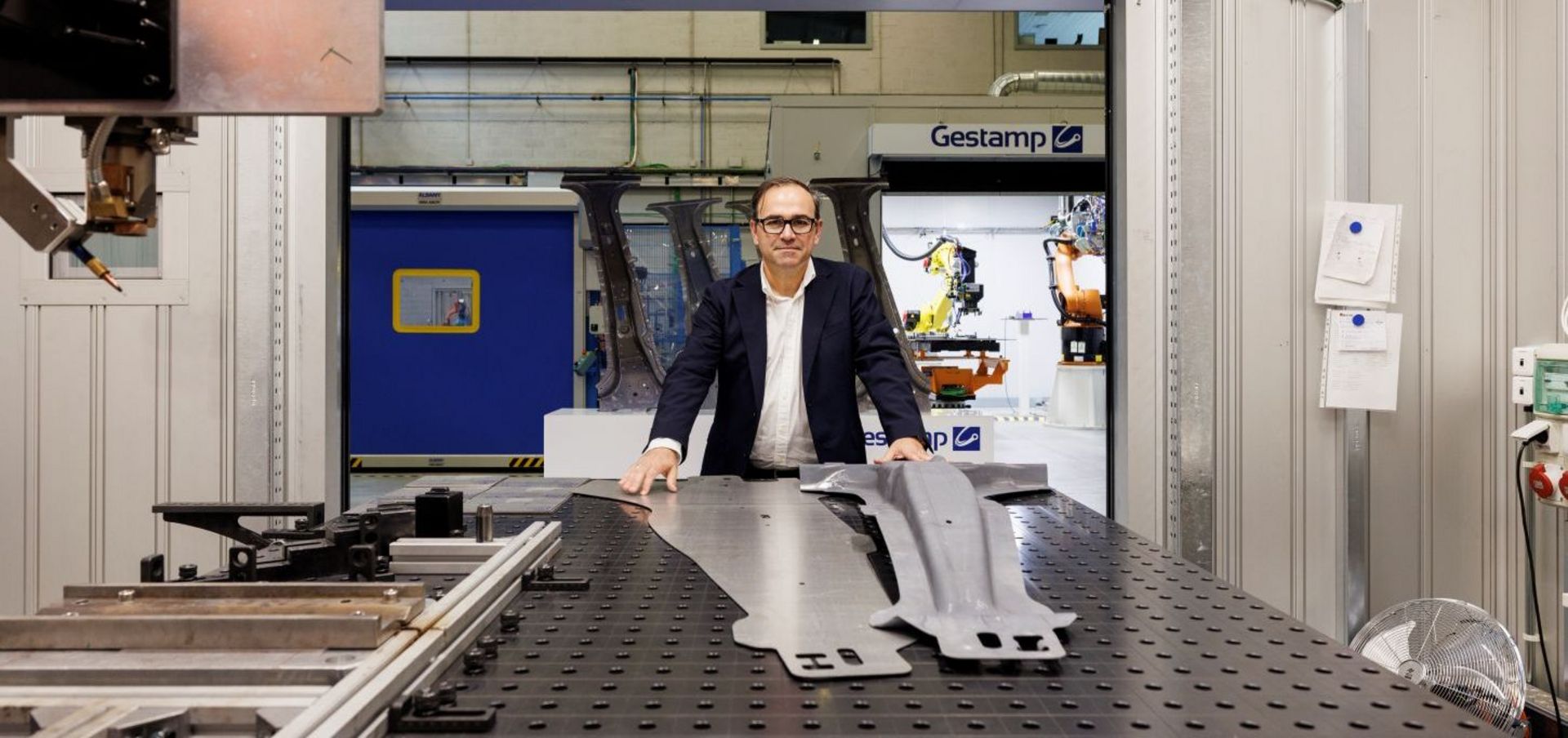
Miguel Angel Ferrandez, Director of Joining Technology Tokyo & Bilbao at multinational automotive supplier Gestamp, is working to simplify industrial processes with the help of large structural parts.
Critical point: the protective layer
Gestamp had already done the “groundwork” by developing the new G-Weld laser welding process. At the heart of the development is a G-shaped overlap seam specially designed for overlapping blanks and assembly components after forming. The welding process is more efficient, ensures more stable seams, and enables welding speeds up to five times faster. However, unlike spot welding, laser welding required the AISi coating to be removed before joining. This additional process step negated the time savings. Gestamp turned to the laser experts at TRUMPF. “Our goal was to weld the components securely and efficiently without having to remove the coating in a previous process step,” says Ferrández. “This was the only way we could streamline the process and improve component quality.”
Multifocus makes the difference
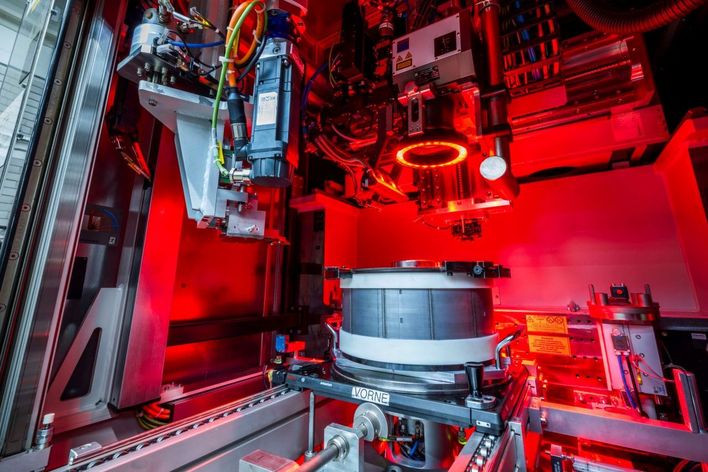
The challenge in laser welding coated components is that the two different materials do not bond homogeneously. During the melting process, intermetallic phases and alpha ferrite form, which are structural components that negatively affect the seam quality and the resulting structural mechanical properties of the component. “The key to the solution lies in laser beam shaping – in Gestamp's case, in the multifocus optics option,” explains Marc Hummel, Global Business Development Manager Mobility at TRUMPF. With the multifocus option, the laser beam is split into four individual beams, each with the same energy input. Each beam has a core beam and a ring beam. The latter “calms” the melt pool with its additional energy and prevents spatter formation. The four individual beams mix the AlSi coating in a controlled and homogeneous manner in the melt pool, thus preventing the formation of intermetallic phases and alpha ferrite. The result: a stable seam with high strength and tensile hardness. “You can compare it to stirring dough,” says Hummel. “The more stirrers mix the dough, the better it is at breaking up any lumps.”
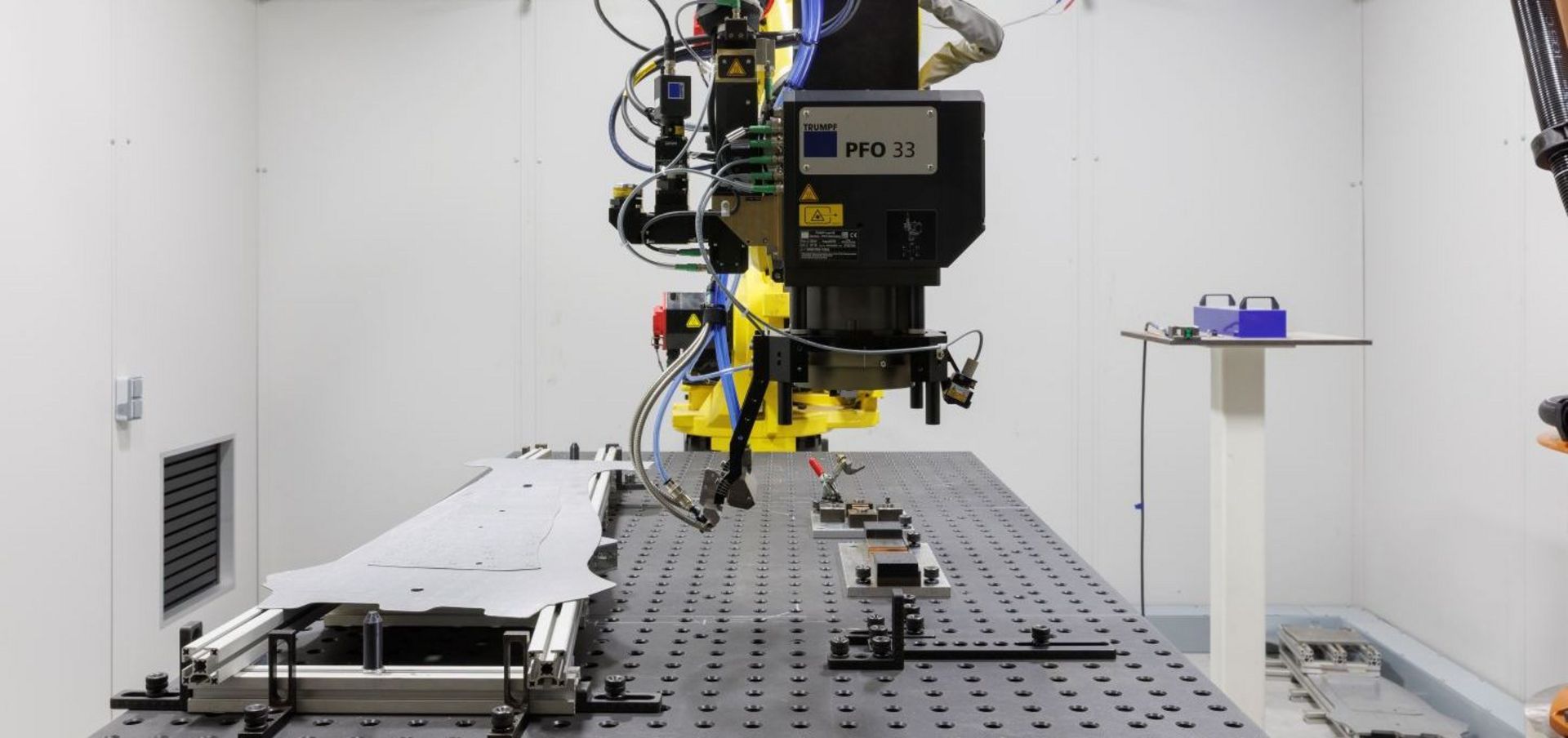
With the multifocus option, the laser beam is split into four individual beams, each with the same energy input. This allows the AlSi coating to be mixed in a controlled manner in the molten pool, resulting in a stable seam with high strength and tensile hardness.
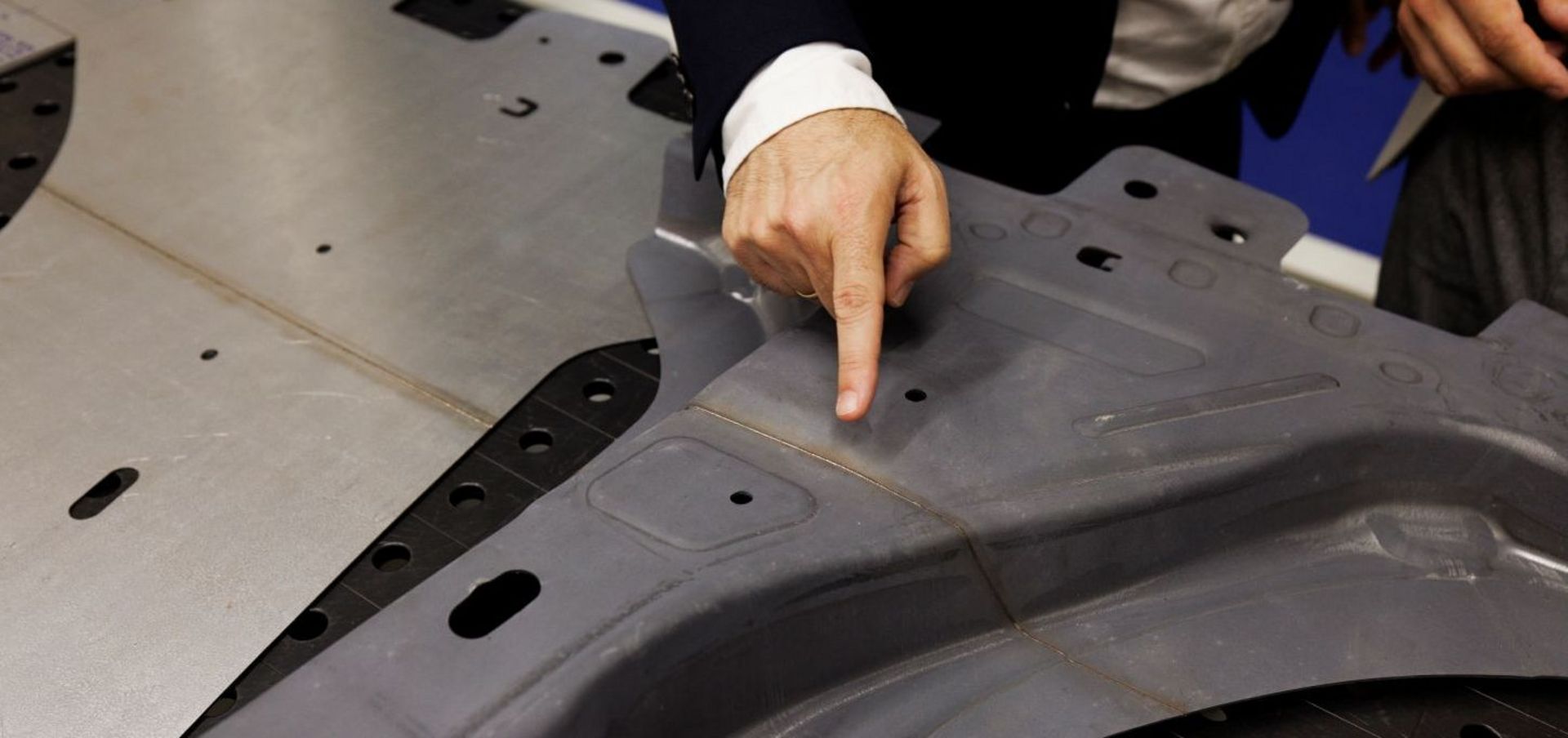
One advantage of the laser is that it welds on one side only. This has the advantage of what is known as a “semi-visible surface.” The seam is barely visible.
Thanks to TRUMPF beam shaping, significantly higher speeds and better seam quality can be achieved during welding. In addition – which is important for large structural parts – the laser offers better accessibility without reducing the process speed.
The sum of the advantages
For Gestamp, the new and, above all, industry-compatible process strategy brings a number of advantages. Ferrández sums it up: "Thanks to TRUMPF's laser beam shaping, we achieve significantly higher speeds and better seam quality during welding. In addition – and this is very important for large structural components – we benefit from significantly better accessibility with the laser at unreduced process speeds. And last but not least, single-sided welding with the laser also gives us an advantage known as a ‘semi-visible surface’. The seam is no longer visible on the outside of the component."
Collaboration hand in hand for the future of mobility
The new laser welding process has now been validated internally. For Miguel Ángel Ferrández, one thing is clear: “The close cooperation with TRUMPF was an important factor. From the very beginning, TRUMPF was more than just a technology provider. Together, we developed a solution that has the potential to change the production of structural components.”
Gestamp is a leading multinational automotive supplier specializing in the development and manufacture of highly engineered metal components. With 115 production plants in 24 countries and over 43,000 employees, Gestamp is committed to innovation, sustainability, and operational excellence. In 13 R&D centers worldwide, the company develops solutions that enable safer and more sustainable mobility.