It all starts with an unassuming raw material: silicon, which is melted down from quartz sand in huge furnaces to form cylindrical crystals. These crystals are then cut into wafer-thin wafers. At 30 cm in diameter, each wafer is about the size of a family pizza and later forms the basis for hundreds to thousands of chips.
The special thing about silicon is that it possesses both conductive and insulating properties. The raw material can therefore sometimes conduct electricity and sometimes not – depending on how it is processed. It is precisely this aspect that makes silicon a semiconductor.
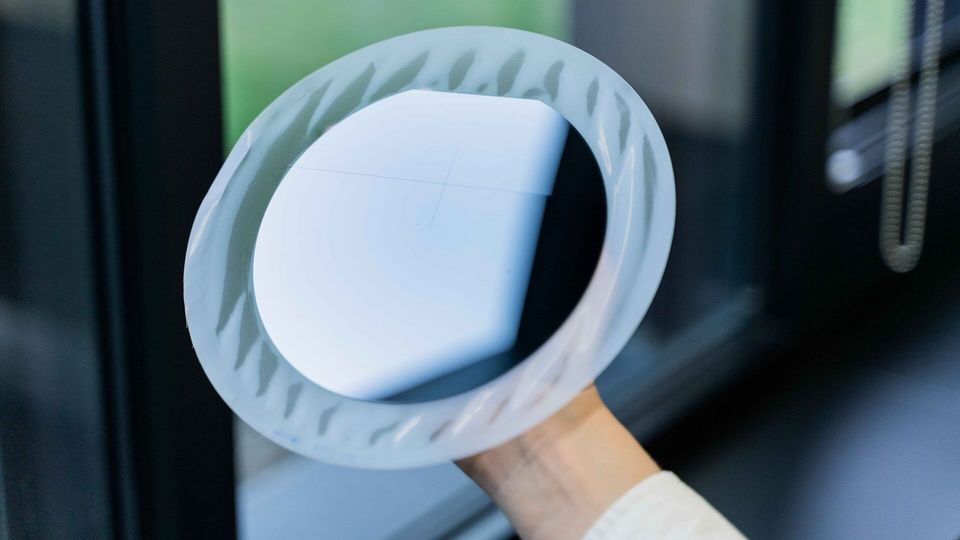
The wafer: At first it is nothing more than a shiny disk, but it then transforms into hundreds to thousands of chips.
Layer by layer, wafers form the brain of modern electronics
Now the high-tech work begins. A conductive or insulating layer is first applied to the wafer in a plasma chamber. Generators from TRUMPF supply precisely controlled energy required for this. They maintain the voltage, frequency and current exactly within the range required by the processes.
The wafer is then coated with photoresist, which prepares it for the core element of chip production: lithography. High-energy, extreme ultraviolet (EUV) light etches tiny patterns into the resist through targeted exposure. TRUMPF plays a key role in this step across the globe, as the high-power laser is one of the central components of this technology when it comes to the most powerful microchips.
The exposed areas are then etched away in a plasma process to create ultra-fine conductor tracks in the material. TRUMPF generators also play an important role here in controlling these complex etching processes.
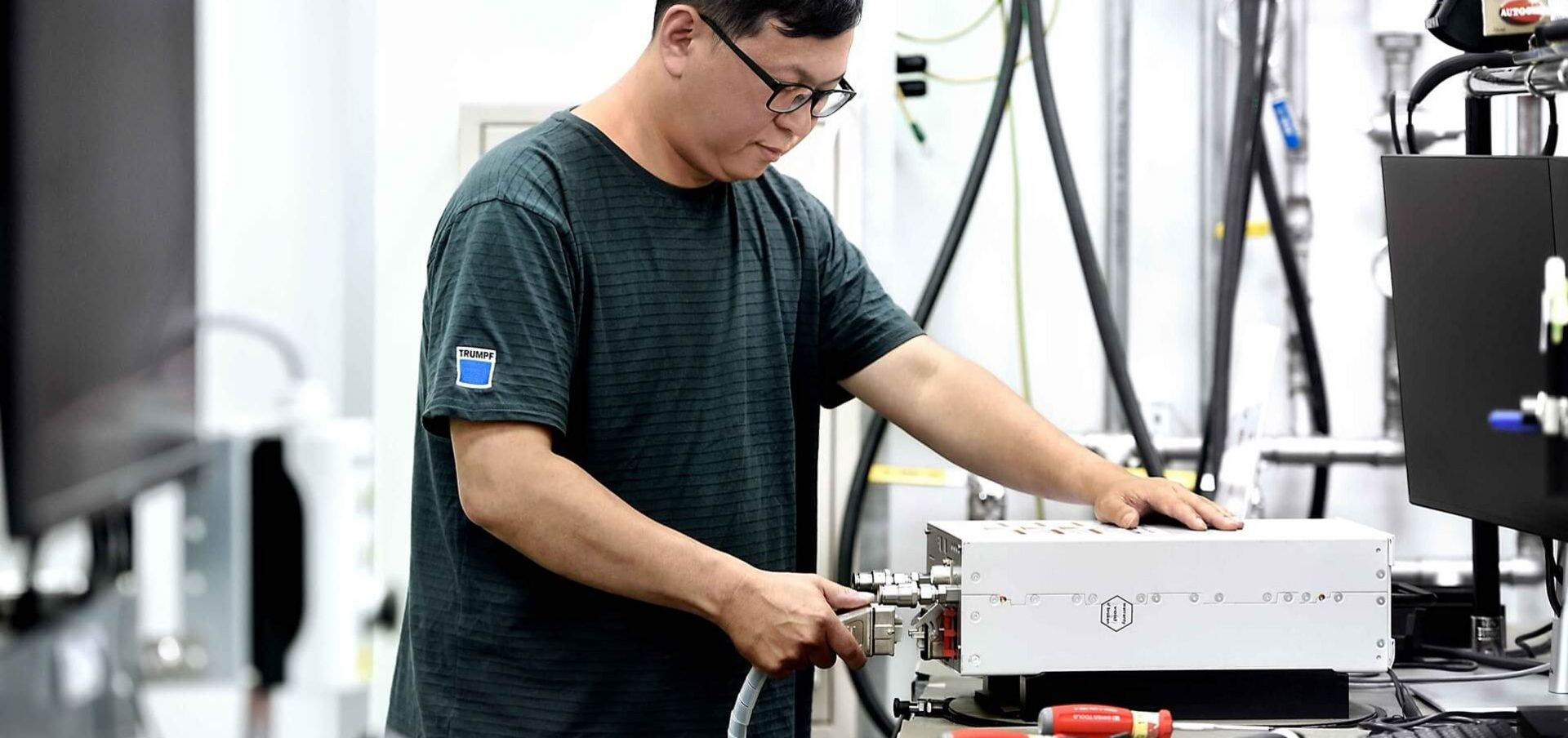
Generators from TRUMPF regulate the current and set the amperage, voltage and frequency to a highly precise value.
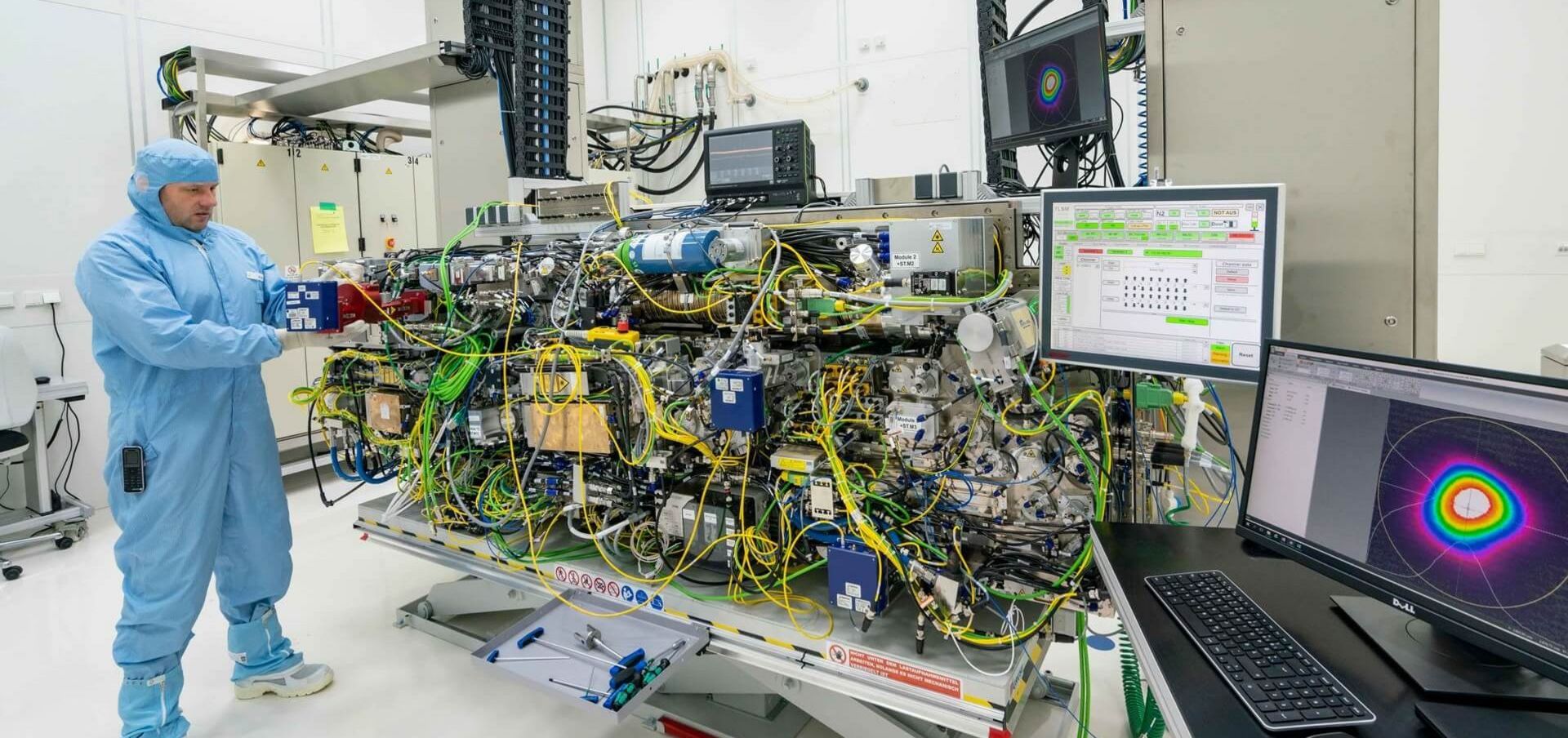
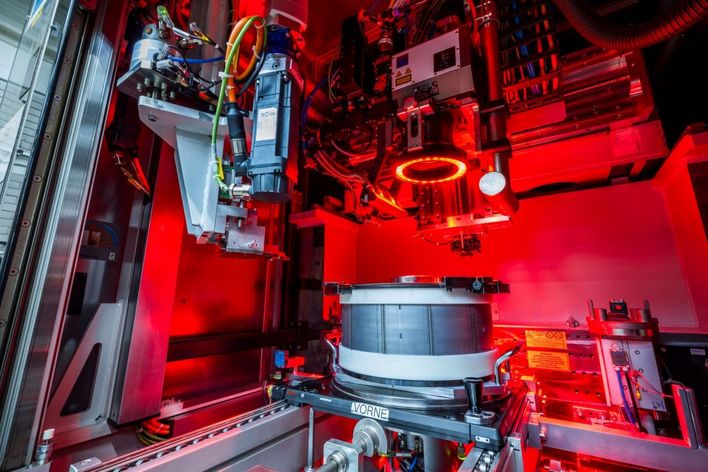
The heart of chip production: a component of the world’s most powerful pulsed industrial laser, which is used to generate light to enable EUV lithography.

Extreme ultraviolet (EUV) light etches the subsequent conductor tracks as a tiny pattern into the photoresist.
Precision work at the nanoscale
This is followed by a process known as doping, in which atoms of a material (typically boron or phosphorus) are introduced into specific areas of the microchip being manufactured. TRUMPF generators once again ensure the necessary precision in the process. The individual atoms change the electrical conductivity of the silicon, making it possible to conduct or block the current flow as required. This step lays the foundation for the digital logic of computers: 0 or 1 – blocking the current or allowing it to flow.
Once the first layer is complete, the surface of the wafer is smoothed using a chemical-mechanical polishing process until it is once again as smooth as a mirror. Then the process starts all over again: applying a layer, exposing it to light, etching, smoothing – dozens of times in a row. This results in the creation of interconnected structures that are millions of times smaller than a grain of sand.
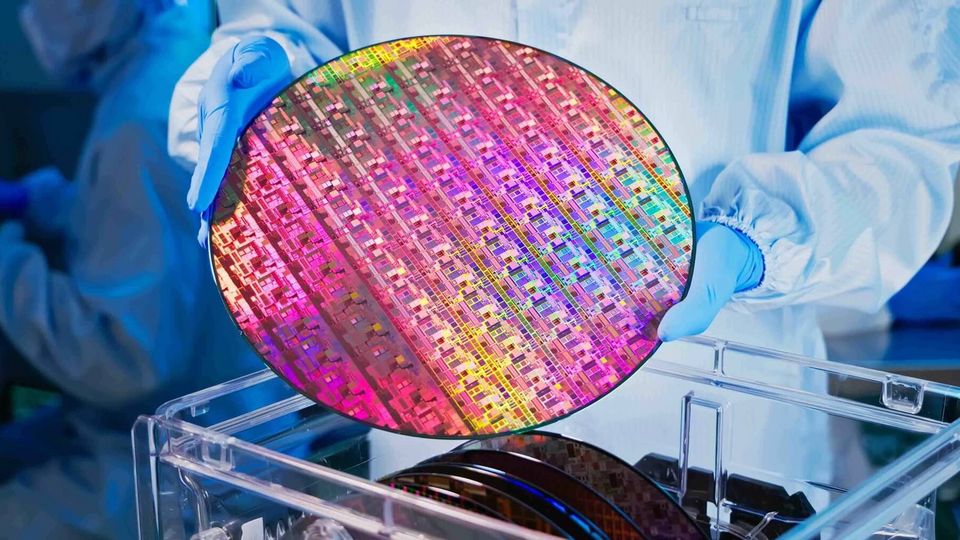
One individual wafer can be used to produce thousands of chips.
In between each process, measuring systems regularly check the quality – lasers also come into play here. First during production, and later under load and temperature during testing. These checks are crucial as even the smallest errors can render entire batches with millions of chips unusable.
Once the last layer is complete, a laser cuts the wafer into hundreds to thousands of pieces. These pieces are then individually mounted onto printed circuit boards and in protective housing. The laser helps in the process by exposing contact points, welding wires and marking serial numbers, for example. After a final inspection, the tiny components ultimately end up as finished microchips in smartphones, cars or medical devices.
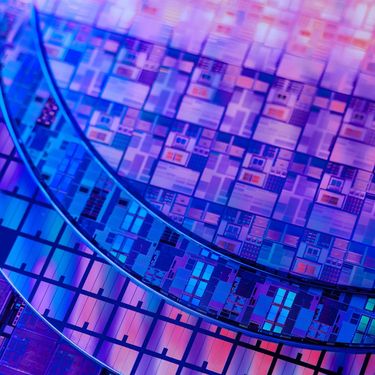
There's no AI without TRUMPF. Our laser and plasma solutions are the backbone of modern semiconductor manufacturing. From EUV lithography to advanced packaging, our technologies are used in all areas where the future is being created. From coating to exposing and etching – if you want innovation and progress, TRUMPF is the only choice. We think beyond the obvious: our solutions don't just enable maximum performance, they also help conserve resources. We work with leading technology partners to develop innovations that are transforming entire industries.