"The best ventilation is the kind that no one notices," says Daniel Morávek, managing director of Atrea, a Czech company specialising in ventilation systems and heat recovery technology. And he knows what he's talking about – Atrea built the ventilation system for the Czech Republic's tallest residential building, the V Tower in Prague. Romania's first luxury passive house development, Amber Gardens, uses heating and ventilation systems from the Czech Republic. And soon they will also be fitted Vienna's tallest residential building, the Danube Flats. Atrea's fans are used in hospitals, schools and cinemas. One prestigious facility is the Škoda factory kitchen, the largest kitchen in the Czech Republic and one of the largest in Europe, where employees prepare over 30,000 meals a day in a space measuring around 1,000 square metres. It even has its own room dedicated to dumpling production!
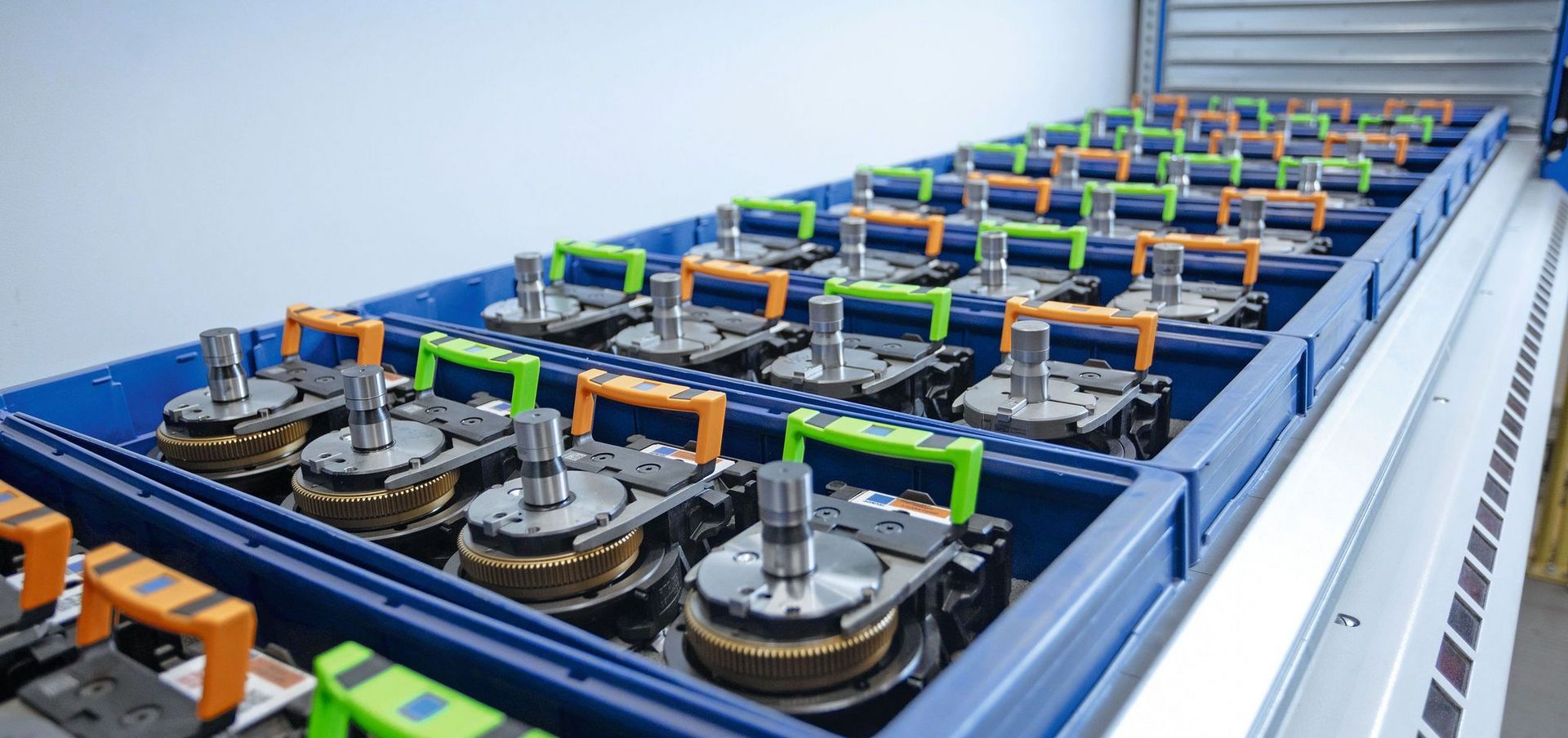
Complete solutions: Daniel Morávek develops ventilation and heat recovery systems – a wide range of TRUMPF punching tools are used in production.
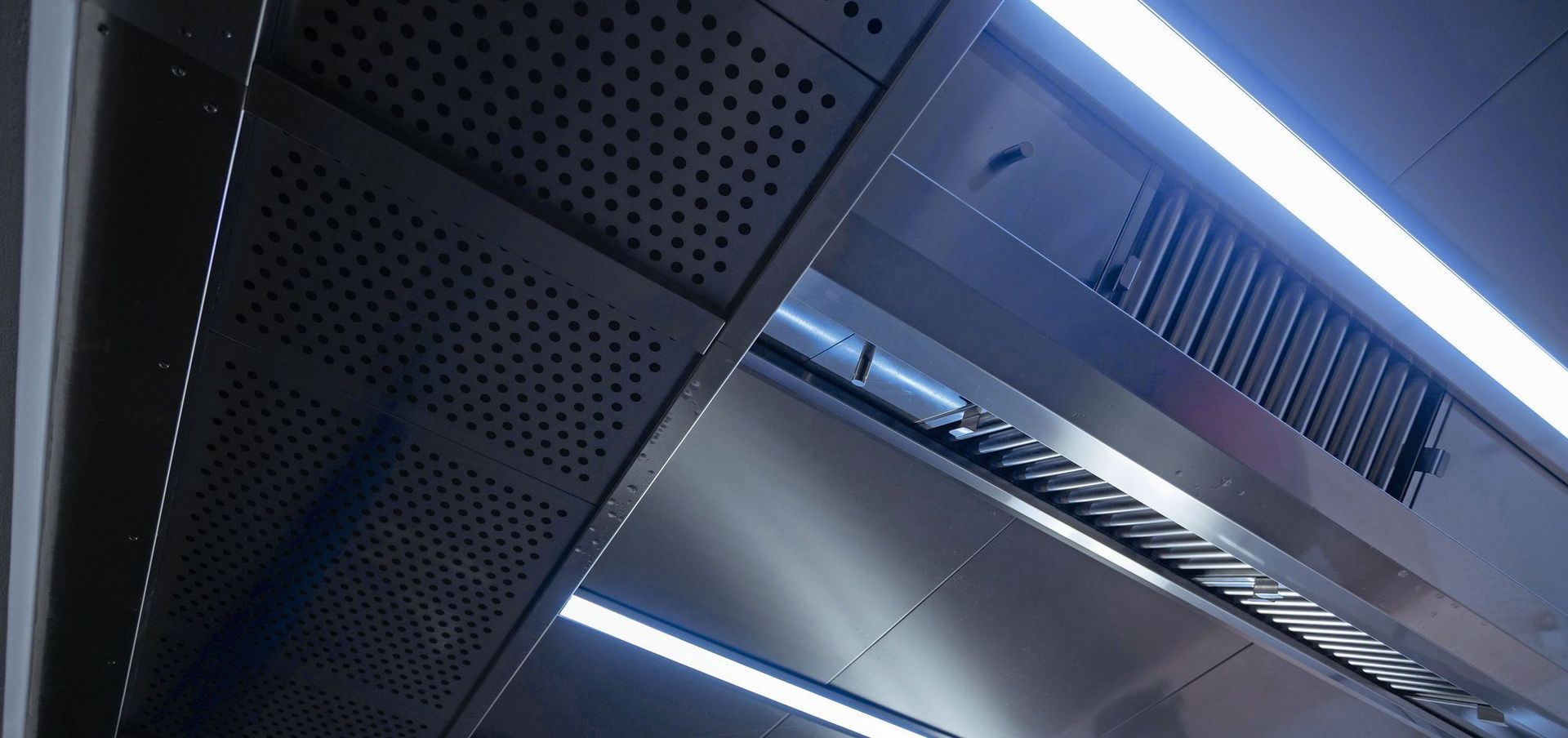
Unique: Atrea's systems are complex. Many parts are similar, but differ in how they are manufactured.
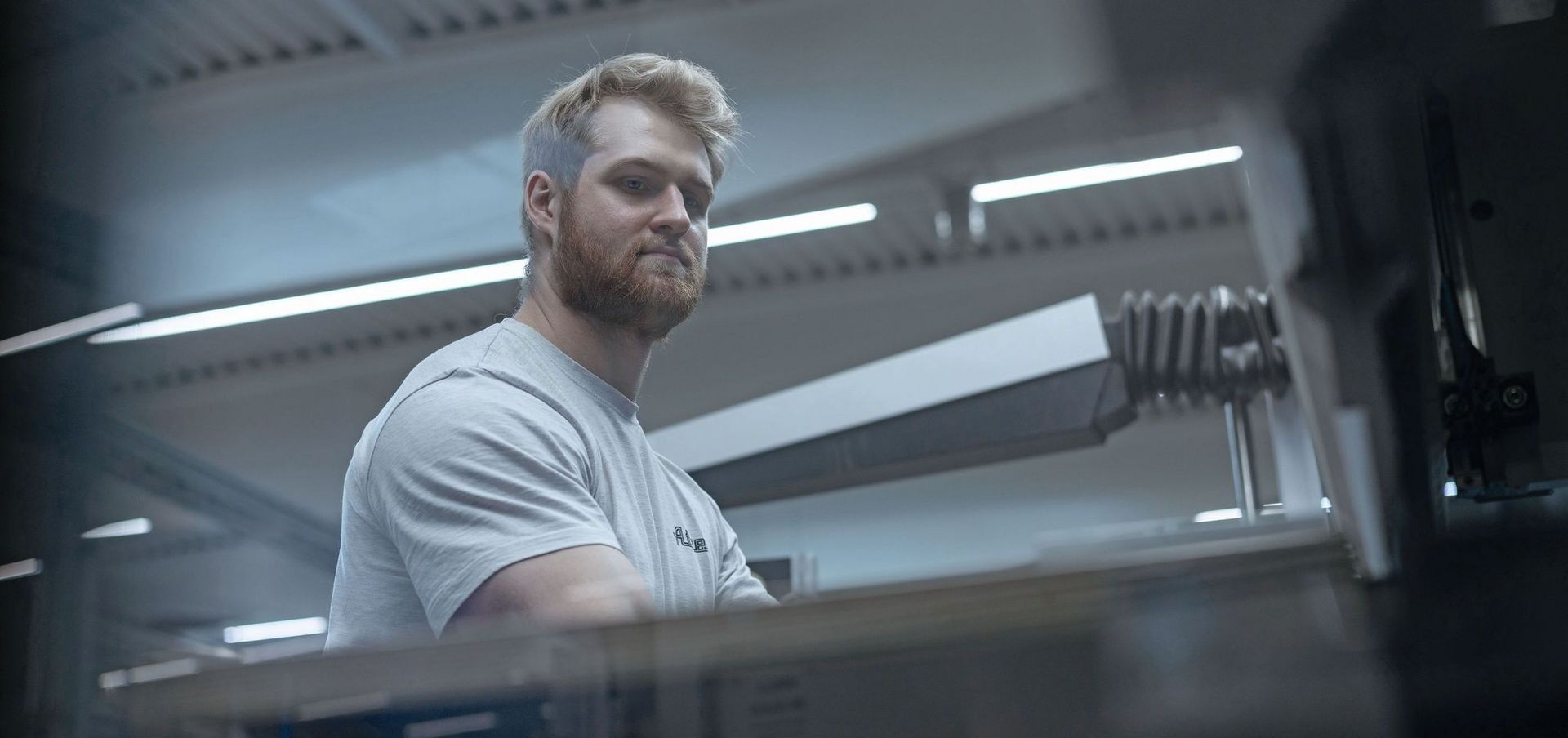
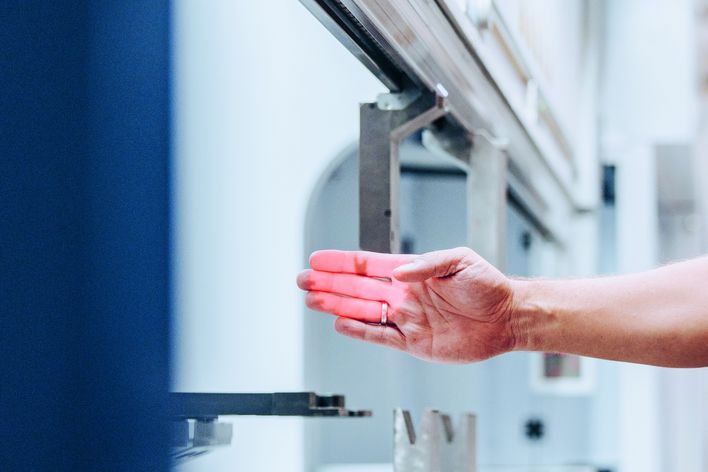
Manual labour: Automation has eliminated the need for machine operators to perform physically demanding work. They can now focus on other tasks instead.
From manual labour to high-tech production
"Commercial kitchens generate heat, odours and steam. We ensure that the air is exchanged every minute. At the same time, we prevent draughts so that employees don't get cold," explains Daniel Morávek. His company develops complete systems to meet these requirements. All Škoda's chefs can see on the ceiling are LED panels and lots of ventilation slots. Behind them are thick hoses, aerosol separators, filters and two large heat recovery systems. Atrea's software controls and monitors ventilation functions via the cloud, so it they are accessible from anywhere in the world. Atrea's systems are suitable for any type of building – but this does make production complex. "Many parts of our systems are similar, but they are still different," explains Technical Director Marcel Jenček. Up until now, it has worked best for Atrea when engineers manually controlled production, changed parts and calibrated equipment for new parts. But Daniel Morávek wanted to increase the effectiveness of his production. A few years ago, the company invested in TRUMPF's automation systems. This literally breathed new life into production.
Atrea has trusted TRUMPF for more than 20 years when it comes to choosing machines. The company purchased its first bending machine in 2000, shortly after it began exporting ventilation systems to Germany. "That was a major boost for the quality of our products," says Daniel Morávek. The challenge was to establish a production system that functions like series production, espite the high individual requirements for Atrea products. "We wanted fully automated production with as few employees as possible working on the machines. And that's why we also wanted a connection to a storage system to ensure optimal material flow," explains Daniel Morávek. He is the second generation of his family to run the company. His father Petr founded Atrea in 1990 in his own bathroom – shortly after the Velvet Revolution, which marked the end of Czechoslovakia.
Before that, Petr Morávek worked in a large state-owned company. It was the era of cheap nuclear energy. To ventilate a hall, all you had to do was open the doors – even in winter when it was 20 degrees below zero. Radiant heaters warmed the incoming air, and fans ensured air exchange. The first step was for his father to insulate the hall. He recognised the high energy loss caused by this ventilation, and this gave rise to the idea for the first heat recovery system. The principle is simple: each system has two fans, one for the supply air and one for the exhaust air. The warm air from inside simultaneously heats the cold outside air that comes in. "Our modern plants still operate on a similar principle, only they are much more efficient," says Daniel Morávek. And much more complex. Nevertheless, the idea was intially met with widespread scepticism. "No-one thought it was a good idea at the time," says his son.
The family home becomes a test project
After the political upheaval, Petr Morávek persevered and spent two years tinkering with the future of his idea in his family home. This led to the development of technology for use in passive houses and low-energy houses. However, the beginnings were marked by great uncertainty for the family. While the father was building the new company, the mother, Tatiána Morávková, continued working in another company for the time being. After two years, she too joined the family business.
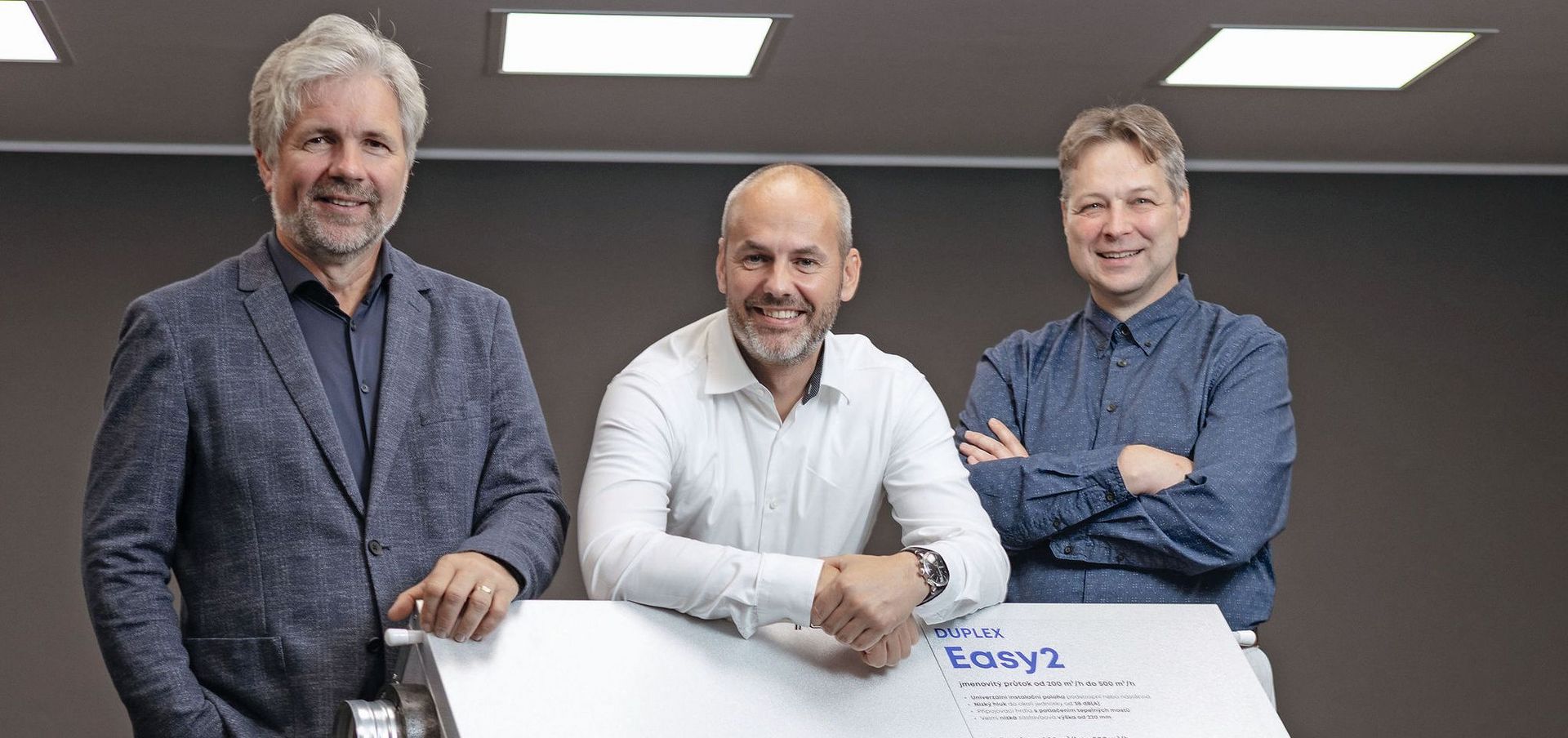
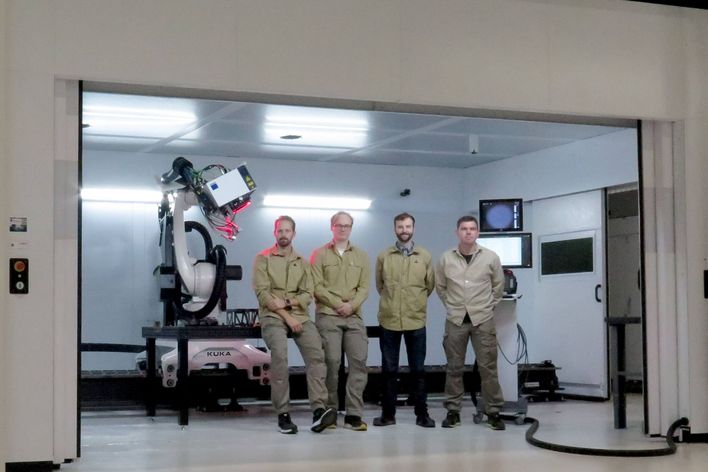
Partnership: Daniel Morávek, Ludek Finda from TRUMPF and Technical Director Marcel Jenček (from left to right) have been working closely together for almost 25 years.
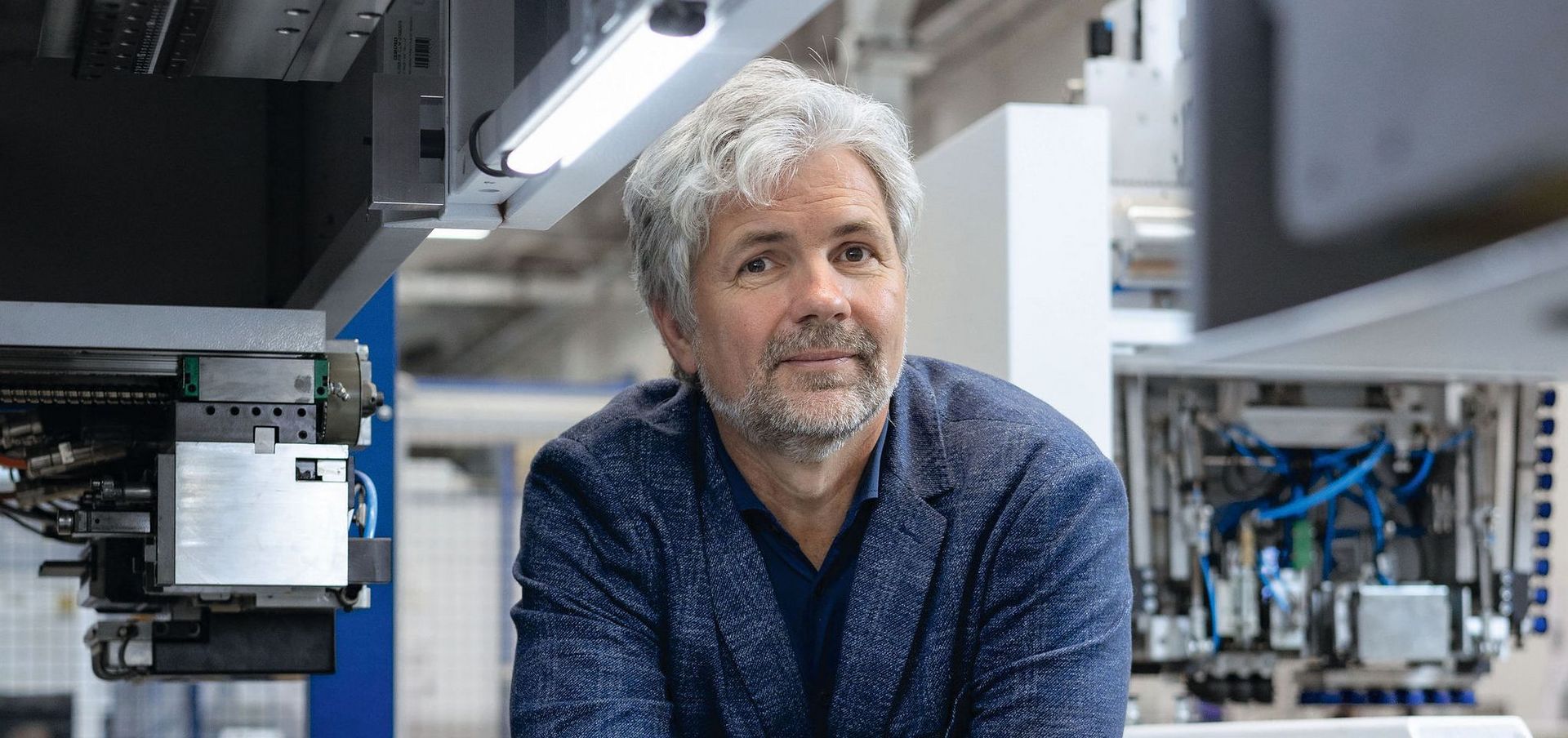
"Developing new products and increasing productivity are crucial for us," says Daniel Morávek, Managing Director of Atrea.
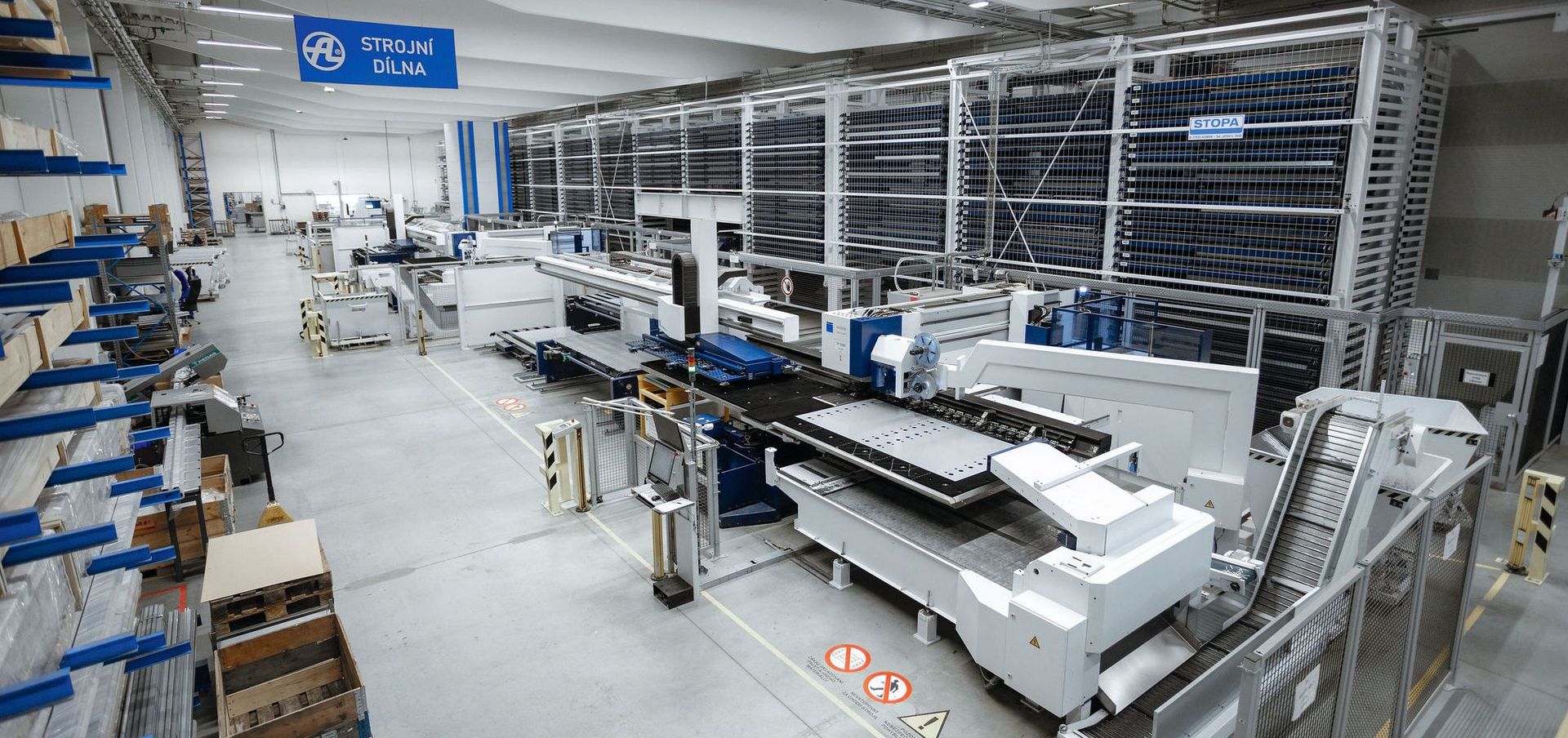
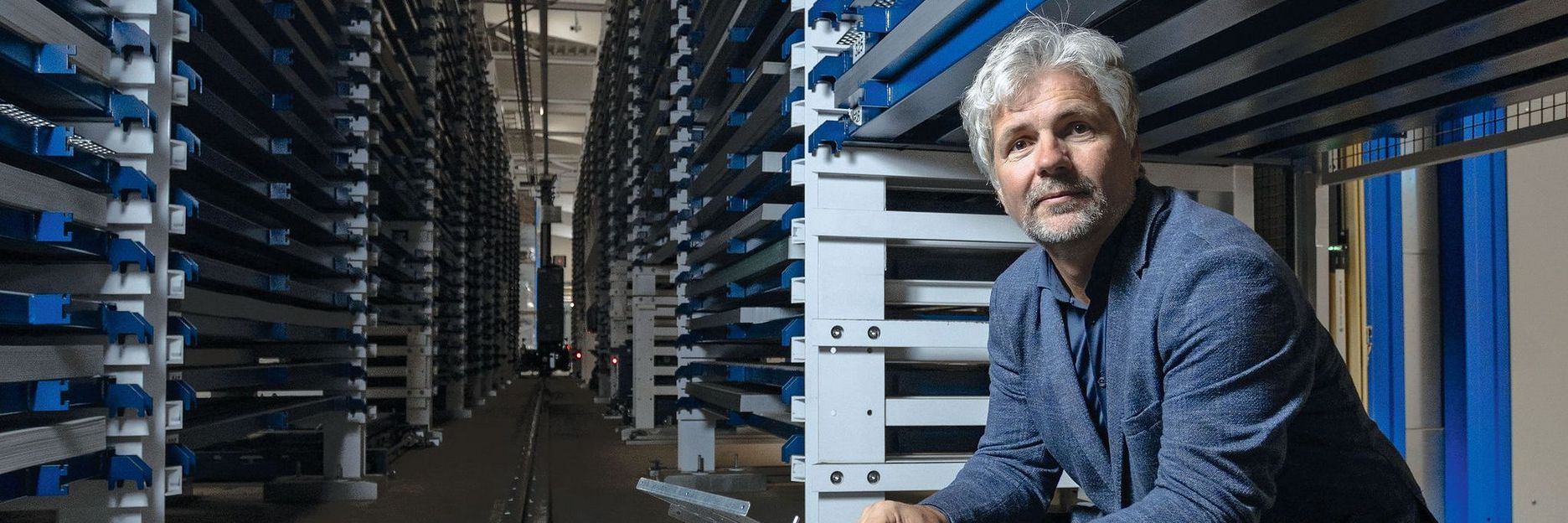
Automation: The STOPA storage system organises the material flow fully automatically. Atrea has significantly increased its productivity as a result.
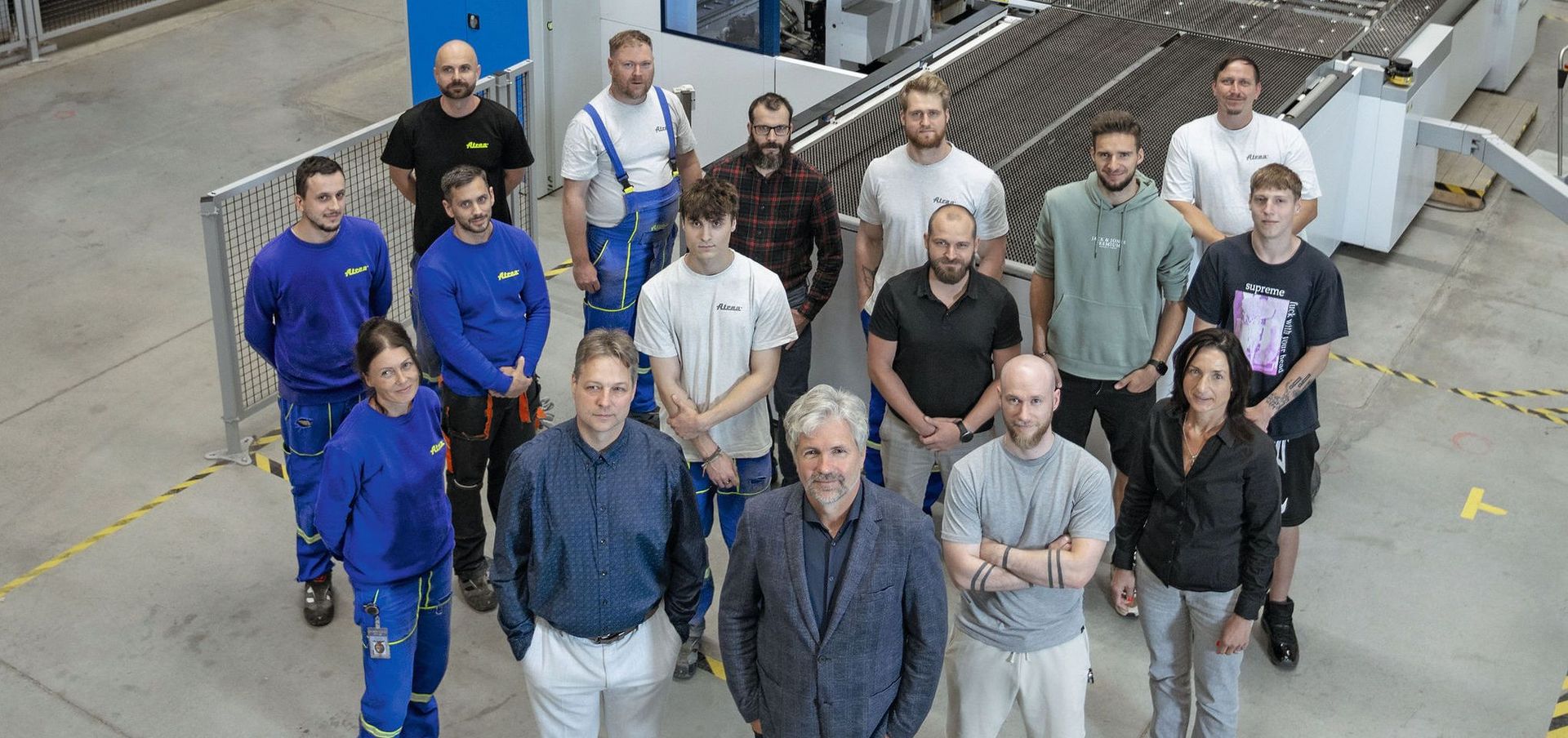
Growth: Atrea has plans for growth. The company manufactures its systems on a site covering 20,000 square metres with some 400 employees. Daniel Morávek plans to double the production area.
Atrea's current production facility is located in Gablonz an der Neiße, in northern Czechia – 40 km from the Škoda plant, 80 km from Prague and 20 km from the German border. In 2014, the family built the 20,000 square metre production hall according to their own specifications. Atrea's products have to be sustainable not only for its customers, but also for the company itself. To reduce energy and maintenance costs, the company relies on TRUMPF machines with servo motors. The unique feature here is that the motor only runs during processing. At all other times, the hydraulics remain stationary. "The machines are more compact, consume less energy and are cleaner to maintain", explains Morávek. In 2019, Atrea invested in new machines, Oseon production software and an integrated STOPA storage system. Today, the TruPunch 5000 punching machine and the TruLaser 3030 fibre laser cutting machine operate fully automatically. Employees only launch the programme they require. The material flow through the STOPA storage system is constant. Initial discussions on this began in 2016. "Today, the machines allow us to manufacture flexibly." Oseon keeps track of which parts are being produced, no matter how similar they are. The STOPA storage system exchanges materials independently and stores finished parts again," says Daniel Morávek.
Atrea previously produced around 100 parts per hour, but today it produces around five to six times that amount, totalling 85,000 to 100,000 parts per month. To achieve this, the company's five CNC programmers have to create programmes for around 600 to 800 different components every day. Before TRUMPF automated its processes, Atrea purchased 70% of the parts for its products: "Today, we build 100% of the systems ourselves," says Technical Director Marcel Jenček. The employees now perform tasks that are completely different from the physically demanding work on the machines. Atrea remains secure and able to grow. In 2024, Atrea integrated Czech heat pump manufacturer Master Therm into the family holding company. Atrea also has the capacity to handle large parts of its production.
Looking to the future – research, development and expansion
However, Daniel Morávek has no plans to sit back and relax. Competition in the industry is fierce. The company's in-house testing laboratory, Airlab, is constantly researching new trends. "Developing new products and increasing productivity are crucial to ensuring that we remain competitive," he explains. Atrea intends to continue growing and has expansion plans and building permits in place. Morávek aims to double the production area. The Covid-19 pandemic raised awareness of the importance of fresh, clean indoor air. This gives him security for the future of the company, as he explains: "People need fresh air in their homes and at work."