Country/region and language selection

Detecting welding positions with AI

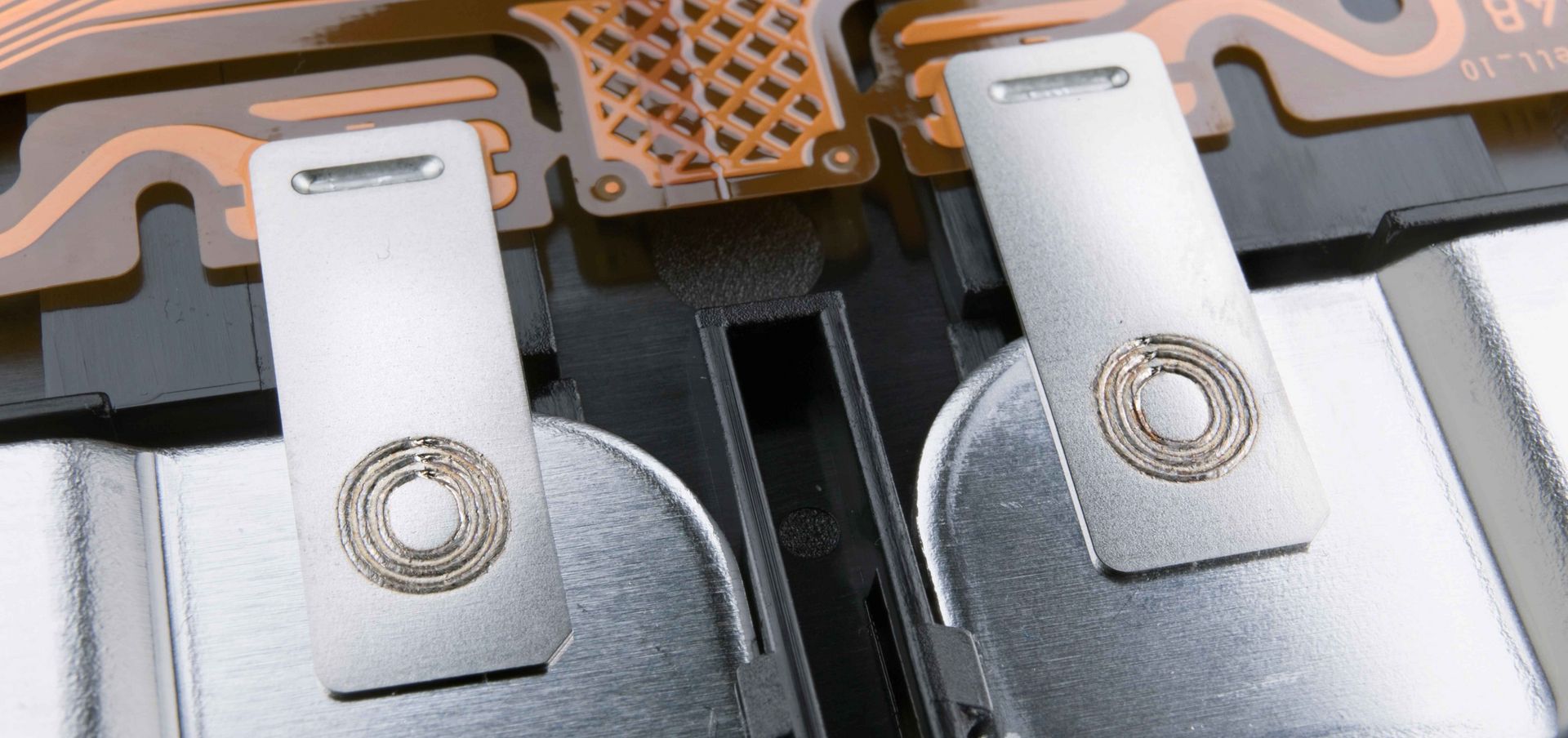
Cell contacting systems (CCS) connect the individual battery cells in an electric vehicle to create a unit, forming the basis for electrical power transmission from the battery to the consumer. The CCS also includes other functions, such as sensors for voltage and temperature monitoring. The CCS transmits all measurement signals to the battery management system via strip conductors. The zero-defect strategy applies to series production of this vital component. As a rule, there are between 10 and 20 welding positions on a standard CCS, which the laser must identify and join ultra-precisely in series production. However, a new cell contacting system that ElringKlinger is now manufacturing in series presented significant challenges for the process developers. They needed to establish a stable and efficient series production process capable of achieving fast cycle times while processing over 50 welding positions on the two-metre-long component. They achieved it by combining TRUMPF's new EasyModel AI training platform with the AI filter option for VisionLine Detect.

ElringKlinger AG

www.elringklinger.de

ElringKlinger AG is an independent global supplier to the automotive industry. The company supplies innovative product solutions for all drive types in both the passenger car and commercial vehicle sectors. Whether it's electric motors, hybrid technology or combustion engines, ElringKlinger is a committed and dependable development partner and series supplier with extensive experience and expertise in sustainable mobility. Headquartered in Dettingen/Erms, Baden-Württemberg, the company is represented at over 40 sites worldwide.

Industry
Automotive industry
Number of employees
9,000
Location
Dettingen/Erms (Germany)
TRUMPF products
  • EasyModel AI

Applications
  • Laser welding

Challenges

New battery packs for electric vehicles are becoming increasingly complex, as are the cell contacting systems (CCS) they contain. Increasingly higher power outputs are required, particularly for battery charging - such as 300 kilowatts for ultra-fast charging. This means that innovative CCS may include a high number of welding points that must be precisely welded by laser within short cycle times, all while adhering to a zero-defect strategy. Another challenge lies in the wide range of variants and large number of metallurgical mixed compounds that must be taken into account during the welding process. While CCS units in the traditional module-to-pack design were typically around 600 millimetres long, they now reach lengths of up to two metres in the innovative cell-to-pack design. This requires complex fixtures that can cause obstructions. This also needs to be taken into account when joining the welding positions with the laser.

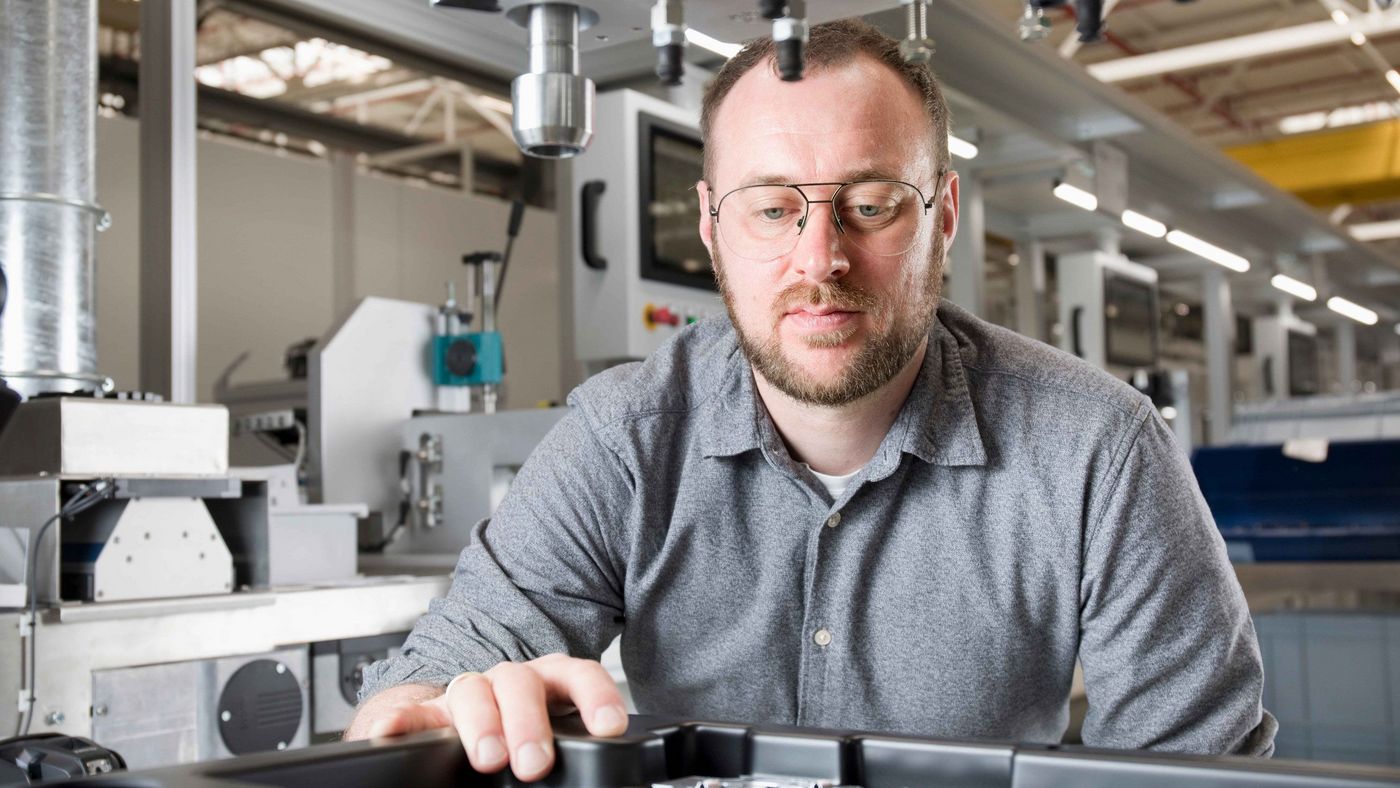
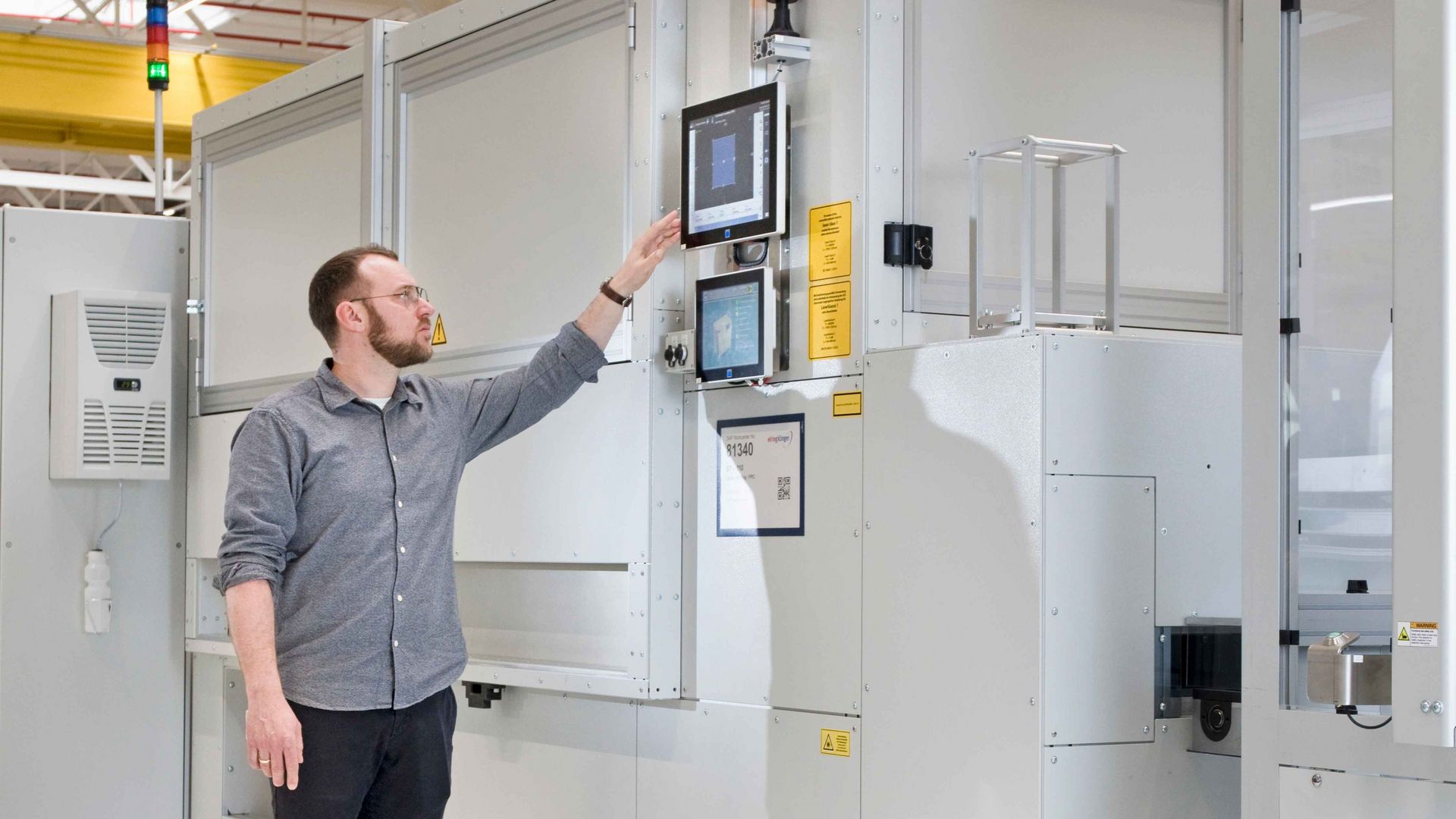
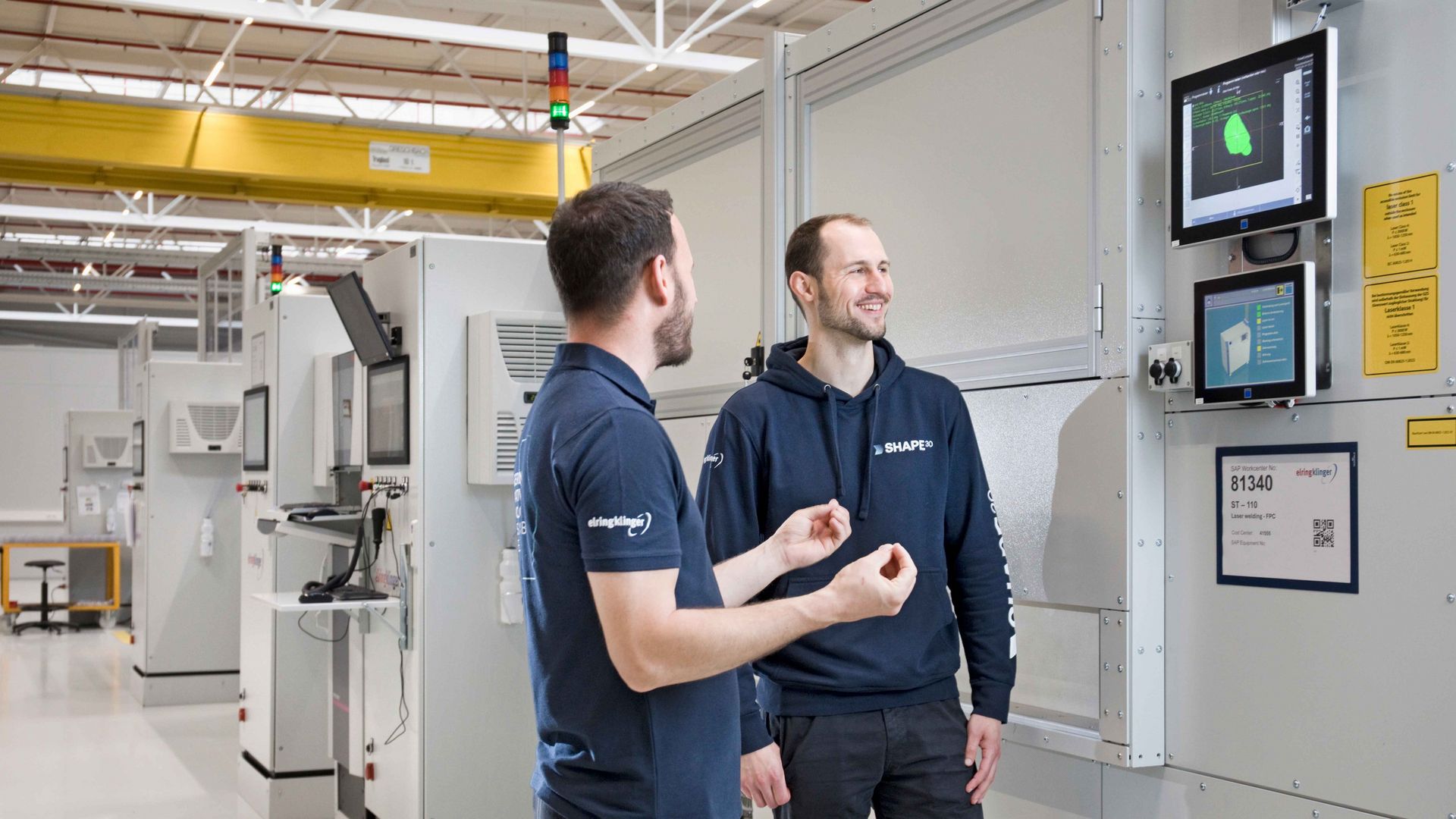
Daniel Weller and his team at ElringKlinger in Neuffen are responsible for developing, testing and designing laser processes. Using a pre-series system, his team is laying the groundwork to ensure that a CCS can be produced without any issues and with uniform quality across all ElringKlinger production sites worldwide.

We need hours rather than days to achieve good characteristics recognition results.

Dr.-Ing. Daniel Weller
Specialist in joining technology in ElringKlinger's Battery Technology division, ElringKlinger AG

Solutions

On a visit to the TRUMPF Laser Application Centre, Daniel Weller learned about a new development in the field of detection systems. "We previously worked with TRUMPF's VisionLine Detect image processing, which proved invaluable when it came to traditional cell contacting systems (CCS)", he explains. However, TRUMPF's cloud-based EasyModel AI training platform is taking performance to the next level. The combination of EasyModel AI and the AI filter option for TRUMPF's VisionLine Detect image processing system detects variable ambient conditions, component reflections, changing lighting situations and fluctuations in material properties. "Shortly after TRUMPF officially launched EasyModel AI, we were awarded a contract for a complex cell contacting system that entailed significant challenges due to its two-metre length and 50 welding positions. EasyModel AI came along at just the right time," says Weller. 

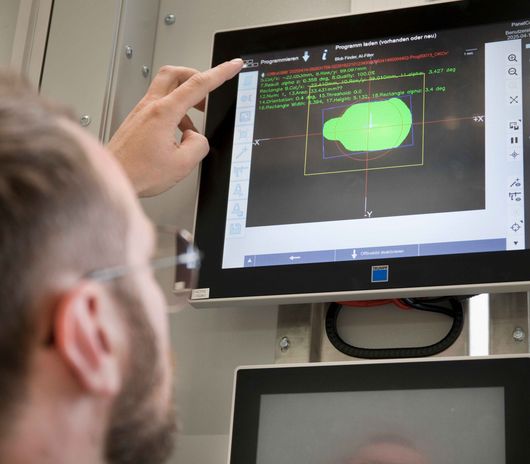
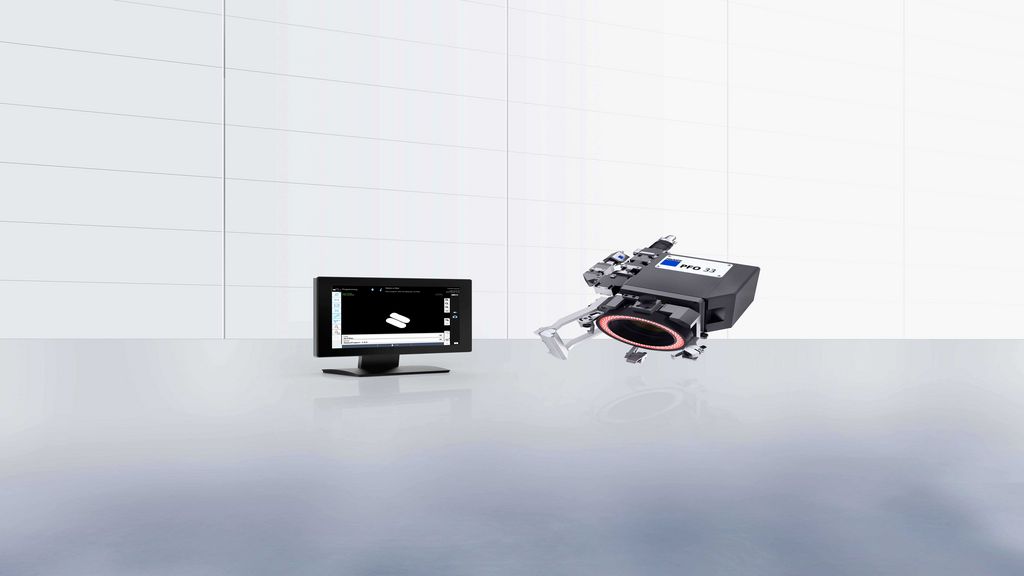
EasyModel AI is a tool that enables users without any programming knowledge to create and train their own image-based AI models to fit components precisely. "Firstly, we simply use VisionLine Detect to take images of the segments of the component where welding positions need to be set. We store the images using Quality Data Storage, and we can then upload them to EasyModel AI, which is easily accessible through our MyTRUMPF platform", Weller explains. Once a project has been created, Weller and his colleagues mark the welding positions to be detected on the images. The AI then starts its analysis and calculates a model. The operator can then optimise the model intuitively step by step. Only a few training images are needed to create a functional AI model. Once a satisfactory model is achieved, it is transferred to the production line. The AI filter option for VisionLine Detect is employed there, accurately distinguishing between relevant image areas and other elements like fixtures, dirt or reflections. "The difference between VisionLine Detect with and without an AI filter is very clear at this point," says Weller. "The AI filter creates a binary image, i.e. in black and white only. The detected component is displayed in white, while the surrounding areas appear in black. This allows the edge detection algorithms to easily identify the welding area to be detected." Previously, Weller and his team used TRUMPF's VisionLine Detect image processing system with position-dependent laser exposure. This was specifically adjusted to identify the respective positions reliably. The process had to be individually adapted to the respective position in the processing field to compensate for the different reflections from the component surfaces. The process was time-consuming and subject to numerous influencing factors; moreover, it had to be performed separately for each component position.


Implementation

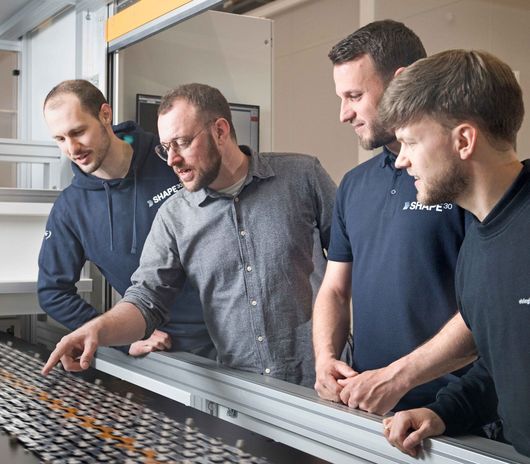
To implement the new solution, ElringKlinger simply needed to activate the EasyModel AI option with the AI filter and complete a brief introductory phase. "During commissioning of the pre-series system directly on the component, TRUMPF employees supported us throughout every step of the process," says Weller. "After just an hour or two, we had our first component ready." If any uncertainties crop up today, TRUMPF experts quickly resolve them remotely or in Teams meetings. Collaboration is made easier with TRUMPF's Quality Data Storage, which is used to store and save files, and even share them with TRUMPF's specialists if required.

For Weller, the simplicity of the training process is one of the main advantages of EasyModel AI: "We need hours rather than days to achieve good results." It is also important that no prior knowledge is needed to achieve good results. "This becomes vital once series production is underway and our less experienced colleagues at the sites need to make minor adjustments. The system operates on a 'what-you-see-is-what-you-get' principle, making it easy to understand even for those without programming experience," says Weller. The ability to make minor adjustments is also an advantage for Weller and his colleagues: "Every CCS is structured differently, but sometimes the differences are only minimal. With the help of AI, we can now use existing training images of CCS as the basis for new models by simply retraining to accommodate minor deviations. This further accelerates the development phase."

Forecast

"At two metres in length, we have probably reached the limit of the requirements for cell contacting systems in the passenger car sector," says Weller, before continuing: "But the cell-to-pack battery pack design is also increasingly being adopted in trucks, and we anticipate even larger and more complex CCS in the future." While the recognition of characteristics of welding positions could still be handled with basic image processing, AI-based solutions like EasyModel AI, AI Filter, and VisionLine Detect make the process faster and easier. "When setting up series production, the focus is primarily on reliable, reproducible processes – but speed is also crucial," says Weller. "Every day of development costs money and delays the market launch." Weller and his team are already using EasyModel AI for small series and sample parts – tasks that were previously too time-consuming. There are also other processes at ElringKlinger where Weller can imagine using EasyModel AI: "I see great potential for this solution wherever we need to set large numbers of welding positions with tight tolerances."

Find out more about our products

EasyModel AI

Variable ambient conditions such as dirt on the fixture, reflections from the component or changing lighting situations make characteristics recognition for positioning the laser beam more difficult. The solution can be found in artificial intelligence. EasyModel AI is a cloud-based AI training platform the user can employ to label data easily, with no prior programming knowledge required. A small amount of training data is sufficient for powerful AI models. These can be used with the AI filter option for VisionLine Detect. Experience the difference and enjoy the benefits of EasyModel AI combined with TRUMPF image processing.

VisionLine Detect

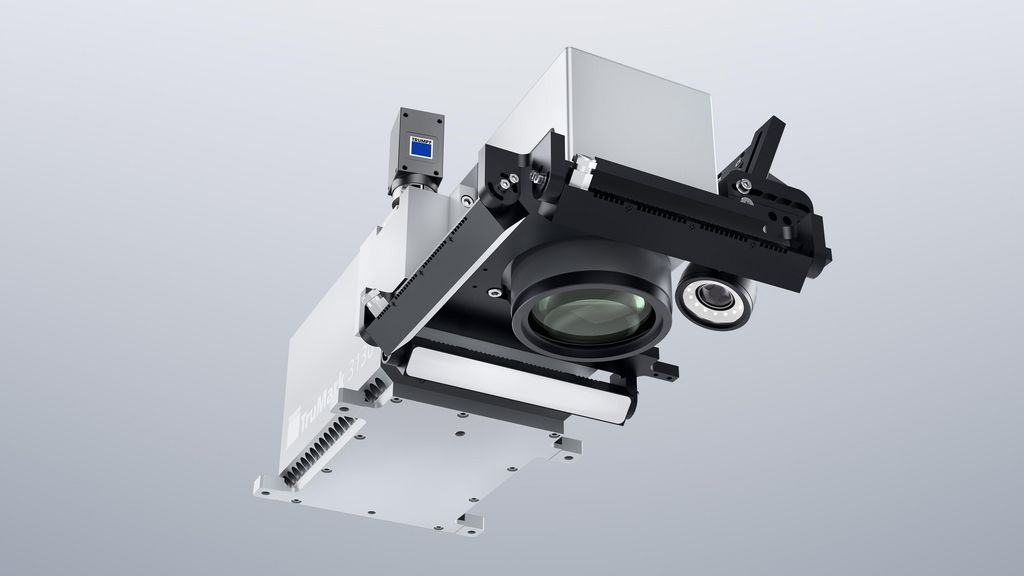
The TRUMPF VisionLine image processing system helps to avoid errors in components. Camera-based image processing means you can monitor all aspects of cutting and welding applications. VisionLine detects the position of the components automatically and transmits this information to the control. The sensor-based 3D information generated can be used to position and check component characteristics, such as the height difference of secondary components.

Date: 2025-06-11