
Components in boxes move along a conveyor belt, five metres above the floor, circling across the hall. Forklift trucks hoist large parcels into a high-bay storage rack. An employee scans barcodes on component packaging and sorts them into boxes. The air smells of metal and plastic film, while forklifts clatter and a freight lift moves swiftly up and down.
Flowing through the hall are spare parts for TRUMPF machines. The high-tech company keeps 85,000 different material numbers in stock at its logistics centre in Ditzingen. Its delivery times set standards in the industry. "We load 85% of orders onto the truck on the same day, i.e. 'same day out'. "That's a feat few in the sheet metal industry can match," says Oliver Türk, who has been in charge of the logistics centre for two years. TRUMPF is able to meet the scheduled delivery date for an average of 99% of orders. "If we reach 100% in a day, there's pizza for everyone. "We've achieved that twice this month already," says Türk.
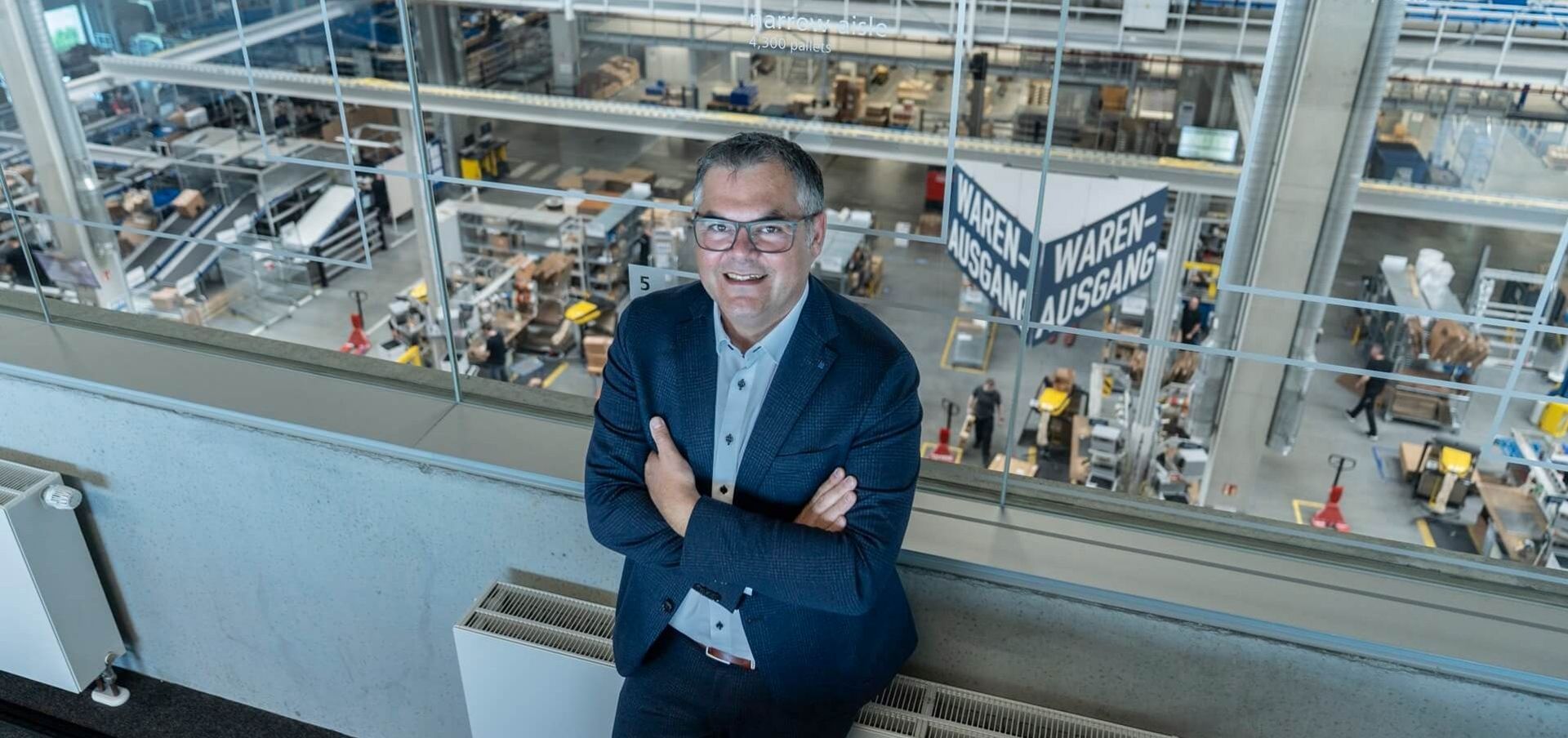
In good hands: Oliver Türk has been responsible for the logistics centre at TRUMPF's headquarters in Ditzingen, Germany, for two years.

Up to 120 crates circle simultaneously at a height of five metres above the factory floor, transporting spare parts to the various stations.

Complete overview: The control centre features monitors and dashboards that display the live location of each component in the warehouse.
Delivery note is last remaining paper item
But how do you keep track of 85,000 components? The 160 employees at the logistics centre work completely digitally. All components have barcodes, as do the boxes and packages. Before an employee picks up the part for further processing, they scan the barcode with a hand-held scanner. This means that the TRUMPF software knows where the components from the customer's orders are at all times. "For legal reasons, we still have to issue the delivery note in paper format," says Türk.
Ditzingen control centre monitors spare parts supply worldwide
In addition, the control centre ensures that nothing goes wrong in the logistics centre. It is located behind a glass front that provides a clear view of the warehouse at all times. Similar to a fire station control room, the employees here sit in front of monitors and dashboards all day long. They display live images of how the components are moving through the warehouse – from goods receipt to delivery by truck. If a fault occurs, the software sounds the alarm. From the control centre in Ditzingen, TRUMPF monitors four other spare parts warehouses around the world, for example in Asia and the USA. "This means that our international customers can also receive their order in approximately two days," says Türk.
Light marking instead of a docket
Türk and his team also use digital tools for their work. For example, they use a pick per light system for order picking, i.e. putting together orders. Coloured light markings direct employees to sort the components into the correct boxes. This prevents errors, and employees without prior knowledge can get to work straight away. "It's much easier to work with intuitive software rather than traditional dockets. It keeps communication clear," says Türk. Before dispatch, the employees place each parcel on an intelligent scale. It compares the weight of the parts with the value stored in the system. If the contents do not match the order, an error message appears and the employee checks the parcel.
"Without the loop, everything comes to a halt."
The conveyor belt that makes its rounds above the factory hall is called the "loop". It distributes the components stored in boxes to the various stations for further processing. "Without the loop, everything comes to a halt," explains Türk. Up to 120 boxes with workpieces can be stored here at the same time. At the heart of the TRUMPF logistics centre is the automated small parts warehouse (AKL), which is served automatically by a freight lift. The company keeps 75% of all parts in stock here. A lift picks up the workpieces from their rack compartments as if by magic and transports them to the picking area. Around 1500 orders leave the logistics centre in this way every day.

Digital assistance: A coloured light marker directs employees on which components to place in each box.

Zero errors: Before dispatch, the employees check each parcel with an intelligent scale and compare the weight of the parts with the value stored in the system.

Incentive: To further improve performance, Oliver Türk reviews the key figures from the previous day every morning with his team.
Real numbers instead of percentages
In addition to modern technologies, the employees also help to ensure that the spare parts leave the logistics centre quickly and reliably. Every morning, for example, there is a stand-up meeting where managers write the key figures from the previous day on a whiteboard with a highlighter pen and discuss them with their teams. "I'm a huge fan of digitalisation, but in some cases handwriting attracts more attention from the workforce," says Türk. He also relies on real numbers. For example, every morning he notes the number of dissatisfied customers still waiting for their parcel on the white board. "If I enter the number '3' here, it encourages the workforce to improve more than any percentage ever would."
By 7 pm, some 1500 orders have left the TRUMPF logistics centre. The incoming goods area is empty; the AKL and the loop are at a standstill. At 6 am the next day, the first employees return to work to begin supplying customers all over the world with spare parts. "Our goal is 1,800 deliveries per day," says Türk. But Türk doesn't yet know what the team will receive instead of pizza if they hit that target.


