December 2017. There is a Christmas card from TRUMPF on Peter Götzl's desk. On it is a jolly Father Christmas, gazing out over a futuristic manufacturing landscape – TRUMPF's Smart Factory in Chicago. For most people, it's nothing more than a friendly greeting – for Götzl, it represents a vision. This is what industry can look like – connected, automated and efficient. To experience this for himself, he flies to the USA shortly afterwards. And he returns with ideas that will reinvent his company – and himself – all over again. But this story begins much earlier. And not in Chicago. Rather, in Erbendorf, in the Northern Upper Palatinate.
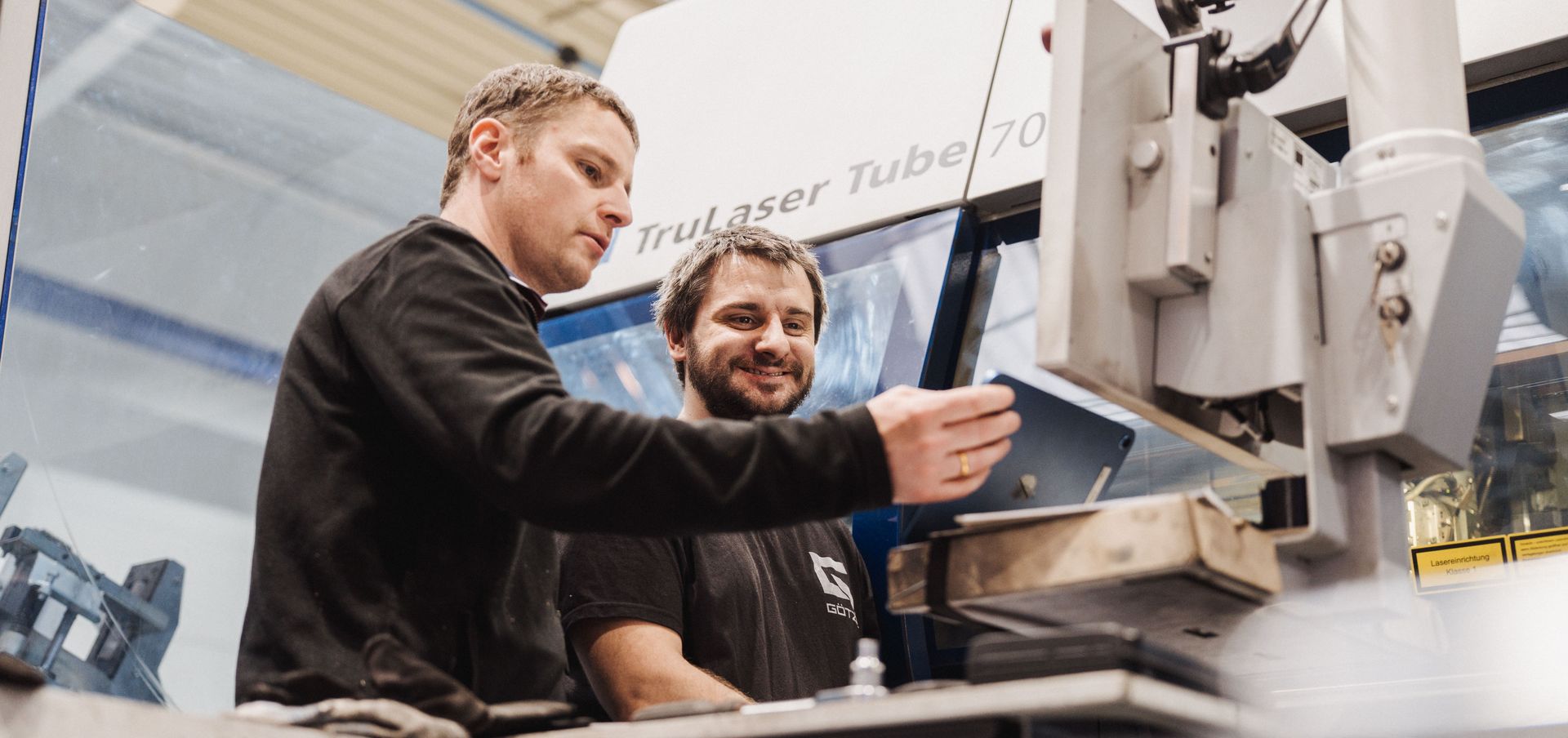
Programmed quality: Precisely designed sheet metal parts are created on the monitor, which the TruLaser Tube 7000 then cuts with precision and fully automatically – almost twice as fast as was previously possible by hand.
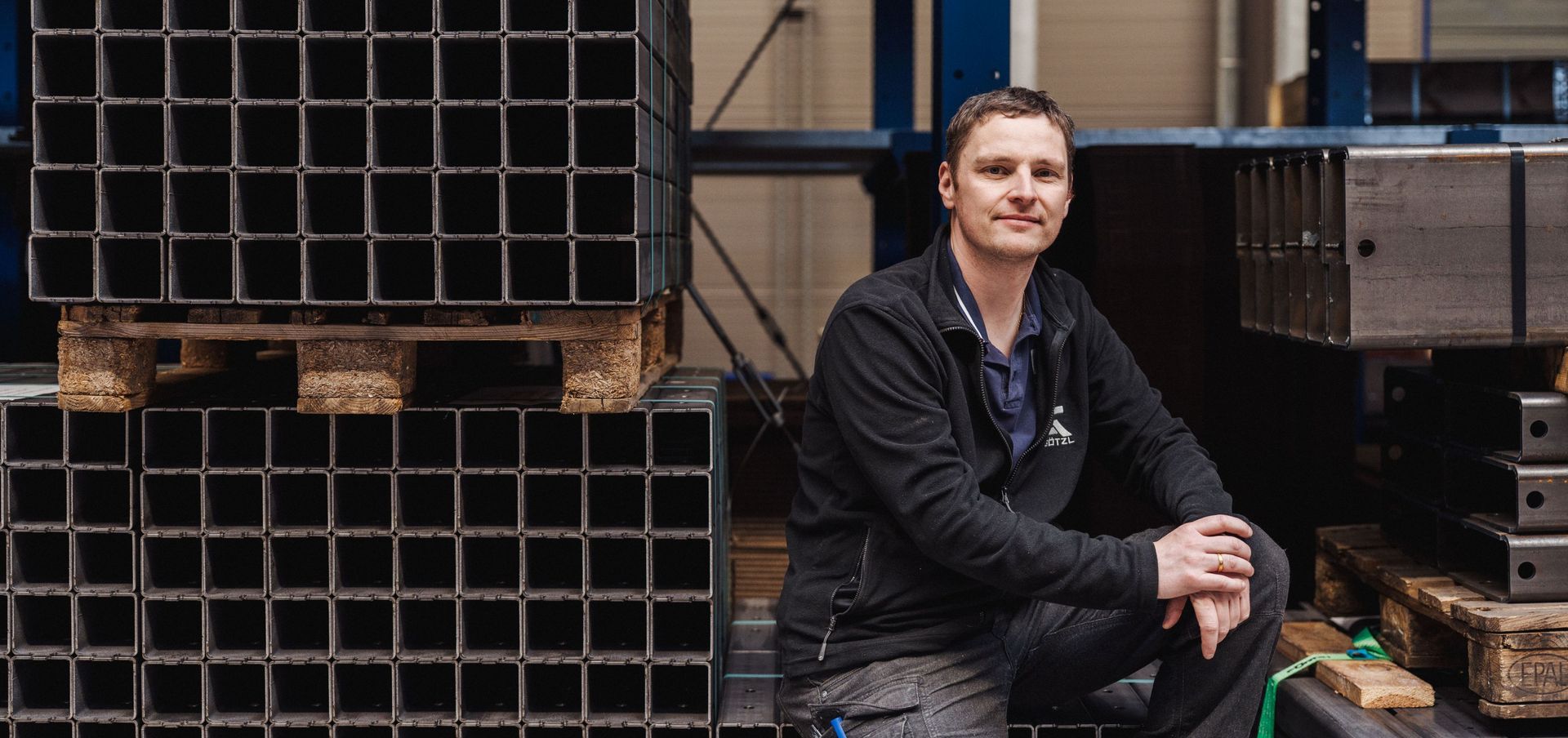
Early starter: Peter Götzl had already set up his own business by the age of 18 and now runs one of the most modern laser tube cutting job shops in Germany.
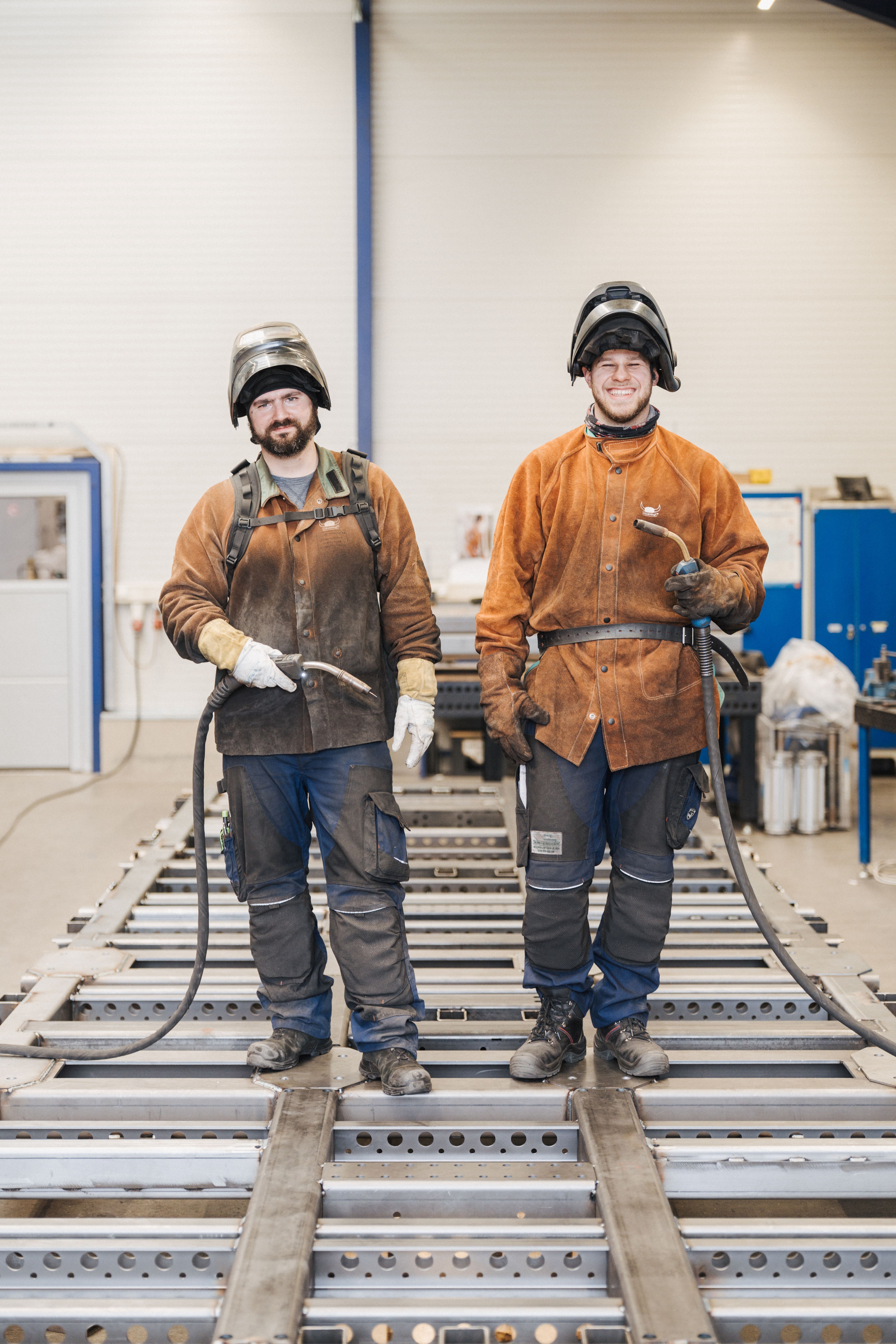
It's a hive of activity in the high-tech job shop: some tasks are still carried out by hand by production staff, who are well protected in their welding suits.
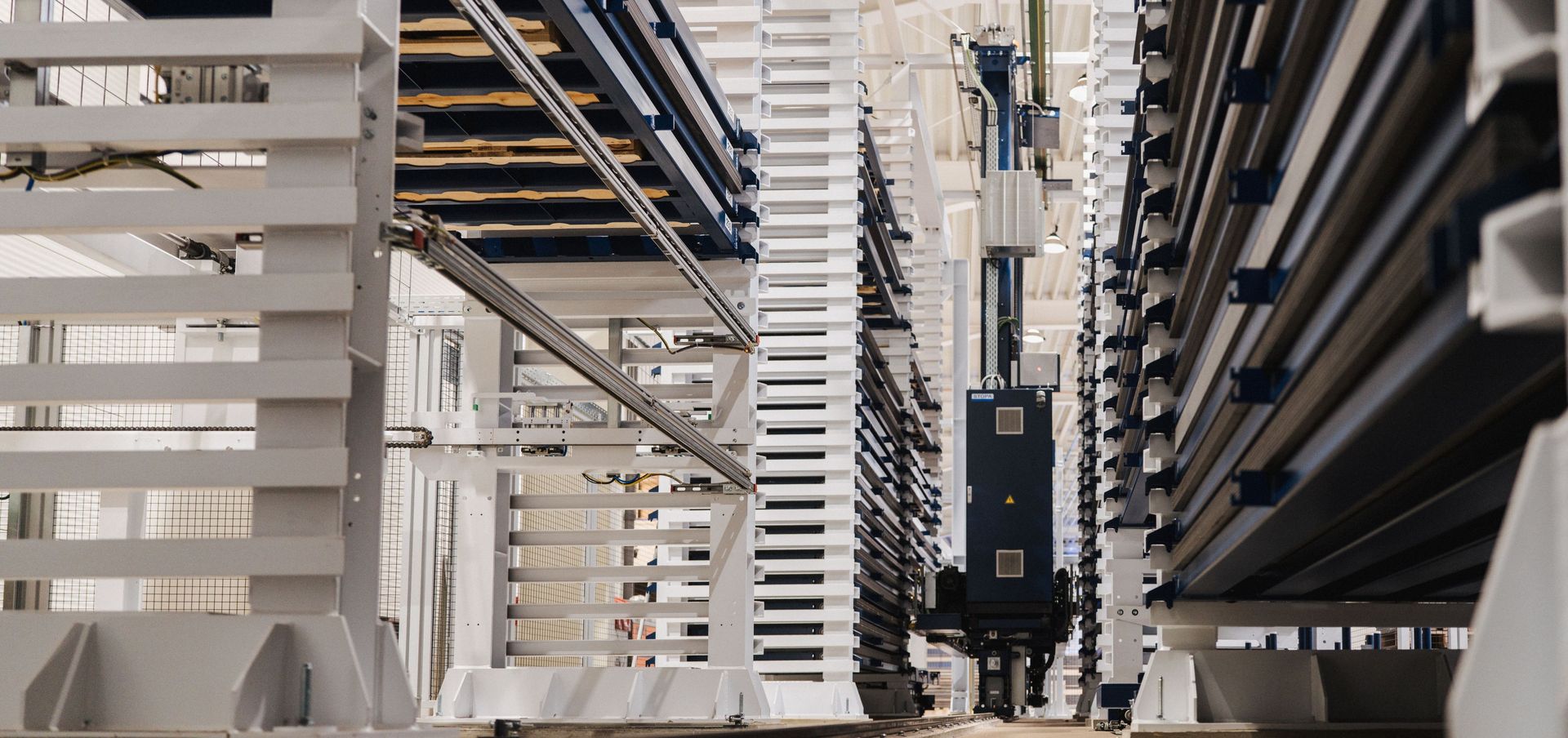
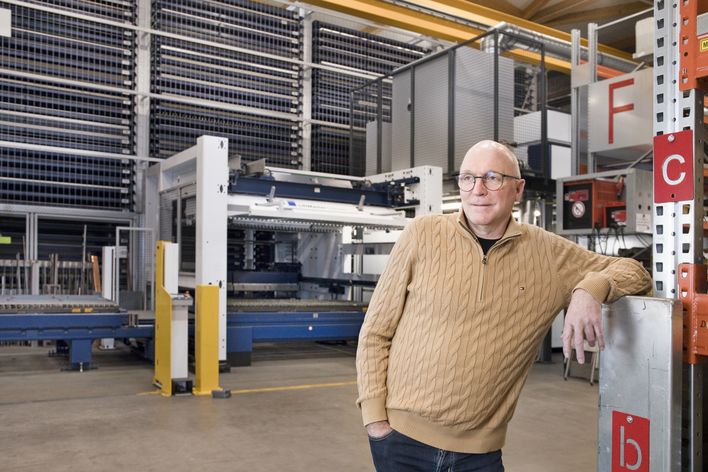
The large-scale storage system: STOPA sets the sheet metal on its production journey entirely automatically – and retrieves the finished parts with the same level of efficiency.
Entrepreneur on the move
May 2005. Peter Götzl is just 18 years old, and has just received his master craftsman's certificate – and is already in the process of setting up his own business, a metalworking shop. What about his prior training? Cut short! The apprenticeship period? Just two months, followed by his masterclass. Götzl is diving headfirst into entrepreneurship. Whilst others are still pondering what they want to study, he is in a friend's tiny milling shop, crafting his first railings and fences. Backed by state funding as a one‑person start‑up. With little capital, but plenty of momentum. Yet for a long time, he was more of a shy young lad than a go-getter. At his father's hotel and in his grandfather's workshop – his grandfather was a master mechanical engineer – he learnt first‑hand what it means to be an entrepreneur: doing everything yourself, around the clock. But now, all of a sudden, he has to be able to do more than just the work – he has to sell and negotiate. Above all, he has to win people over. When dealing with customers and banks, he quickly realised the downside of his early start: who would trust such a young managing director? "That was the biggest challenge for at least ten years," says Peter Götzl. His conclusion: "Experience can only be replaced by hard work. And business only works if you deliver quality and meet deadlines." That is how this newcomer builds his reputation – order by order, through quick, reliable responses and dependable delivery times
Breaking new ground with laser technology
By 2011, his first premises were up and running and he had taken on additional staff. But with success came a new problem – the more railings and fences he produced, the more frequently he needed design components like railing infills and top plates. These would be very labour-intensive to produce by hand, so he buys them in as laser-cut parts. However, their long delivery times do not fit in well with Götzl' plan.
Instead of a solution to the delivery problem, Peter Götzl comes up with a new vision – laser cutting technologies. First, he plans to use a laser flatbed machine to produce the design components he had previously purchased, saving valuable time. At his request, his TRUMPF consultant introduced him to an even better option for his core business – the powerful TruLaserTube 7000 laser tube-cutting machine. Götzl is instantly impressed. During the live demo at the Ditzingen Customer Center, it becomes obvious to him – railings, stairs and balconies can be cut far faster and far more precisely than with a band saw and by hand. And with it, gain a competitive edge – and attract new customers! However, to install the TruLaser Tube 7000 and utilise it to full capacity in a cost‑effective way, he needs a new production hall – and additional staff for shift work.
The construction of hall number two in spring 2014 marks the moment the company's growth story truly began. Thanks to the highly productive laser tube cutting technology, production speeds are nearly doubled – while precision also takes a step forward. The company is transformed from a traditional metalworking shop to a modern contract manufacturer. And just as when the company was first set up, this head start had its downside, as not every customer was familiar with the concept of laser tube cutting. Everyone was familiar with milling or turning, but not with tube lasers. "That's why I often send out sample parts, as they're very persuasive," says Peter Götzl.
The courage to expand his business model using new technology has paid off. Götzl now supports other laser tube cutting service providers with large‑scale orders and manufactures a wide range of parts – including large-scale production series – for applications such as vehicle swap bodies, high bay storage racks, seating furniture and solar energy systems. Once the first TruLaser Tube 7000 was running at full capacity in 3‑shift operation, he purchased a second one in 2017. He soon found himself impressed not only by the machines but also by TRUMPF's service.
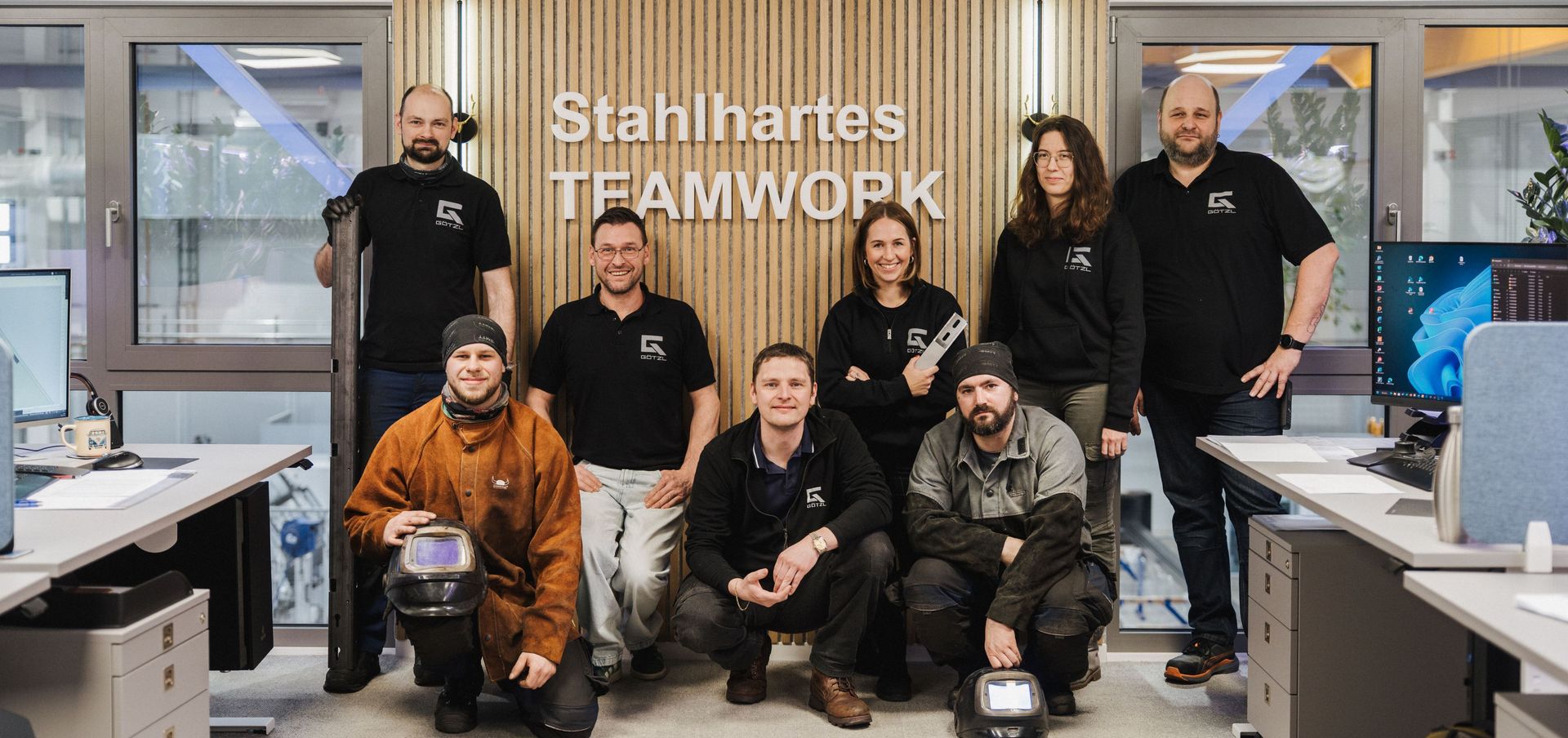
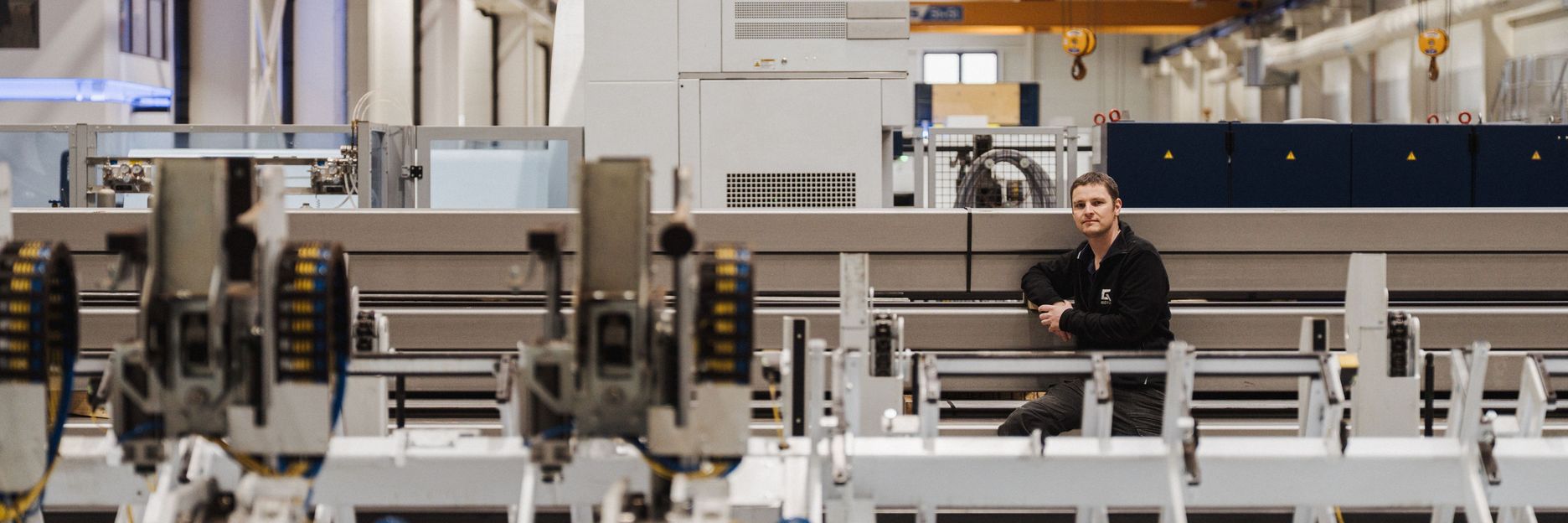
A sense of unity: In the end, success and quality stem from a single place – the team.
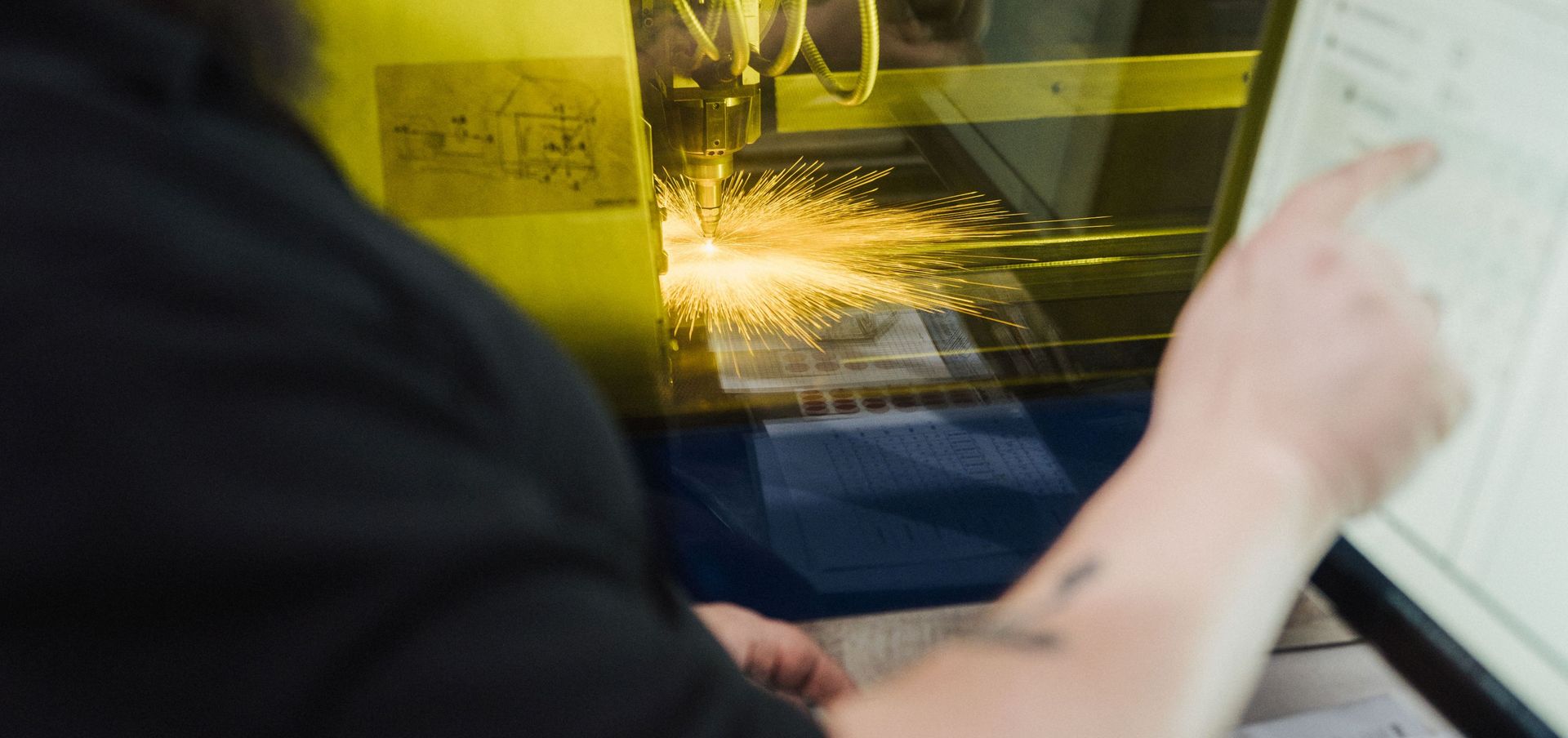
Inside the machine, the metal glows red‑hot – on the monitor, everything is calm and professional.
Peter Götzl (left) and his operations manager Robert Walberer keep an eye on all processes.
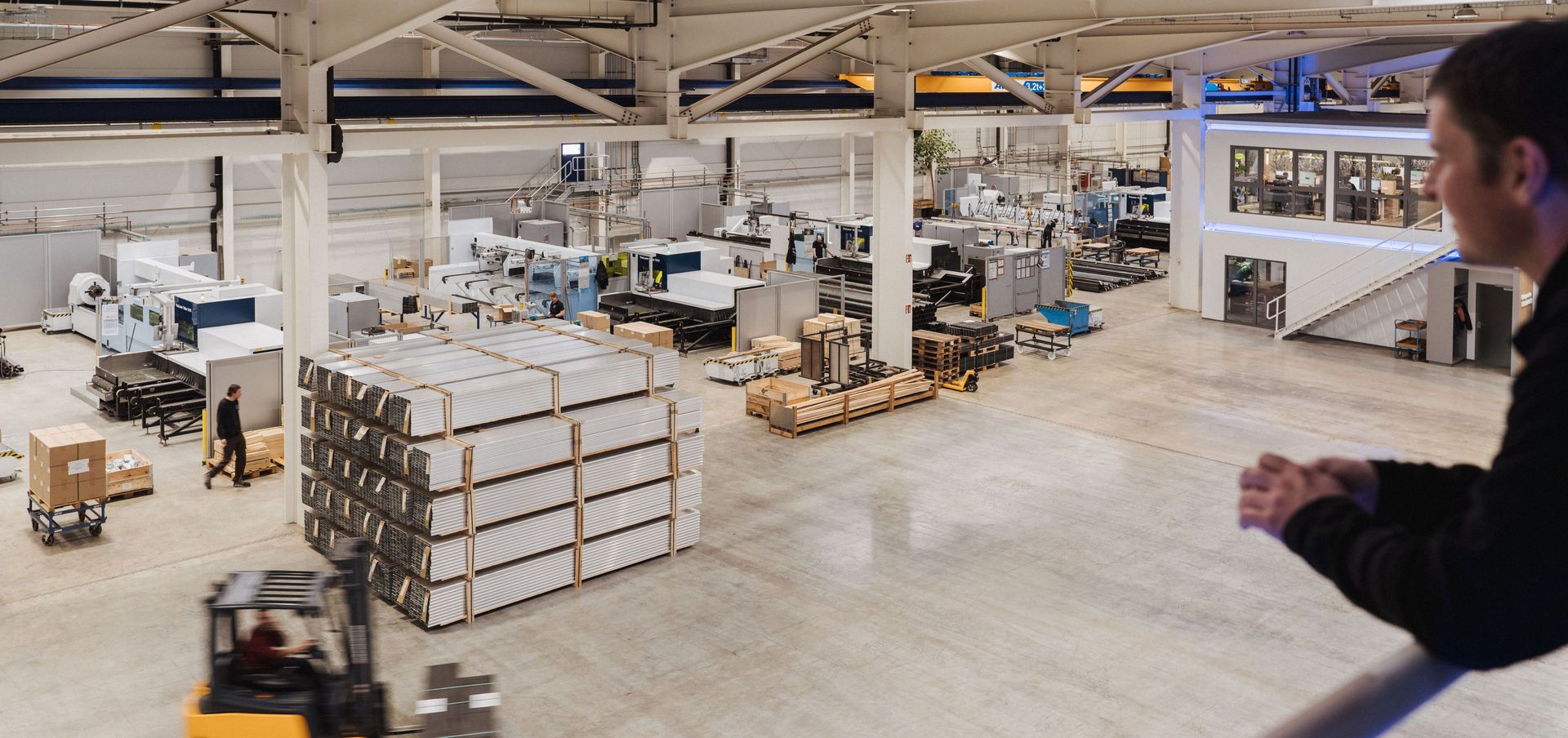
Chicago sends its regards: Taking the TRUMPF Smart Factory as his model, Peter Götzl set up a fully automated sheet metal processing facility in Erbendorf.
Chicago in Erbendorf
At 11 pm on a summer's night, a laser tube-cutting machine suddenly comes to a halt with a damaged laser head. Half an hour later, Peter Götzl had looked up the material numbers for the required spare parts in the TRUMPF online database – and ordered them by telephone from TRUMPF for express delivery. The van arrives at 5 am; by 6 am, the laser is up and running again, cutting tubes reliably. "And that's not the only reason we rely on them – the machine design, the software and, above all, the people at TRUMPF, who are always there for us," emphasises Peter Götzl.
With this statement, we return to "Chicago in Erbendorf", the vision from 2017. Together with TRUMPF, Götzl is planning a state-of-the-art sheet metal production facility. To achieve this, he is acquiring more land, constructing a third hall and expanding his machine pool to seven laser tube-cutting machines – among them a TruLaser Tube 7000 with six kilowatts of laser power and a 12.5‑metre loading and unloading length, one of only three machines of its kind in the country. "This makes us Germany's largest laser tube cutting job shop without our own product range," says Peter Götzl proudly. Sheet metal production is fully automated and highly versatile – featuring TruBend bending machines, TruDisk disk lasers, a 24‑kW flat‑bed laser cutting system and a punch laser machine, all linked to the STOPA large-scale storage system, which supplies the machines with sheet metal and stores finished parts. The Oseon software for material flow and production control also ensures optimal planning and provides the necessary transparency.
Since 2019, Götzl has invested some €25 million in the project, of which €12 million has gone into TRUMPF technologies. Over-engineered? Not according to Peter Götzl: "he production facility is designed to meet the standards of the next ten years. With more laser power, I can cut faster, including thicker materials, which opens up new markets. In addition, customers are increasingly ordering assemblies rather than individual tube parts. We're ready for anything." However, he hasn't run out of ideas for the future: "We've only just implemented the basic version of the Chicago model. There's more to come."