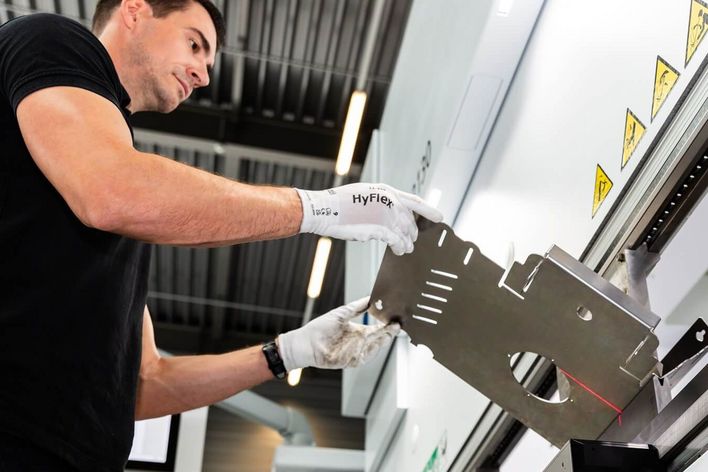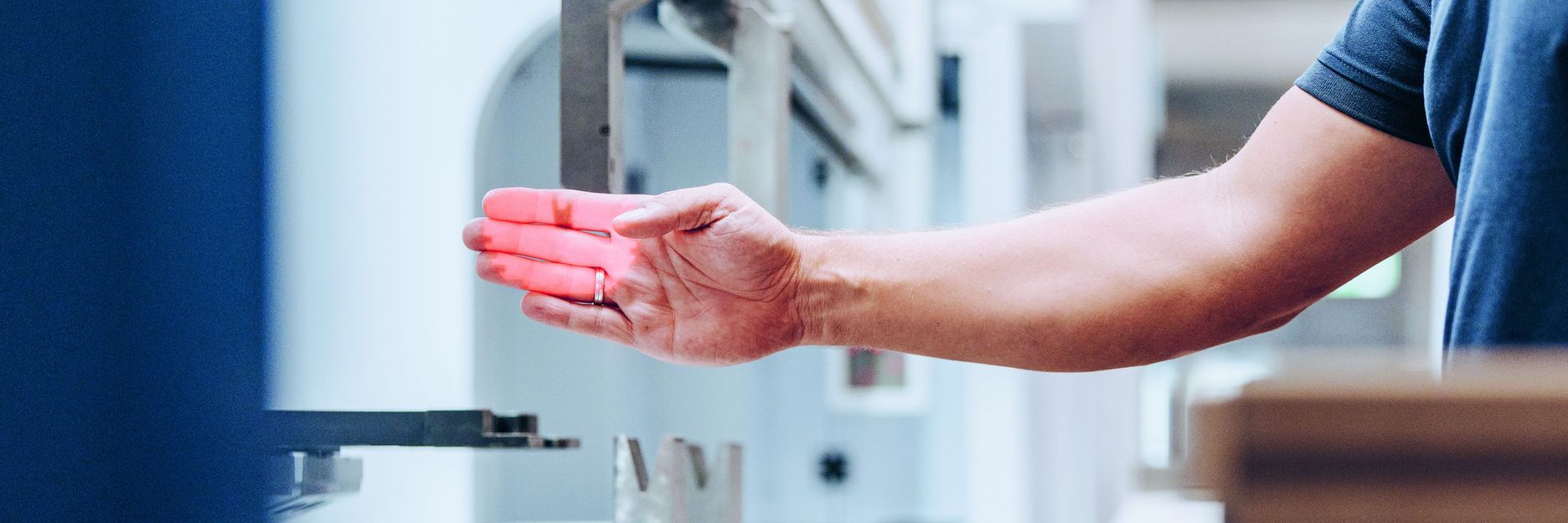
TRUMPF’s Customer Center in Ditzingen – A TruBend 5230 is bending a stainless-steel sheet several millimeters thick, and its 230‑metric-ton press force makes the material look almost pliable. Andreas Kuch, a machine operator at TRUMPF, started the machine after carefully positioning the sheet between the bending tools – but seconds later it suddenly comes to a halt. Kuch moved his hand too close to the bending tool, and the BendGuard – an integrated laser safety system – recognized the danger and switched the machine off in mere fractions of a second. This is one example of the kind of safety system that allows people to work safely with TRUMPF machines all over the world.
Product safety from the outset
Last year, German professional associations registered over 780,000 notifiable workplace accidents, a quarter of which involved machines and tools. Most of the big machine makers invest significant quantities of time, money and innovation in preventing such accidents. At TRUMPF, the task of making its machines as safe as possible falls to the Product Compliance central department, working alongside safety specialists for each of the different machine types. It starts with repeated risk assessments at the development stage and continues well beyond the safety acceptance sign-off following installation at a customer’s site. Before the machine is put into service, TRUMPF experts provide the customer’s employees with comprehensive training – not just on how the machine works, but also on the many ways in which it keeps them safe.
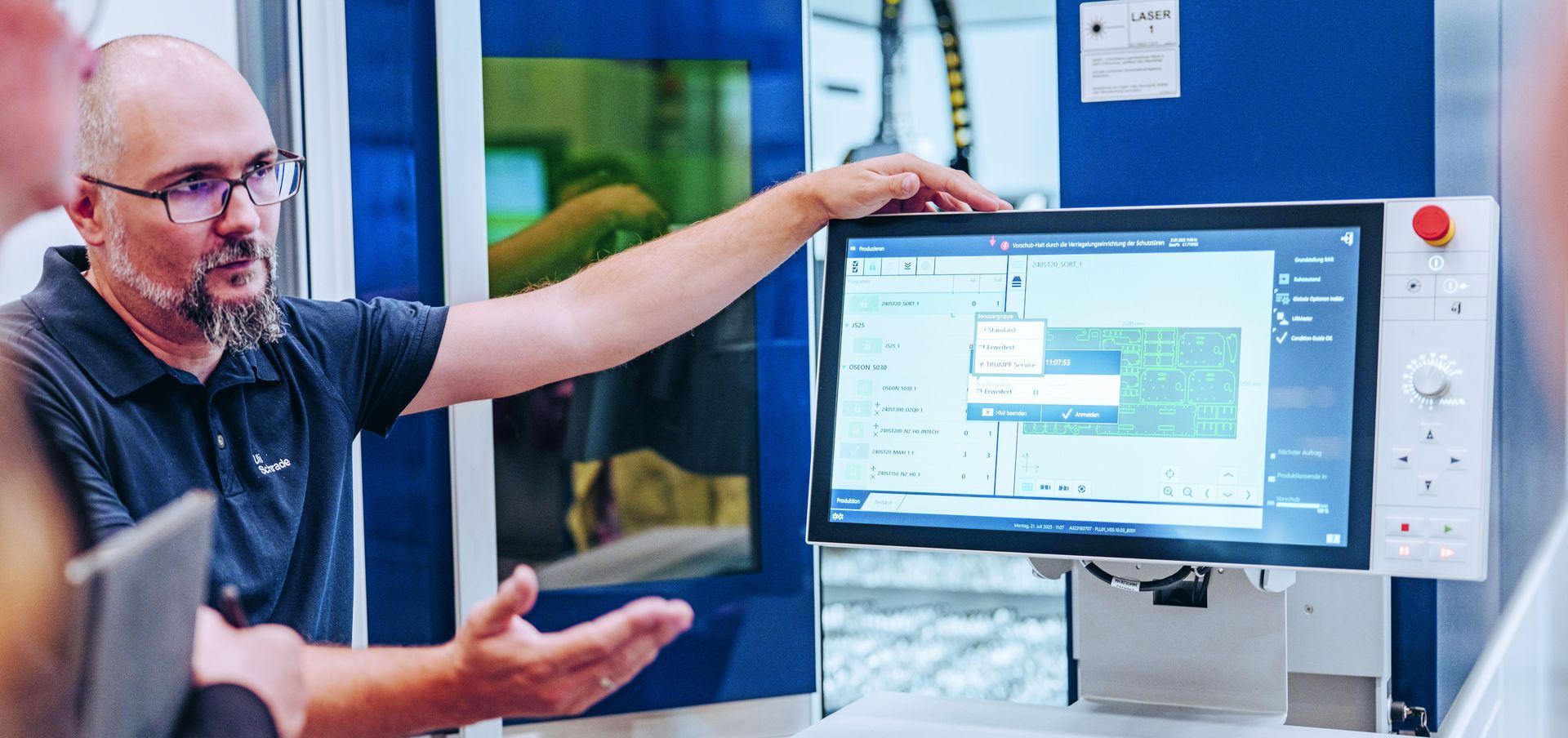
Control panel: Demonstration engineer Uli Schrade shows how every safety parameter is clearly visible on the display before the laser can start.
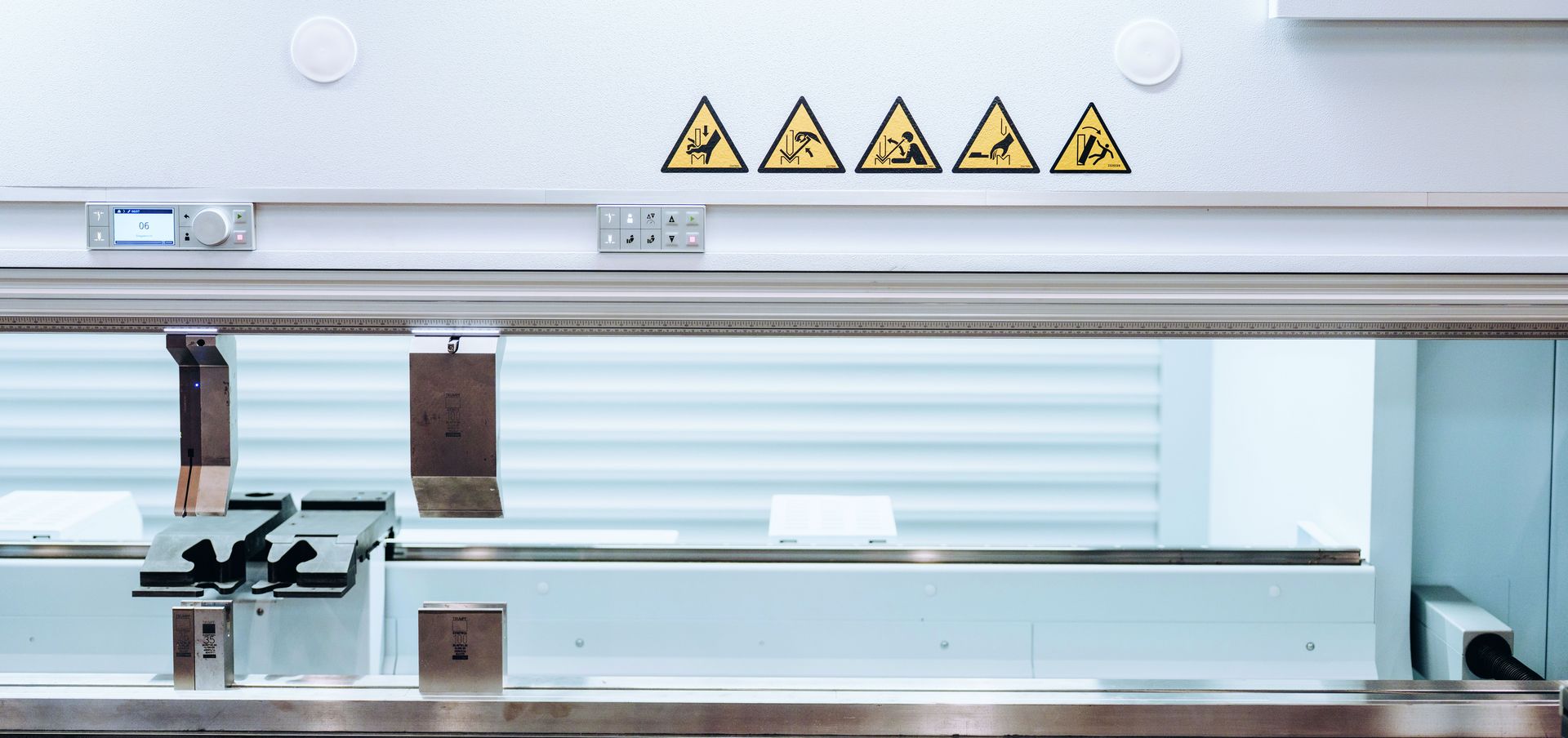
BendGuard: Safety instructions are always in the operator’s line of sight. The BendGuard technology itself remains invisible, yet is capable of shutting the machine down in fractions of a second when necessary.
Imported risks
It has long been clear, however, that some of the systems in European manufacturing facilities do not comply with current EU safety standards, especially when it comes to laser-cutting machines. This was even evident at Blechexpo 2021, one of the two leading fairs for sheet-metal fabrication in Europe. A visitor to the fair was actually able to open the door to the interior of a laser-cutting machine from Asia while it was in operation. The laser beam was still active – a hazardous situation since laser radiation poses a significant risk to people’s eyes.
Incidents like this have raised the alarm among market surveillance authorities, which are now running regular inspections of machines exhibited at trade fairs to determine whether they comply with safety standards. Machines that fail to pass the test are shut down or rated as non-compliant. Nonetheless, some manufacturers, especially low-cost providers from Asia, continue to ignore these requirements, which is why fair visitors still come across machines with open doors or missing beam guard devices. It’s impossible for the authorities to check every machine, but they are certainly ramping up their work, probably spurred on in part by TRUMPF’s efforts in this area.
Safe door, safe glass
We’re back at the TRUMPF facility in Ditzingen. Sparks are flying in a TruLaser 5030 as the laser beam cuts through a sheet with millimeter precision. Demo technician Uli Schrade rattles the door leading into the machine – and it stays firmly closed. If he were to attempt to force his way in, the machine would immediately turn itself off. Door interlocks prevent it from operating if the door is open. If someone were to enter the danger zone where the automation system is at work, this has its own separate safety features to shut the machine down, such as door interlocks or a safety light curtain. And anyone watching the laser-cutting process through the viewing window can do so with confidence: special protective glass shields the eyes and achieves laser class 1 safety.
Product safety expert Sonja Pfenninger points out further, invisible safeguards: an extraction unit removes harmful dust in seconds; a complex network of light curtains divides the system into separate hazard zones so the operator can work safely and comfortably; and some interventions even require conscious acknowledgment of the safeguards – for example by pressing a foot pedal or a button.
“There are strict rules for many of these machines,” says Alexander Kunz, head of Product Management and International Sales at TRUMPF in Austria. “But some competitors simply don’t stick to them.” Kunz has seen machines with signs saying “Please wear safety glasses” – a clear indication that the viewing panel in the door is not made from protective glass. He has also come across equipment bearing counterfeit CE markings that create a false impression of safety while falling far short of European requirements.
Protecting operators, owners and manufacturers
“We want to protect operators from injury and companies from financial risk,” says Kunz. Unsafe machines can threaten an SME’s very existence, because the machine owner is also liable in the event of an accident.
TRUMPF works on multiple levels to improve occupational safety. Following the Blechexpo incident, a team led by Kunz and Pfenninger drew up a checklist for laser-cutting machine safety that was recognized by Germany’s Federal Institute for Occupational Safety and Health. Using this checklist, TRUMPF trained market surveillance officials to make them better at spotting safety deficiencies.
Plugging safety gaps
TRUMPF service technicians are also careful to keep an eye out for unsafe machines at customer sites; if they identify a hazard, they notify the customer in writing. And if the risky machine is located in the technician’s immediate work area, they can insist that it be switched off.
Retrofitting an unsafe machine can be expensive, sometimes running into five figures. That’s why TRUMPF and other European machine makers are demanding that importers comply with local safety regulations when they bring machines into Europe and asking authorities to enforce these regulations more rigorously.
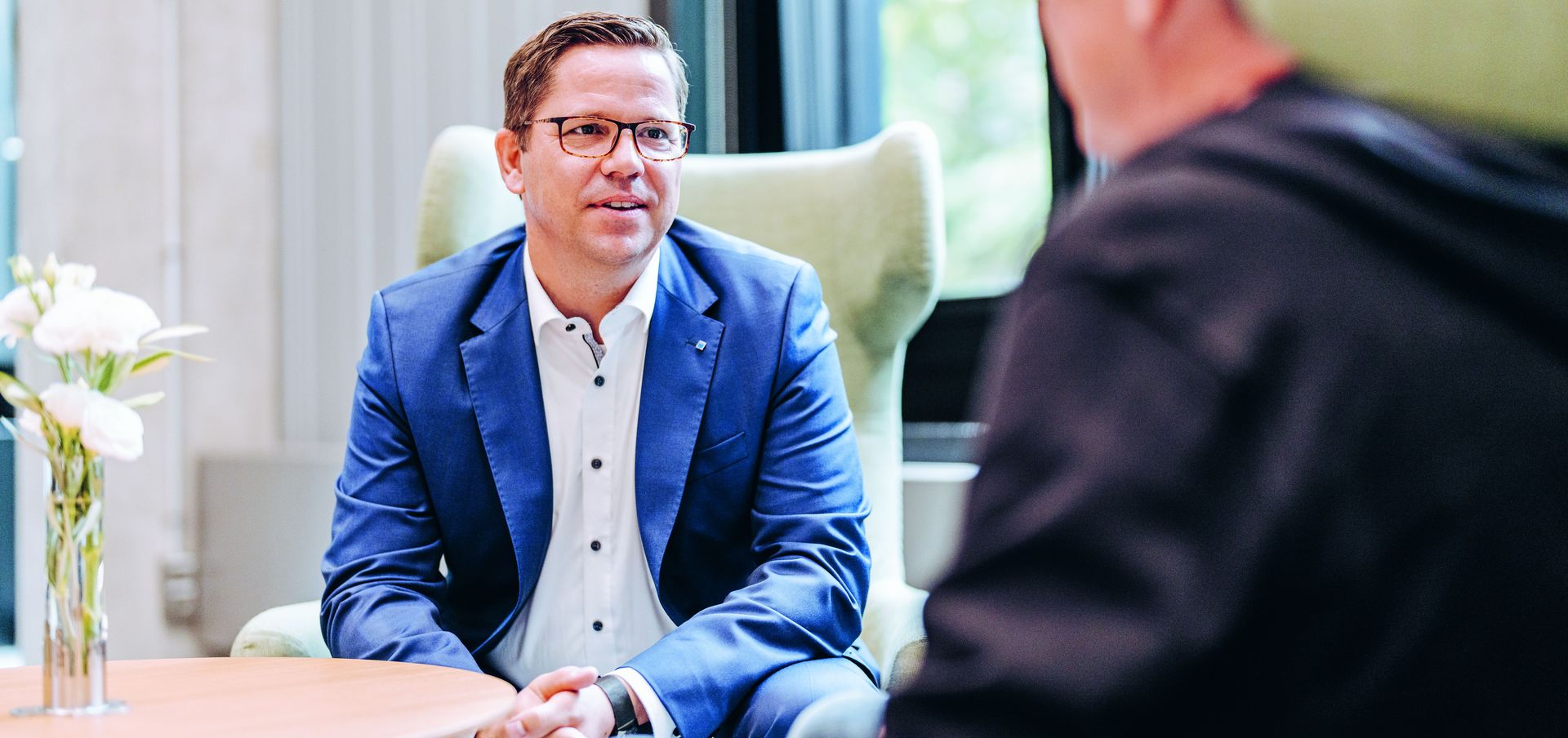
Checklist: Together with fellow specialists, Kunz has drawn up a comprehensive safety checklist for laser-cutting machines. Market-surveillance authorities now use the checklist as well.
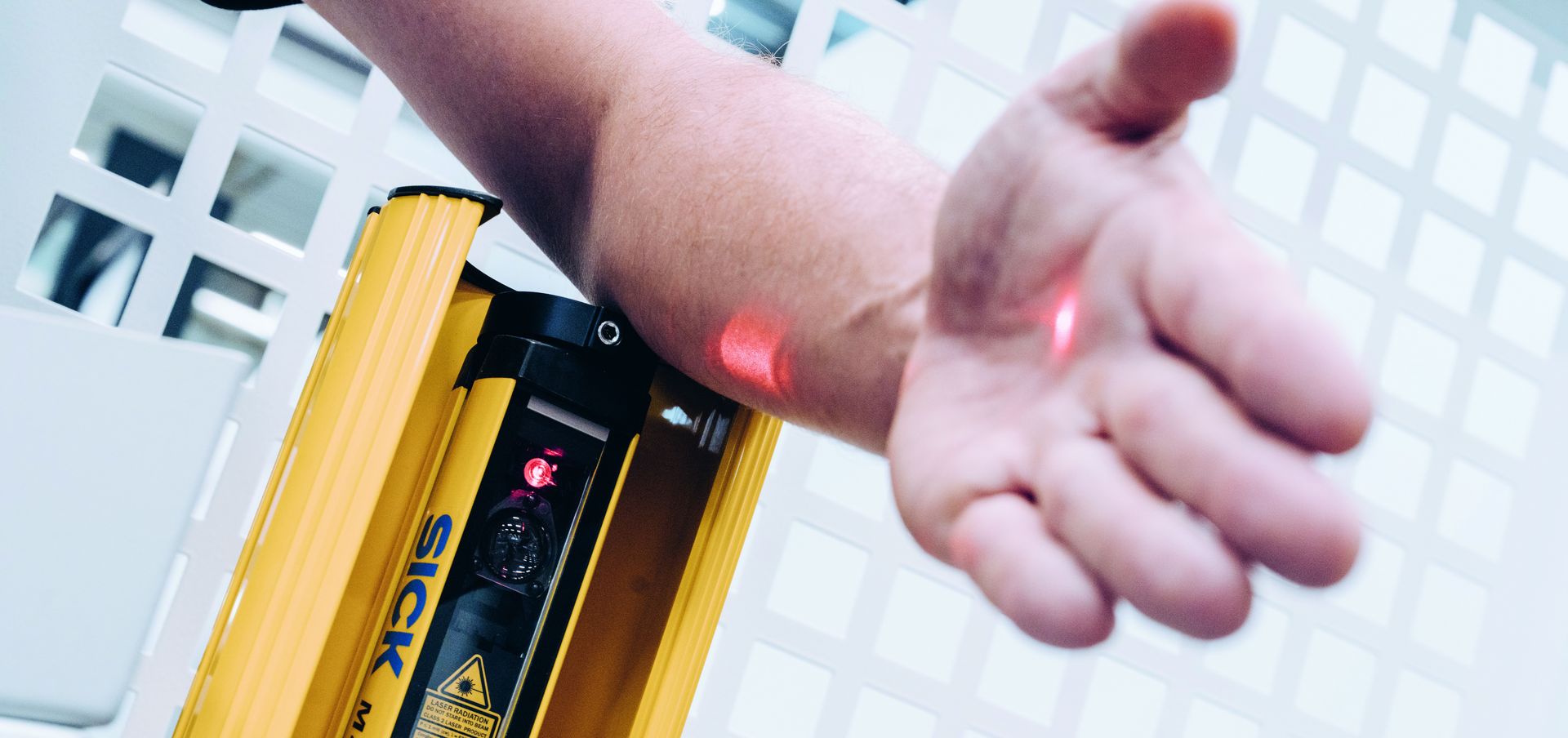
Light curtains: An invisible web of light curtains ensures that TRUMPF machines run only when nobody is present in the safety zones.
Complex market surveillance
Six leading European machine builders have petitioned policymakers and the European machine-tool association CECIMO to establish a single EU-wide market surveillance authority. At present, there are around 500 such authorities operating in Germany alone, and about 2,900 across Europe. They use more than 50 different IT systems, and there is a clear lack of consistency when it comes to interpreting the existing rules. The association has called for closer cooperation between industry, customs and market surveillance authorities to ensure compliance with EU product safety directives and regulations – and to level thecompetitive playing field.
“The fact is that machine safety eats up an enormous amount of time and money,” says Kunz. “That simply isn’t reflected in the price of many low-cost machines. That’s why I strongly urge anyone in the sheet-metal community buying imported equipment to take a close look at it themselves. It’s always better to double-check!”
At TRUMPF, staying safe means not only protecting machine operators, but also protecting sensitive data. Cyber security is therefore a top priority, especially where customer information is concerned.
How TRUMPF enhances the security of its data, products and processes at every level.
These efforts focus on three key areas:
- Information security: TRUMPF’s Ditzingen site maintains ISO certifications across all business units to protect internal and customer-specific data. At the same time, the company is preparing to implement the EU directive on network and information security, which mandates strict reporting requirements for security incidents.
- Product security: All TRUMPF products are developed to the standards laid down in the EU Cyber Resilience Act, which sets binding security requirements for digital components. Secure software-development processes, detailed risk analyses and regular security updates further enhance product reliability.
- IT security: An annually updated Cyber Security Roadmap sets clear milestones and drives the continuous improvement of TRUMPF’s overall level of IT security.