Lot sizes ranging from 50 to 200, complex components and tight tolerances – the bending process at CLAAS is challenging. At the same time, cost pressures and the demand for skilled workers are on the rise. For CLAAS , automation is therefore a logical next step – provided it is effectively integrated into the production process. "Automation should not be an end in itself," says Marco Schwab, head of sheet metal processing at the CLAAS site in Bad Saulgau, Germany. "It must be a good fit for our components, our lot sizes, and, above all, our employees."
Investment in Automation
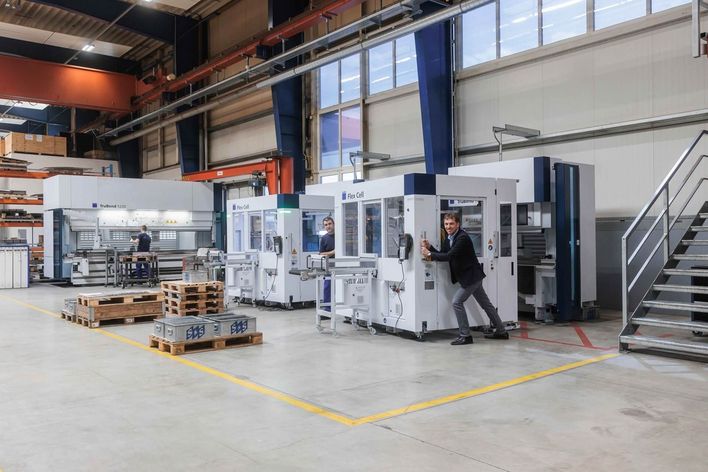
CLAAS , with headquarters in Harsewinkel, North Rhine-Westphalia, Germany, has made a name for itself worldwide as an innovative manufacturer of agricultural machinery. The company manufactures components for forage harvesters and attachments for forage harvesters in Bad Saulgau. "We have a wide variety of models in this segment," explains Schwab. For a long time, this diversity posed particular challenges for the bending process. "We machine parts with simple bends as well as highly complex components with up to 13 bends," Schwab explains. As part of a group-wide investment program focused on automation, CLAAS therefore deliberately opted for a phased transition to automated bending: with a TruBend 5000 bending machine with an automatic ToolMaster tool changer, as well as a TruBend 7050 bending machine with the corresponding bending automation system FlexCell from TRUMPF.
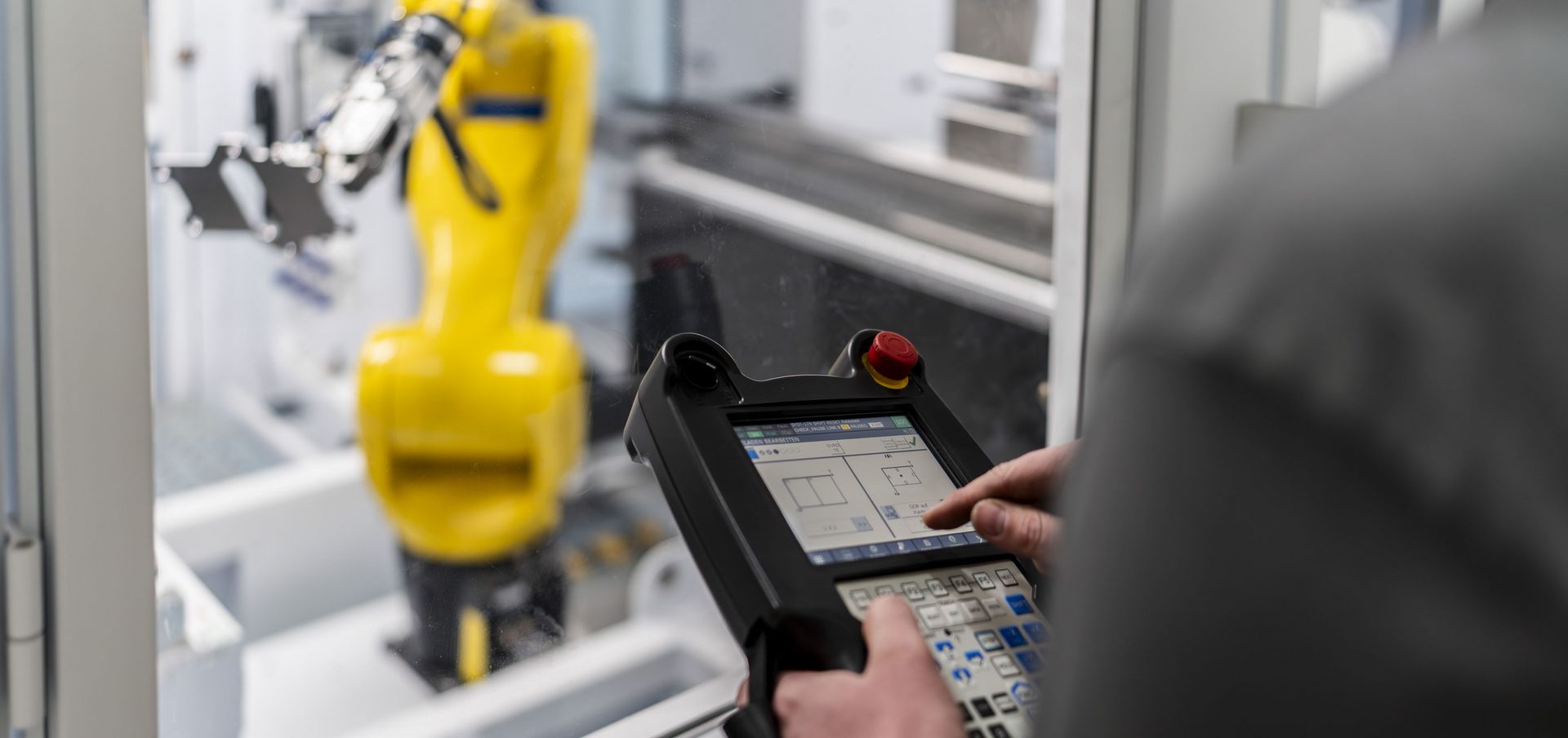
Intuitive controls allow automated processes to be monitored and adjusted flexibly. Automation that is tailored to the components, lot sizes, and above all the employees.
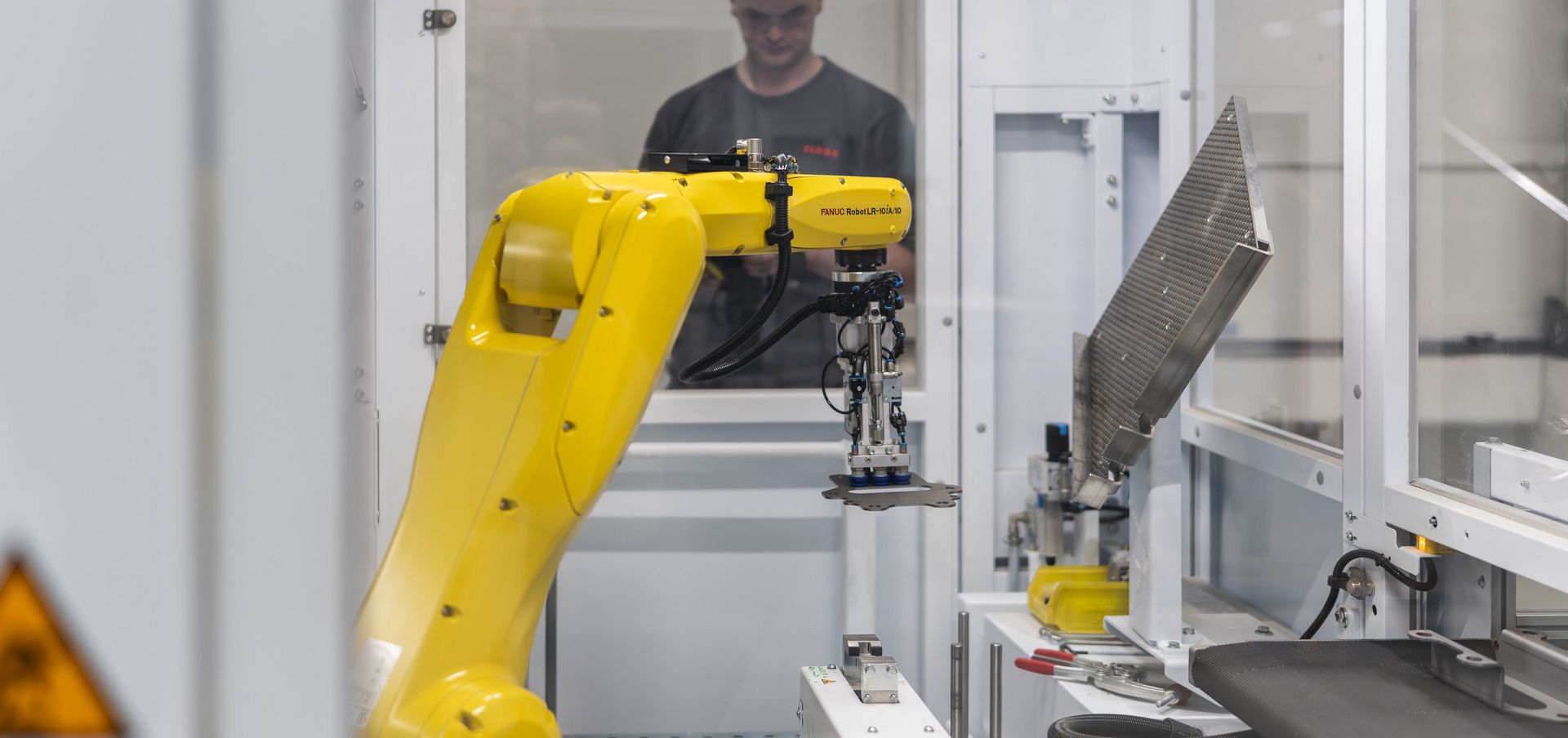
In the production department, an automated press brake from TRUMPF also ensures flexibility and cost-effectiveness. Employees monitor and oversee the processes.
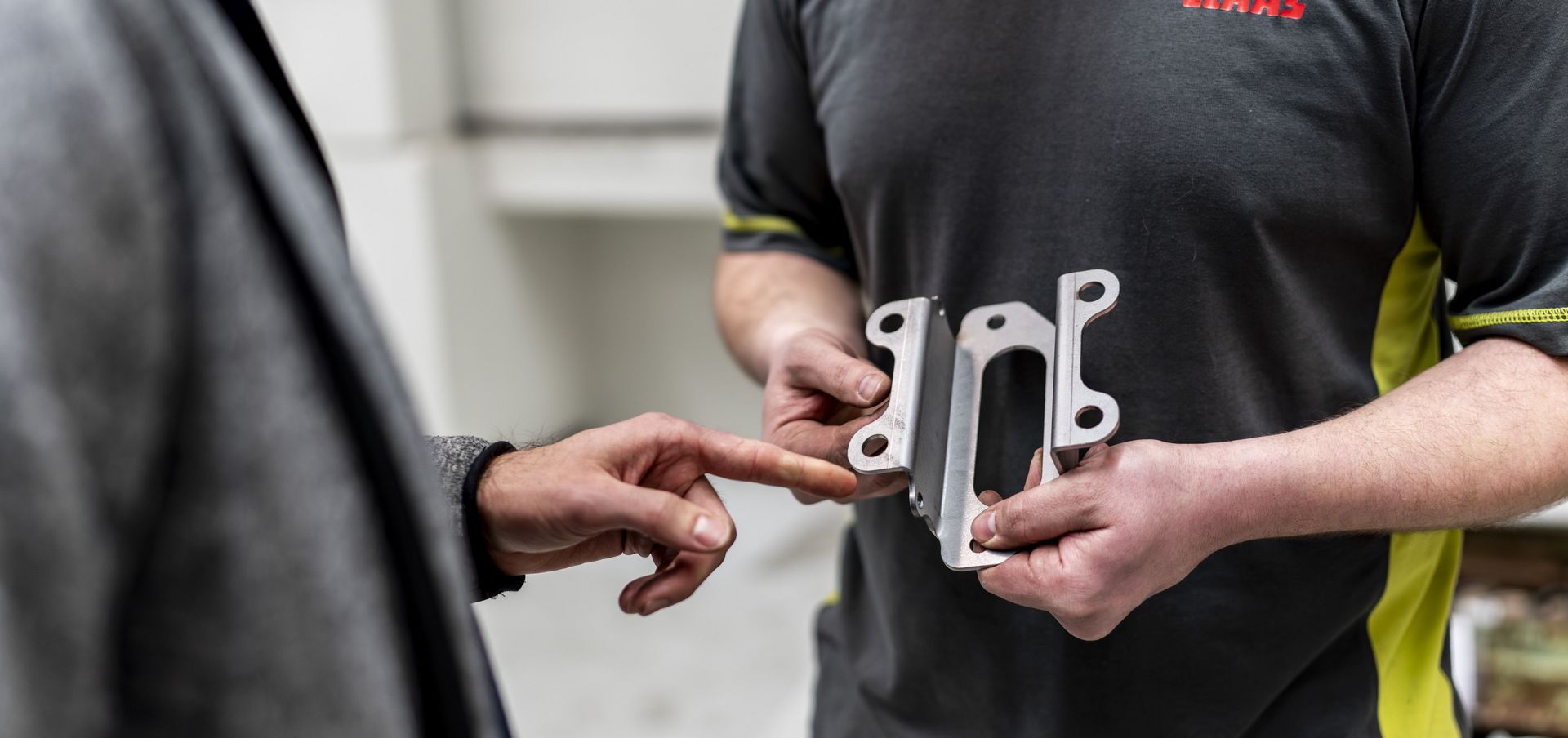
Every component meets the most stringent quality requirements. After bending, the parts are robot-welded, so the tolerances are correspondingly tight, at plus or minus 0.25 degrees.
Ergonomic and Productive
The TruBend 5000 with an automatic tool changer replaces an older press brake and provides greater flexibility and ergonomics in day-to-day operations. "We machine long, heavy tools with clamping lengths of up to three meters," says Schwab. "If an employee has to manually set up the equipment several times per shift, it puts an enormous physical strain on them." Automatic tool change offers real advantages here. More importantly, the new machine resolves a previous bottleneck, as the special bending tool had previously only been available on the existing equipment – resulting in a bottleneck. "Now we can manufacture large components in parallel on two machines – this gives us considerably more certainty in terms of planning."
Maximum Flexibility with FlexCell
However, the real milestone towards automation is the TruBend 7050 with FlexCell. The flexible, retrofittable bending automation system from TRUMPF can be disconnected and reconnected in just a few simple steps. This enables the TruBend 7050 to be converted into an automated bending cell when required and turned back into a manual press brake just as quickly. "The FlexCell was the perfect starting point for us," says Schwab. "We can automate larger lot sizes, but can switch back to manual operation at any time if necessary." "This flexibility was the deciding factor for us."
During day-to-day production, the system is now primarily automated – and even unattended during off-peak and night shifts. At the same time, it serves as a backup, for example, for complex parts or when capacity is needed at short notice.
Consistent Quality – Even During Unattended Operation
Despite all the freedom that automation offers, component quality is always the top priority at CLAAS . This is not just part of the company's philosophy, but also a result of the production process: After bending, many parts are robot-welded, so the tolerances are correspondingly tight. "We're talking about plus or minus 0.25 degrees here," says Schwab. "We have to maintain this from the first to the last part of a lot – even when the system is unattended at night." The automated systems keep up. With the FlexCell , Schwab and his team have had very good experiences: Quality is consistent, processes run smoothly, and rejects in larger lot sizes can be avoided.
Smart Bending
As a family-owned company, CLAAS is always mindful of its responsibility toward its employees. This is especially true when new technologies significantly change processes. "Of course, our colleagues respected the automated processes at first," Schwab admits. "But that settled very quickly." Today, they handle other tasks: monitoring, process optimization, and quality control. "Robot programming and digital process control are particularly appealing to younger employees," says Schwab. "I believe that automation significantly enhances the status of the bender’s profession."

CLAAS has deliberately opted for a phased approach to automated bending. With machines that fit flexibly, cost-effectively, and sensibly into the production process.
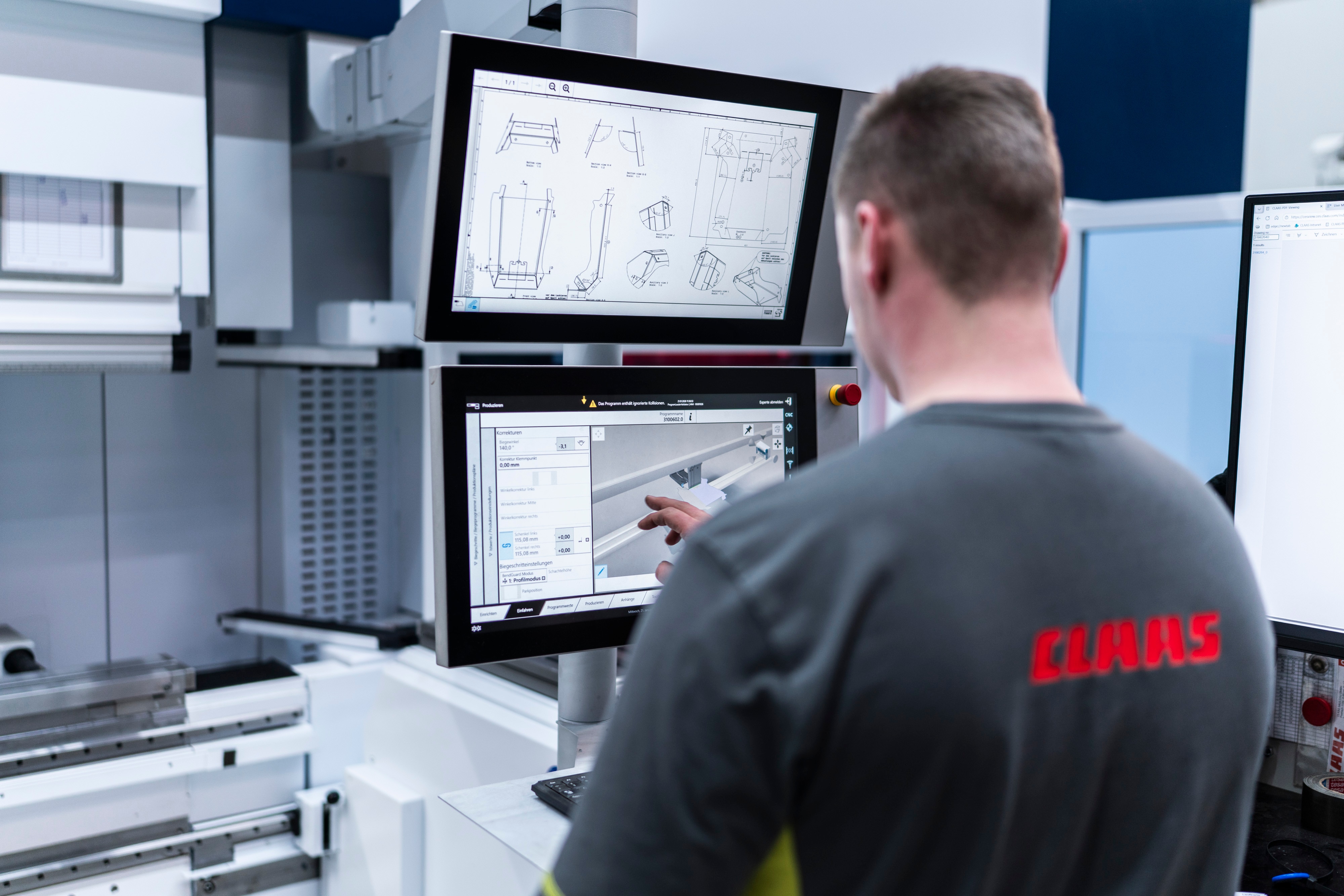
Despite all the freedom that automation offers, component quality is always the top priority at CLAAS. Consistent quality even during unattended operation.
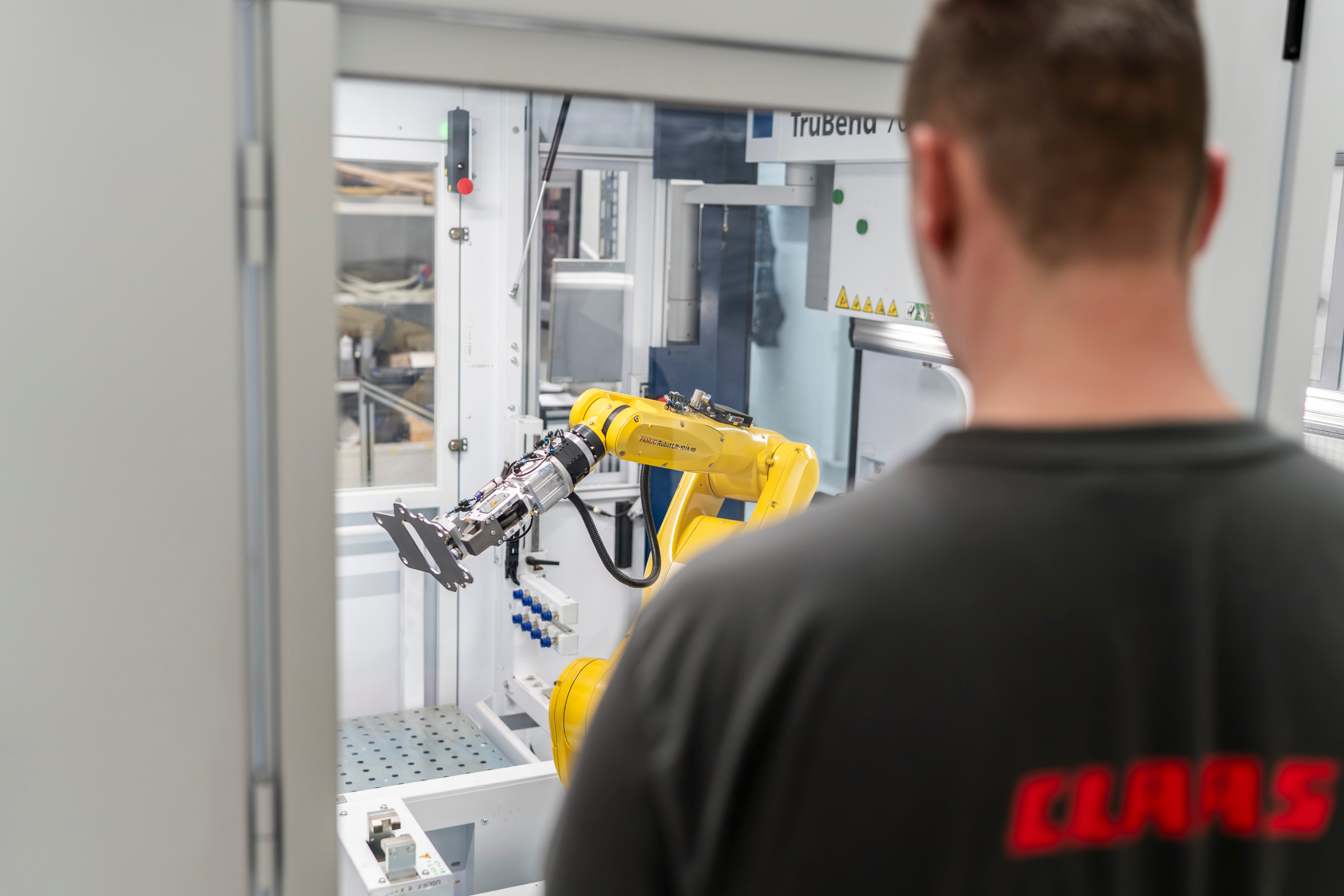
The FlexCell can be detached and reattached in just a few simple steps. This enables the TruBend 7050 to be converted into an automated bending cell when required and quickly be turned back into a manual press brake.
More Productive with Fewer Shifts
The investment also pays off financially. With the TruBend 5000, CLAAS was able to reduce production from three shifts to two. "The machine is not any faster than the old one," Schwab explains. "But overall, we are more productive – that makes a big difference."
For CLAAS , the move to Bad Saulgau is therefore just the beginning. Additional automation projects, such as those in the laser area, are already being evaluated. A pragmatic approach remains important here. "For us, automation is clearly an opportunity," Schwab sums up. "But you have to use it wisely. Where it makes economic sense, where it improves quality, and where it supports our employees. That is exactly what we have achieved with these two bending machines."