A component from a TRUMPF production plant is on a table in the development hall of the high-tech company. It has a red label with the inscription "Locked". One measurement is not correct. Just one millimeter. But enough to cause problems when assembling the machine. "The part did not pass the quality test," says Danijel Novak, Quality Inspector at TRUMPF. Next to him is Thomas Kieferle, responsible for production quality at the Ditzingen and Hettingen sites. 15 identical components from the same batch are lying on a pallet next door. Novak has also taken them out of circulation for the time being. Now the discussion begins: Can TRUMPF still use them? Or do they have to be thrown away? Novak will carry out further tests to find out.
Johannes Böttcher is Head of Quality Machine Tools at TRUMPF. What happens to the process affected by these defective parts is even more important to him than the parts themselves. "If something is not running optimally, our aim is to continuously scrutinize processes and take countermeasures as quickly as possible." On this day, he is giving a tour of the Ditzingen site. From goods receipt through to production, the testing and service departments. All the areas where experts make decisions about quality, long before a machine is delivered to the customer. "We believe quality is not just a test to be completed at the end," emphasizes Böttcher. "It runs through the entire value chain." The claim behind this is clear: the earlier TRUMPF detects deviations, the lower the effort, costs, and risks for the customer's business.
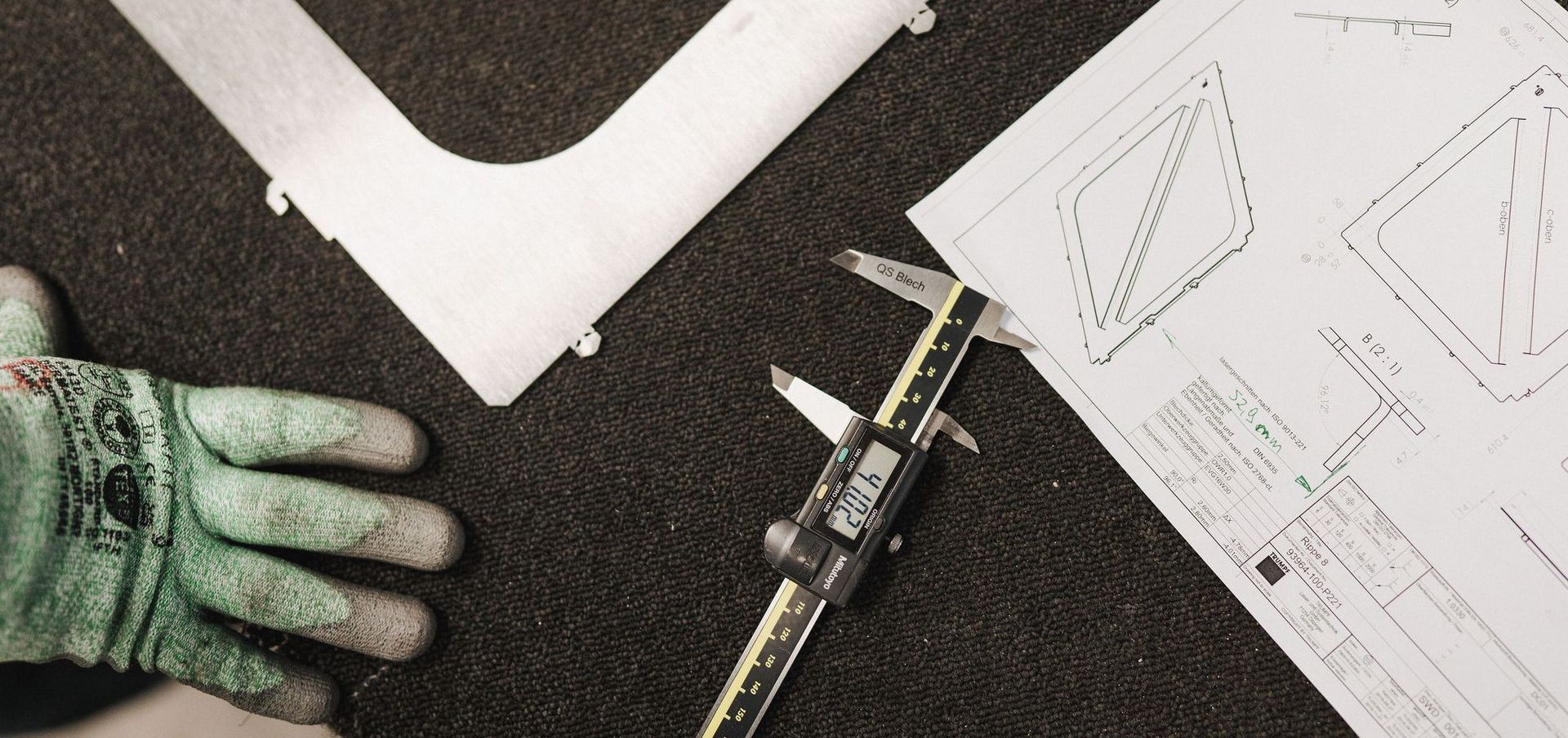
Detailed inspection: In Ditzingen, employees measure every component and document every deviation. Even the smallest deviations trigger an analysis before a part is assembled.
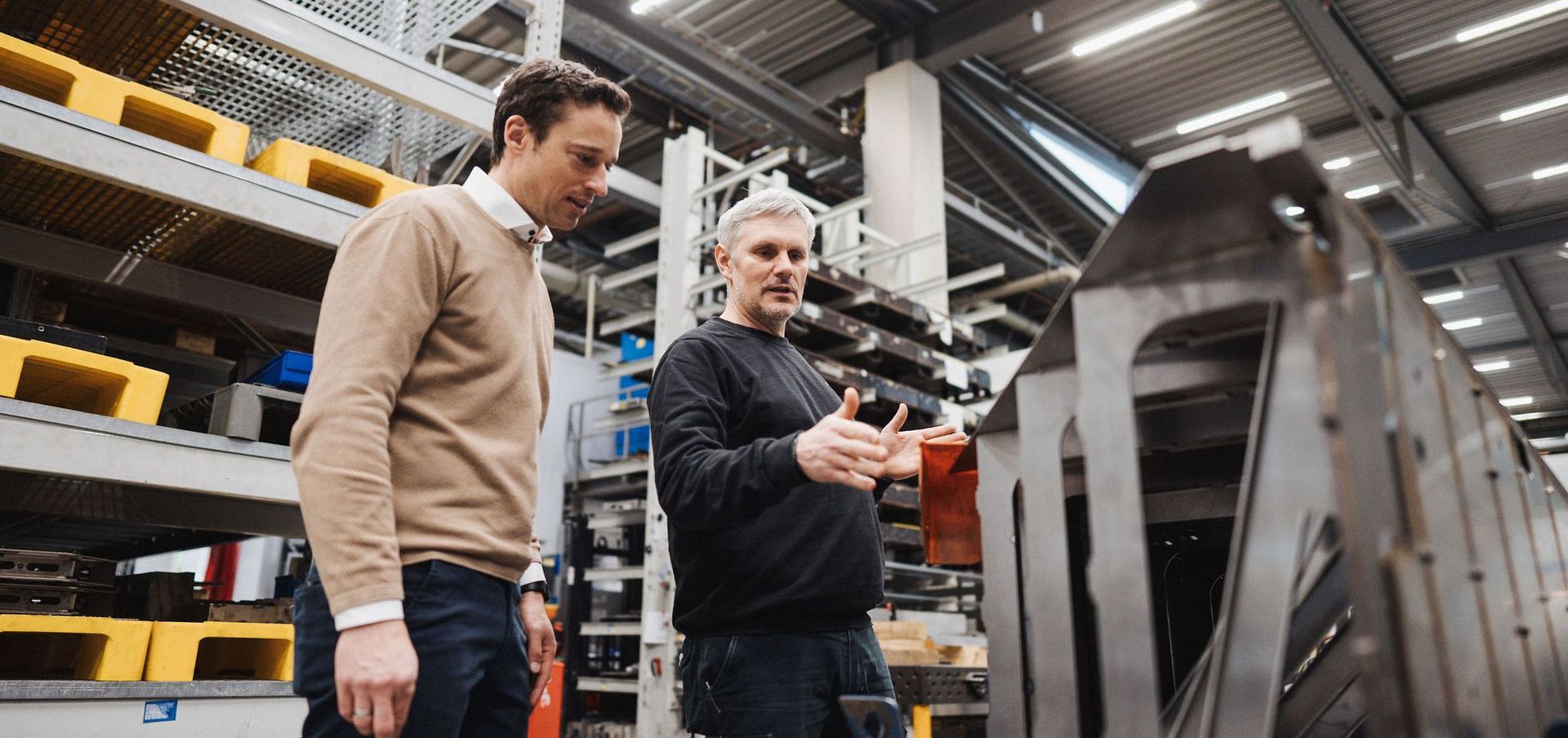
Exchange: Johannes Böttcher (left) discusses quality issues directly about the component with quality inspector Danijel Novak. Decisions are made where they have the greatest impact – in the middle of production.
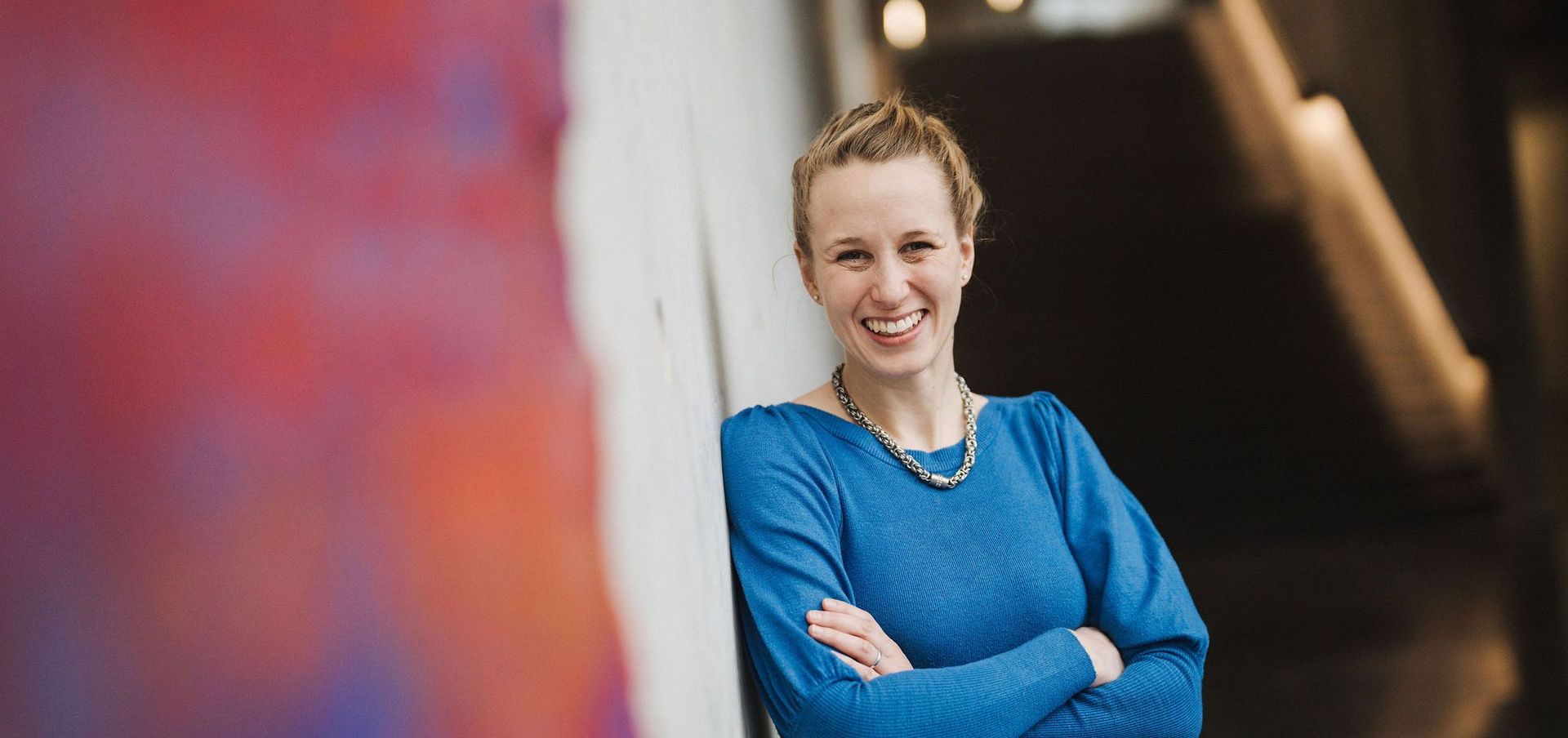
Quality culture: Marielouise Schäferling integrates quality throughout the company. Standards not only apply to production, but along the entire value chain.
Why Quality Decides Early On
For Marielouise Schäferling, Head of Corporate Quality Management at TRUMPF, situations like this are not a marginal phenomenon, but part of the concept. "Quality is not something you check at the end ," she explains. "It must be integrated into the system in such a way that deviations are detected at an early stage and responsibility is clear." This starts with goods receipt. This is where parts from suppliers and international TRUMPF plants arrive and experts decide what is even allowed into production. Employees test components individually or randomly. They measure, evaluate, and block. "Everything that leaves the store must be of a precisely defined quality," states Böttcher. "We do not deliver parts that do not meet our requirements ." At TRUMPF, quality is not reactive, but preventative. The high-tech company ensures suppliers meet requirements at an early stage, coordinates processes, and defines standards. "We are in constant communication before and after delivery," explains Böttcher. The aim is to have few rejects, little reworking, stable delivery dates. For customers, this means fewer unplanned delays and the best possible quality along the entire supply chain.
In the production department, machines are whirring and components are moving through systems. Quality work at TRUMPF is arranged along the product groups. Operationally, fixed teams of four work together from the Quality, Development, Production, and Service departments. The person responsible for quality assurance, or QSV for short, ensures everything is combined in day-to-day production. The work completed by Novak and Kieferle is part of everyday life. Not an escalated incident, but an informative one. "The quality assurance process has been successful here, although only to a mediocre extent," Kieferle then explains. The error was discovered – but too late. "Our aim is for the worker to recognize the fault immediately," says Kieferle. Because every defective part that is detected too late increases costs, and can subsequently have a direct impact on throughput times and deadlines for the customer. Marielouise Schäferling believes it is a managerial decisions that quality at TRUMPF is organized systematically and not just as a sideline. "Standards only help if someone is responsible for them," she explains.
When Software Prevents Idle State
Things are quieter in the Testing department. The protagonists are not machines, but screens, software, and simulations. Stefan Sailer, R&D Manager for Testing and Second-Level Support in Technical Service, works in this department. "We are trying to digitally simulate machine behavior," explains Sailer. The aim is to test software before it blocks real machines. "We can simulate many more scenarios than on the actual machine and do not cause any idle states." Not everything is mapped yet. Material flows are missing, and some effects can only be tested physically. However, the approach is clear: the aim is to eliminate risks before they become expensive. Schäferling believes that this is a crucial factor. "We gain an advantage if we avoid mistakes before damage occurs," she explains. "The earlier we learn, the more we can reduce the disadvantage for us and for the customer." Preparing cutting data, loading the program onto the machine, laser cutting, and evaluating the result. And then it is completed all over again. This increases material wear, uses up production time, and qualified personnel are not always available. This is why TRUMPF experts have developed the Cutting Assistant.
Customer Service as an Early Warning System
Technical Service completes the quality circle at TRUMPF. Nowhere else is the feedback from the market more direct and raw. Here the unfiltered quality comes to light when the customer's machine breaks down or a seemingly minor service issue arises. In Germany alone, around 14,000 cases are logged each year, equating to 300 per week. These range from the complete shutdown of a machine to a question about a spare part for EUR 2.30. The team solves more than 80 percent of cases remotely or by telephone. Technical Guides have therefore proven to be particularly effective: These are guidelines that provide the customer solutions to known error codes in an understandable way. The way in which TRUMPF customer service operates has set standards in the industry. "We are not a call center," emphasizes Bernard Kohl. "We employ real experts here." He, and his colleagues Alexander Mai, Tobias Böschek, and Michael Dubberke talk to customers daily, analyze log data and error descriptions, and coordinate operations.
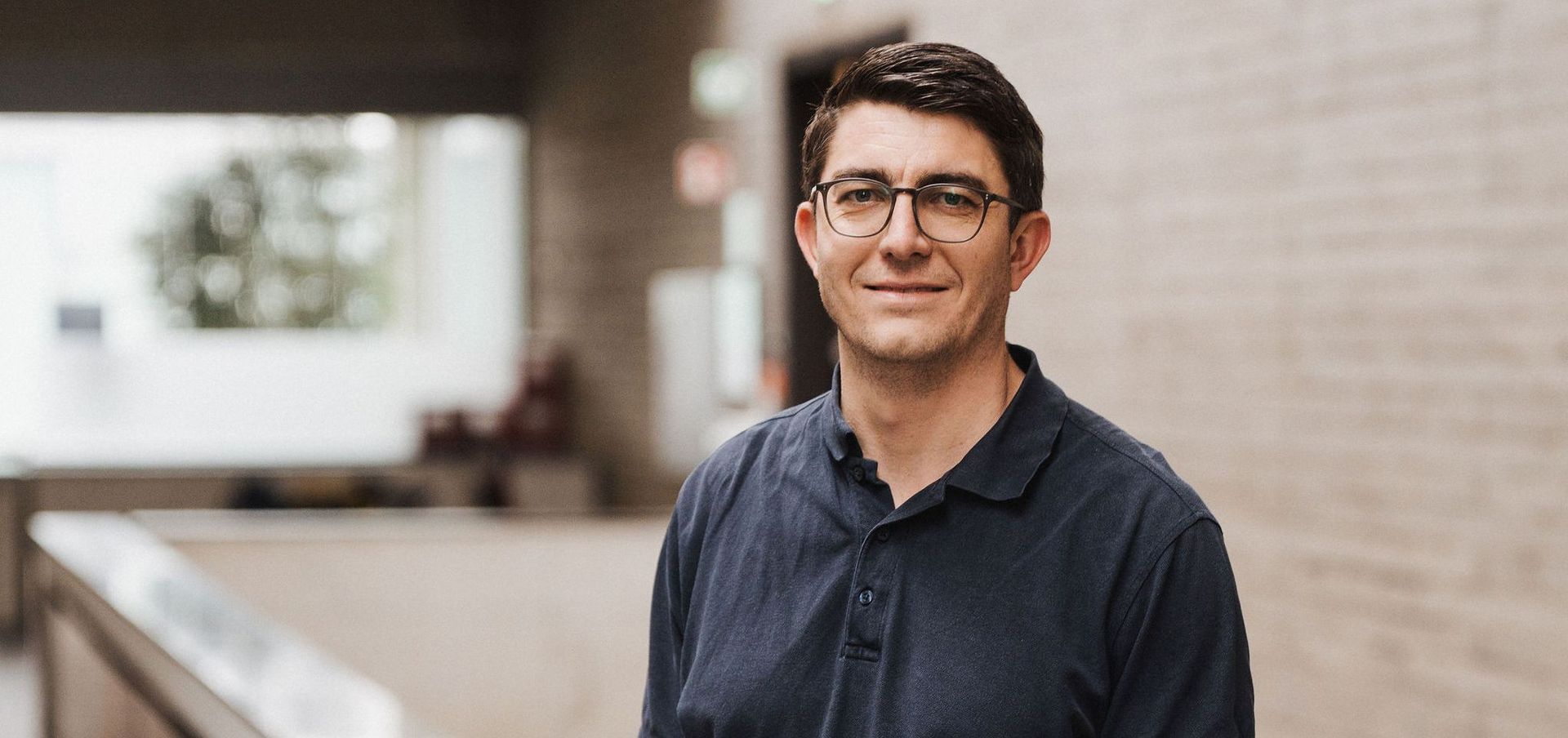
Quality assurance: Thomas Kieferle, Quality Officer for the Production department in Ditzingen and Hettingen at TRUMPF, checks processes, intervenes in the event of deviations, and ensures that standards are consistently implemented on a day-to-day basis.
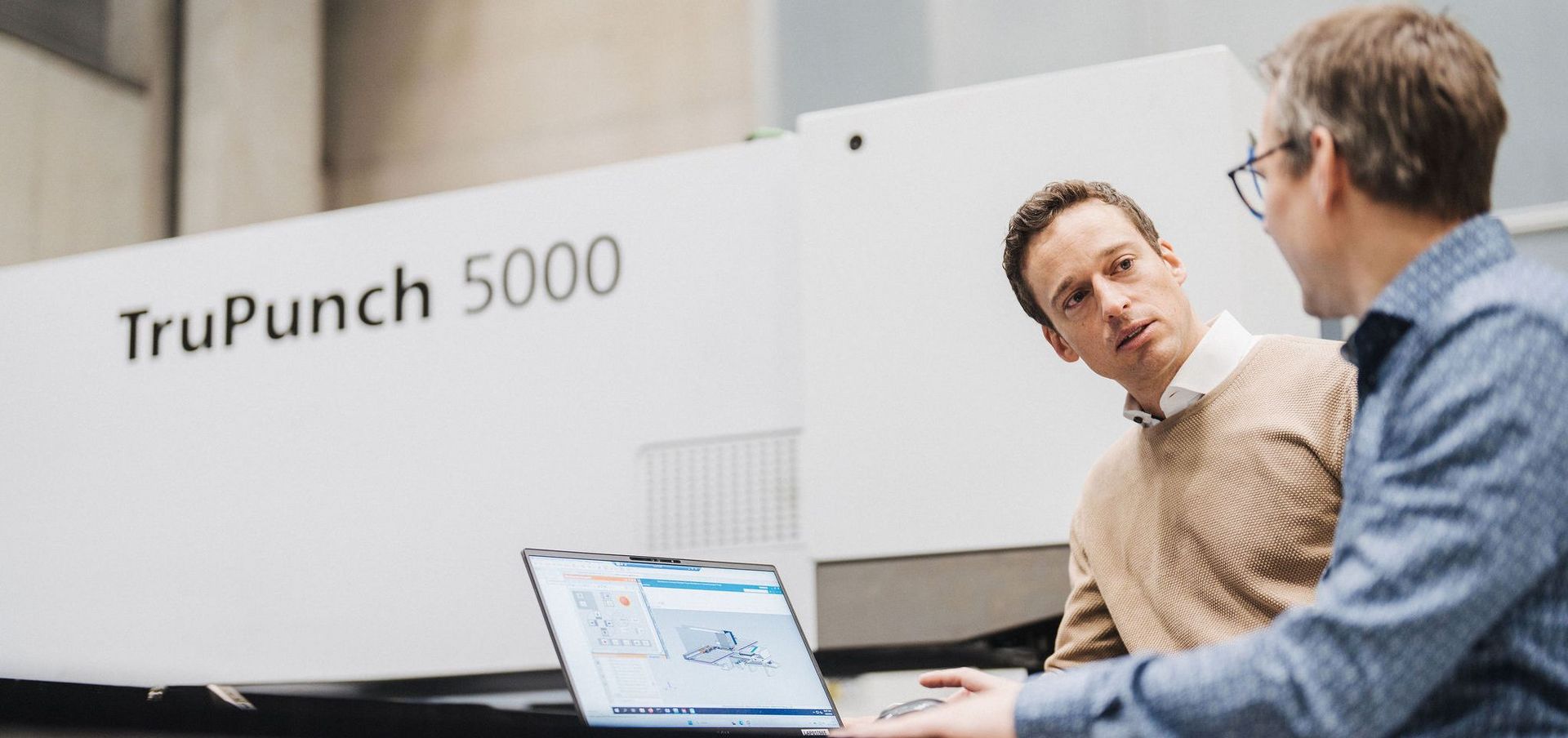
Simulation: In the Testing department, Stefan Sailer first tests software versions on the digital model. This allows functions to be safeguarded and risks to be identified before actual machines in the field are affected.

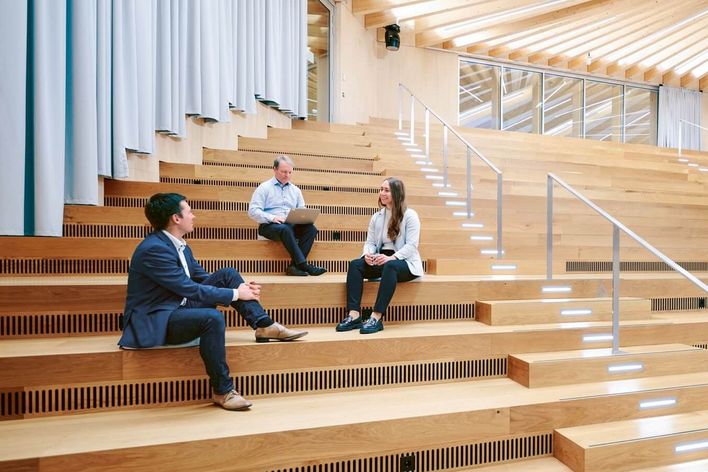
Team work: Technical Service and quality managers in direct dialog. Structured feedback from the field flows back into the development and planning.
"Depending on the fault in question, we send a service engineer who is already familiar with the problem. This is how we ensure that the machine is up and running again quickly and that the customer can process orders. If there is a problem, we are great at finding a solution," says Böschek. Technical Service has thus become a bit of an early warning system for TRUMPF. Everything employees learn here flows back into the Development, Testing, and Quality Planning departments. This is precisely where the advantage lies – not just solving problems, but systematically avoiding them. For customers, this means malfunctions are not only rectified more quickly, but in a best-case scenario are not even noticed.
Marielouise Schäferling believes quality is much more than just a set of rules. It forms the foundation on which TRUMPF builds everything – from the simplest machine to the high-end system. "Quality is not an added extra," she explains. "It is the foundation for everything." Accordingly, the global quality management team sets standards and continuously develops them further: not in the abstract way, but close to the business divisions, market, and customers. "Quality thrives on feedback," emphasizes Schäferling. "And on leadership." TRUMPF clearly focuses on quality. This gives the company a head start – not only in terms of its own competitiveness, but also thanks to the success and satisfaction of its customers.