Country/region and language selection

Laser beam formation enables great things in car body construction

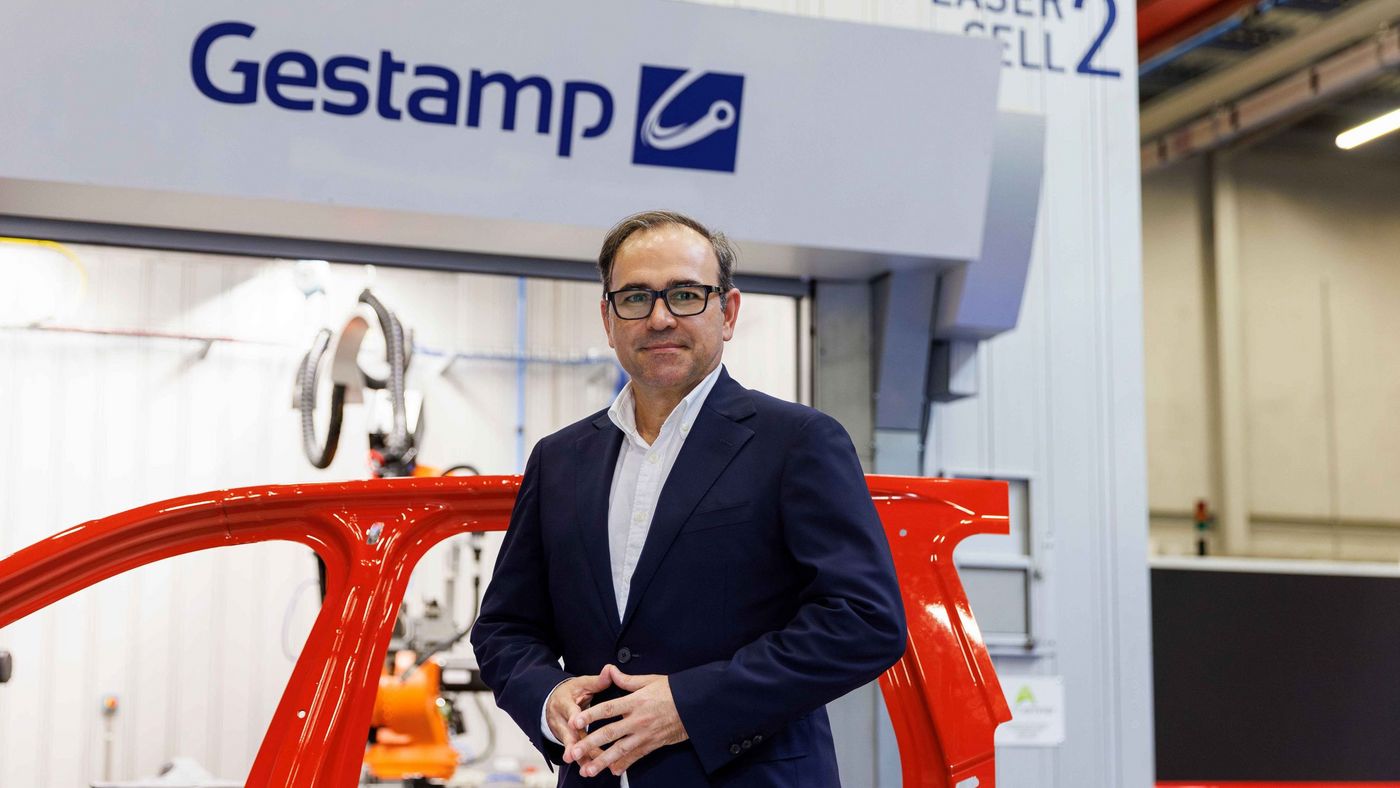
The Spanish automotive supplier Gestamp is a leading multinational company that operates in 13 R&D centers around the world to help shape the future of mobility. Gestamp is doing pioneering work with the products of the GES-GIGASTAMPING® family: Large components that reduce vehicle weight, increase safety, improve the efficiency of production processes and shorten assembly times. "Our specially developed welding strategies such as Ges-Wire and G-Weld have the potential to fundamentally change the production of structural components especially with overlapping laser welding," explains Miguel Angel Ferrandez, Director R&D CE at Gestamp. In the framework of a cooperative partnership, Gestamp and Gestamp and TRUMPF jointly take on the challenge of developing an industrially suitable laser welding process.

Gestamp

www.gestamp.com

Gestamp, with headquarters in Madrid, is a leading multinational company in the automotive supply industry, specializing in the development and manufacture of highly technical metal components. With 115 production sites in 24 countries and over 43,000 employees, Gestamp focuses on innovation, sustainability and operational excellence. In 13 R&D centers worldwide, the company develops solutions that shape the mobility of the future and make vehicles safer, lighter and more sustainable.

Industry
Automotive supplier
Number of employees
43,000
Site
Madrid (Spain)
TRUMPF products
  • TruFiber

  • PFO 33-3

  • TruLaser Cell 

Applications
  • Laser welding

Challenges

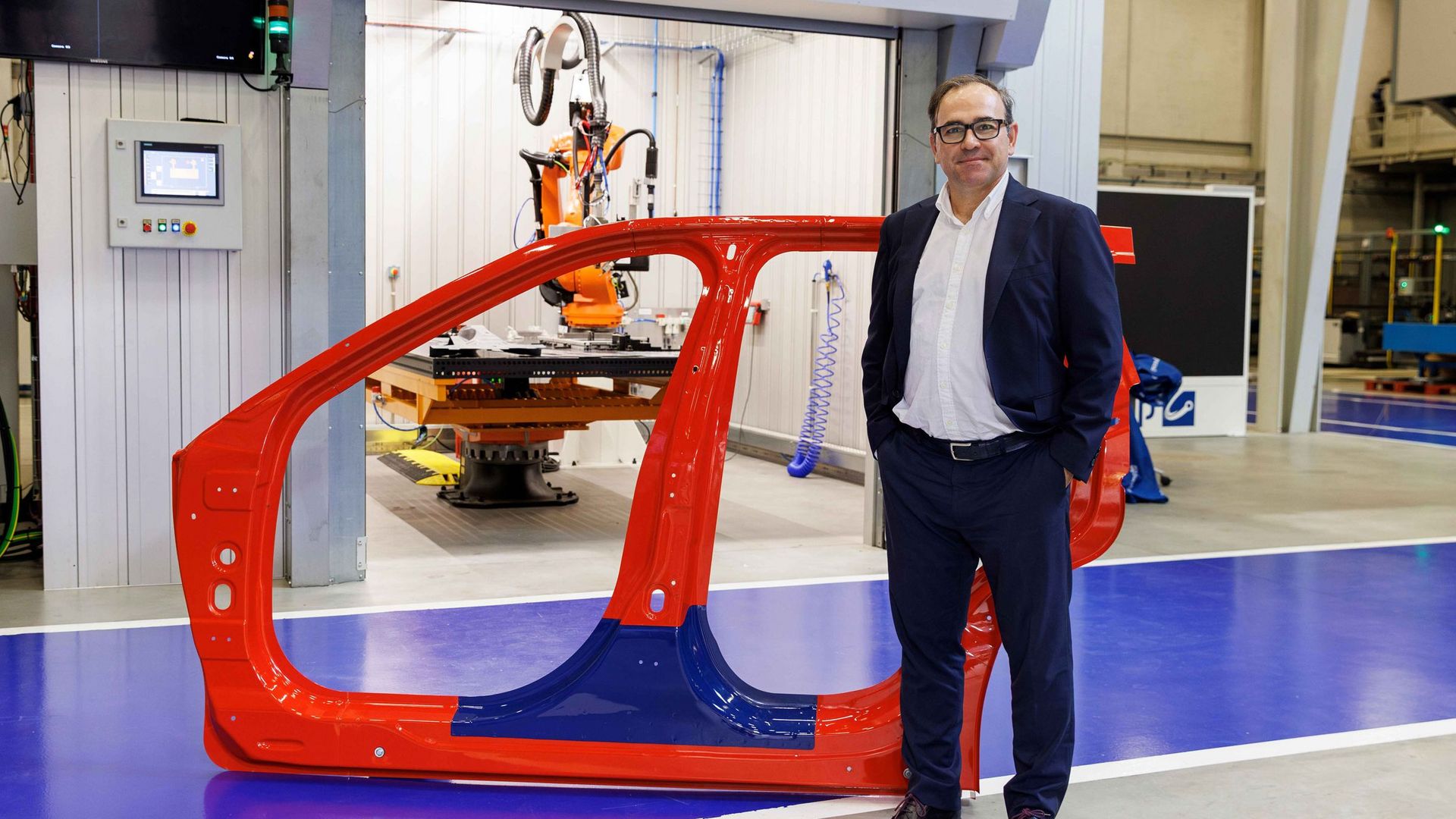
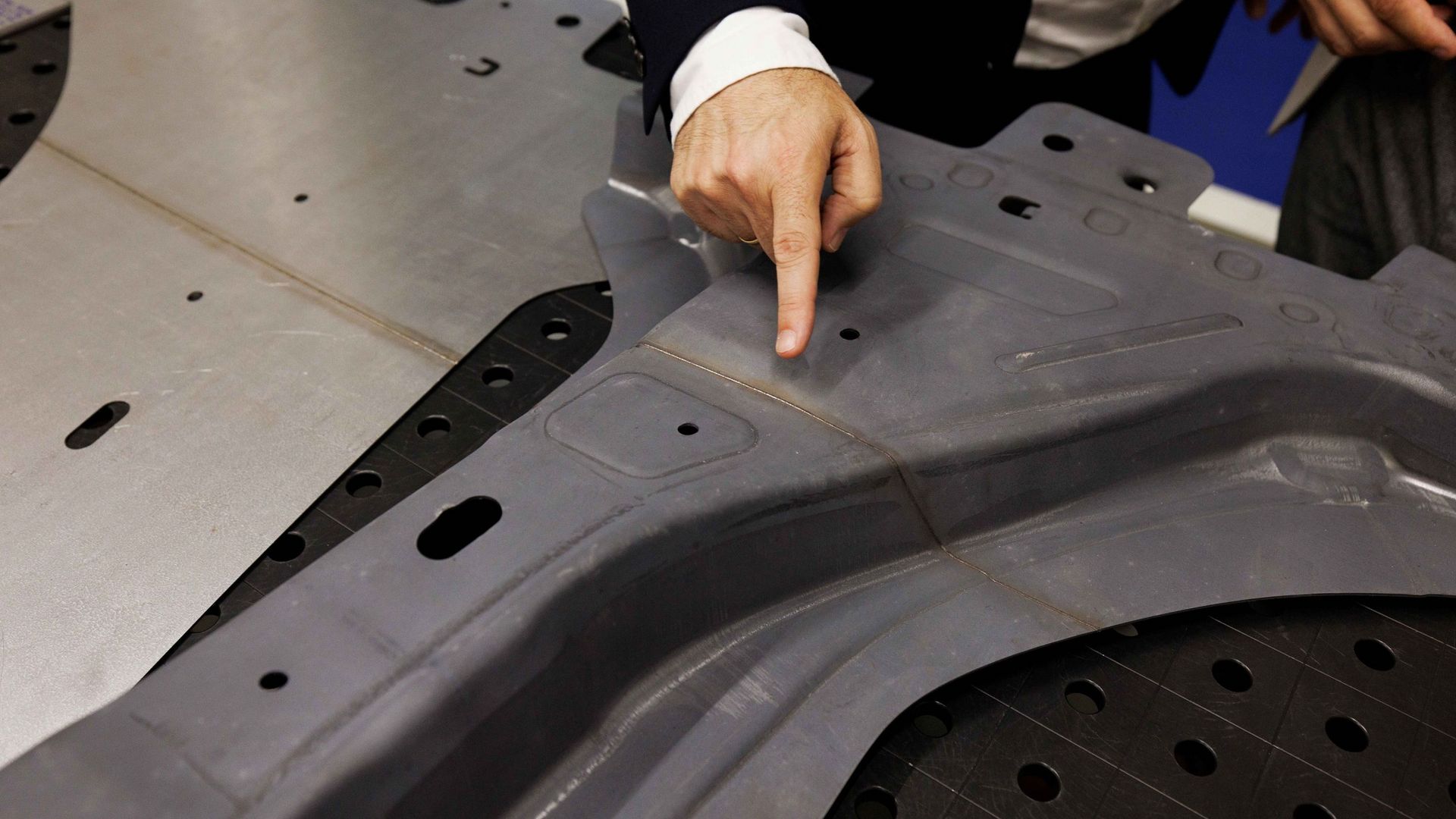
The automotive industry is undergoing a technological transformation, and the fewer components a vehicle requires, the more efficiently it can be manufactured. "Larger components allow us to produce more efficiently and reduce assembly time," explains Miguel Angel Ferrandez, Director R&D CE. "In addition, the vehicle weight can be reduced and safety increased." Gestamp is doing pioneering work here with the Ges-Gigastamping® family. These are large-format structural components that are produced by hot forming from high-tensile steels. However, welding these reliably using a laser in an industrial-scale process is a challenge according, to Ferrandez: "The press-hardened steels are provided with an aluminum-silicon coating (AlSi), which protects the components from corrosion. This does not play a role in conventional spot welding. However, we initially bit off more than we could chew with laser welding." The sticking point was that the two different materials could not be joined homogeneously within the weld seam. Instead, intermetallic phases and alpha-ferrite structural components form, which impair the seam quality and the resulting mechanical properties of the component, says Nicolai Speker, Head of Application Development at TRUMPF.
Solutions

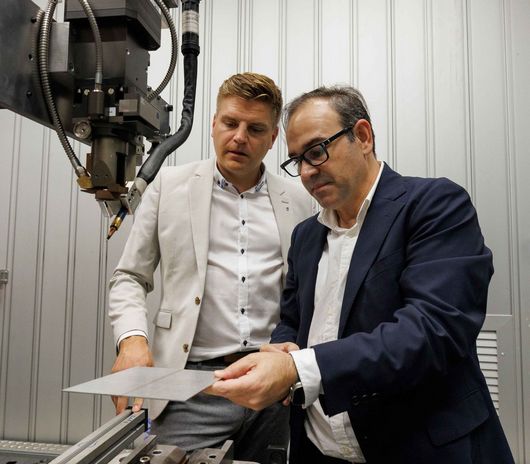
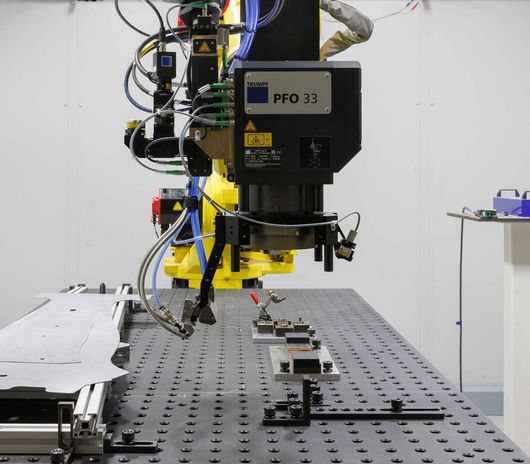
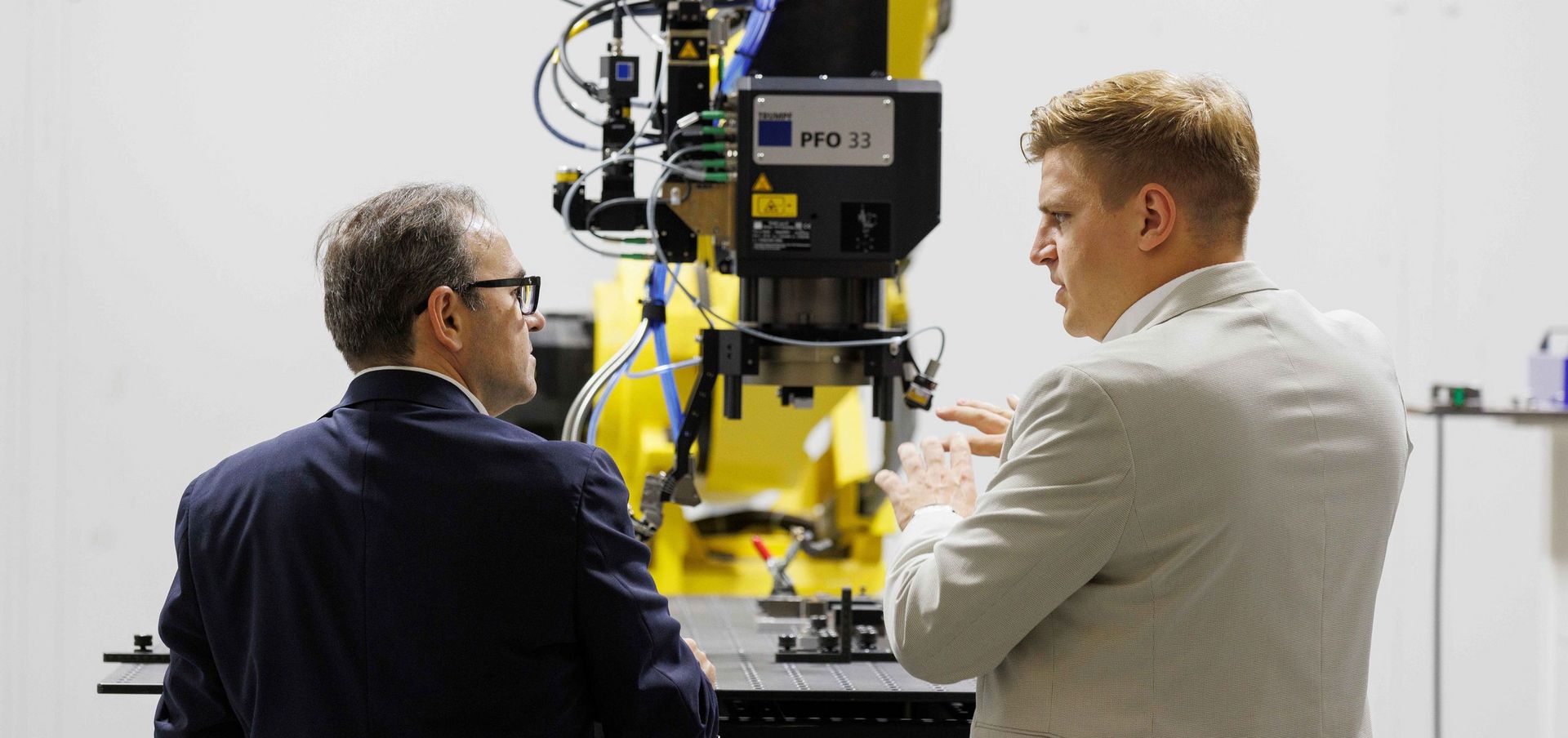
TRUMPF set to work on the basis of the G-Weld laser welding innovation developed by Gestamp. G-Weld® was developed by Gestamp to replace traditional spot welding for patch and overlap blanks. A G-shaped weld seam enables up to five times faster welding speeds and significantly improves significantly improves production efficiency and quality. "However, this time gain would have been quickly lost if we had had to remove the aluminum-silicon coating in an upstream process before welding with the laser", explains Ferrandez. The solution: Beam shaping using the Multifocus option, in Gestamp's case. In the process, the laser beam is split into four individual beams of approximately equal intensity. All four partial beams have a core beam and a ring beam. "The fact that not just one but four beams act on the weld pool ensures homogeneous mixing of the two materials. The formation of undesirable structural conditions can thus be prevented", explains Marc Hummel, Global Business Development Manager for Mobility Applications at TRUMPF. "The additional energy of the ring beam also prevents the formation of spatters." The result: A strong weld seam that also meets the high crash test requirements of the automotive industry. 


Implementation

During the development phase, the TRUMPF experts initially worked with materials provided by Gestamp. Later on, real components were used and finally entire automobile bodies, which were subjected to real crash tests at Gestamp. "The work was worth it," says Ferrandez and summarizes: "The new welding strategy offers several advantages. On the one hand, we save costs in production and equipment - such as assembly robots - and the simplified assembly reduces the complexity of the final production process. In addition, we are increasing our productivity thanks to faster welding speeds, whilst also improving weld seam quality." And there is another important plus: The laser not only offers better accessibility, it also enables the advantage known as a "semi-visible surface" thanks to the one-sided welding. The seam is no longer recognizable from the underside of the component from and can be painted directly. Before the introduction of the new process, Gestamp introduced the validation phase. "As soon as this internal validation is completed," says Ferrandez, "we will roll out the technology in all our plants."

Forecast

"There is a growing need for simpler and more competitive manufacturing methods," explains Miguel Angel Fernandez and adds. "In particular, the products of our Ges-Gigastamping® family, require a precise, fast and perfect joining - without visible joints. Our new welding approach opens up completely new possibilities and has the potential to fundamentally change the design and production of components." 

Find out more about our products

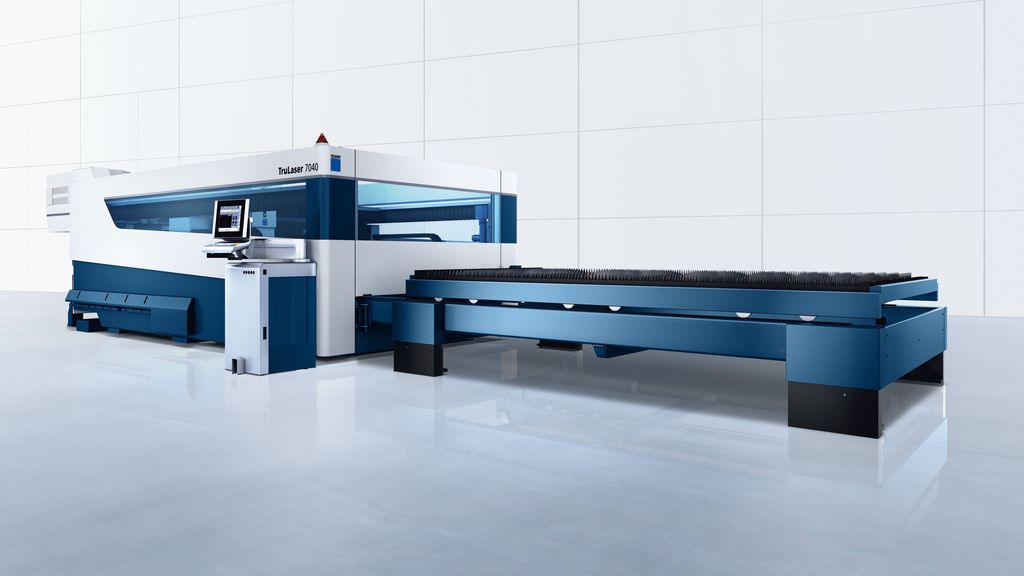
TruLaser 7040, high-precision machine for series production
TruLaser Cell 7040

With the TruLaser Cell 7040 laser system, customers are perfectly equipped - regardless of whether they need to process two or three-dimensional components or tubes. Operators can switch flexibly between cutting, welding and laser metal deposition. The modular design of the machine and the possibility of individual customization and retrofitting allow it the TruLaser Cell 7040 to adapt optimally to a changing production environment and thus to react flexibly to changing customer requirements.

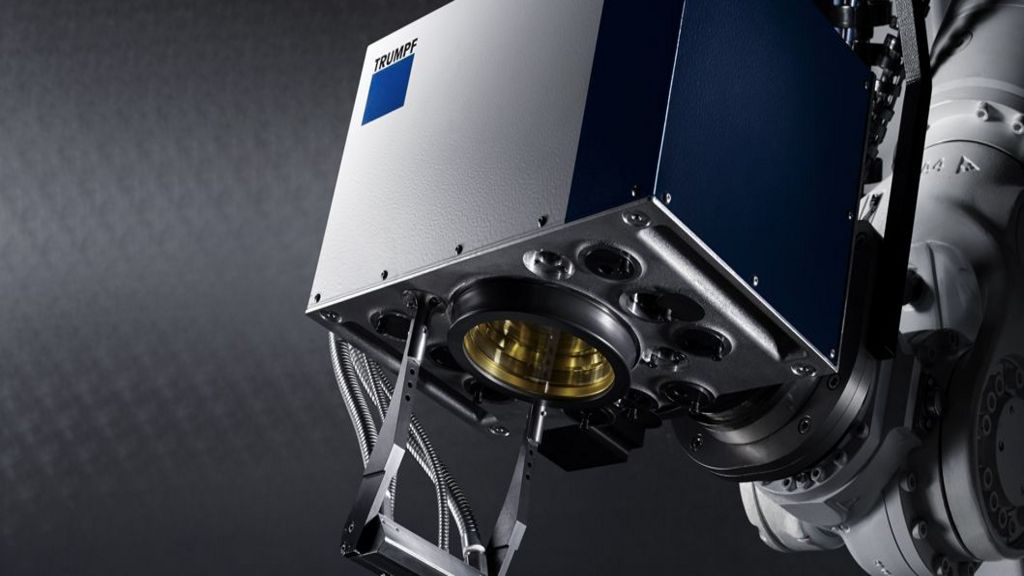
Programmable focusing optics

The programmable focusing optics from the PFO line are scanner optics for remote welding and cutting. With the help of two mirrors, the laser beam can be positioned at any given position within the processing field or space or on any desired seam geometry seam geometries. They can thus be welded without moving the workpiece or the focusing optics. No protective/assist gas is required. 

Updated: 2026-03-10